The Mad, Bad, and Dangerous to Know Series returned for its third outing, once again in Los Angeles. Thus far there have been two gatherings in LA and a third in Manhattan, and there will be more to come. These gatherings are a wonderful opportunity to highlight writers who should have their books on every nightstand.
There were three great writers. Christina Haag and Jillian Lauren joined us in Manhattan at the end of 2011 and we were pleased to have them discuss their books in Los Angeles. Anne-Marie O’Connor joined us for the first of many gatherings. We hope to have them in other TLS cities soon. Continue reading →
When you’ve surmounted the unimaginable, what do you do next?
For Roz Savage, she completed something magnificent when after she experienced the implosion of her personal life as a consultant in London. While sitting down one day, she wrote her obituary of what would amount to a long and full life; cube farming in London was not part of the picture.
She put down her briefcase, picked up a set of oars and was off to explore the world. In 2006, Roz participated as the only female solo rower in the Atlantic Rowing Race and spent a harrowing 103 days rowing from The Canary Islands to the beaches of Antigua.
She joined us for a very intimate luncheon at Fior D’Italia in San Francisco to give us a look to the next chapter of her life.
As she recounted in her book,Rowing the Atlantic—Lessons Learned on the Open Ocean , which was published in 2009 and became the subject of two Luncheon Society gatherings, one in San Francisco and another in Los Angeles., she recounted how the technology which told her friends that she was still alive began to fail her as she struggled to survive in a hostile place. Radios failed, oars snapped, but through it all she persevered and made it alive. Continue reading →
Note: The luncheon took place only weeks before Jonah Lehrer’s reputation collapsed around him with charges of plagiarism. This was a great luncheon, nonetheless. We thought we would leave things in their original state.
One of the coolest things about The Luncheon Society is to sit with an author who telescopes ahead to his next project.
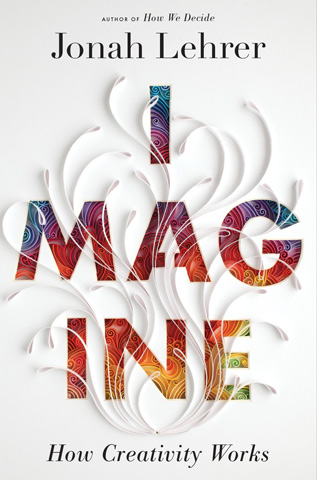
That was the case when The Luncheon Society sat down with Wired Contributing Editor and frequent New Yorker columnist to discuss his latest book Imagine, which is Lehrer’s attempt to put together a series of metrics on how creativity bubbles new ideas upward.
The takeaway: before the breakthrough happens, we have to work through the block. Its more than a magic trick of the mind.
TLS friend Betsy Burroughs has a great take on the Luncheon with her post at The Five-Stir and I would recommend that you check it out.
What Lehrer does—and does quite well—is to think about putting metrics to life’s intangibles. Can we figure out why athletes choke in critical situations? Can it be studied and avoided—or at least better understood? Lehrer’s thoughts on daydreaming might open the window to more thoughtful creativity. His piece on cognitive dissonance ponders why so many so many people reject Darwin’s evolution in these scientific times.
With that in mind, Jonah Lehrer zeroed in on “grit,” that notion of sticking to something that was dear to one’s heart even if the odds appeared to be long. Out of the variables proposed by Angela Lee Duckworth , this might be the magic bullet on bringing ideas to their successful fore. It will be a future article in The New Yorker.
Since we often view success through the rear view mirror, delving back onto the hard work after the fact, we often find ourselves building metrics of what made it successful. Edison said that he never really invented the light bulb but discovered hundreds of filaments would not work incandescently. That was grit in all of its beauty. Continue reading →
Have you ever looked up into the night sky and wondered if anybody was listening? What if they were?
We live in a universe where 760 extrasolar planets have been identified and perhaps billions are waiting to be found. If life has been able to thrive on Earth, logic suggests that it might be plentiful elsewhere throughout the universe. We just have to find it.
We wonder what lies beyond the horizon. When man walked on the moon, we wept with Walter Cronkite and reflected with Eric Sevareid on the meaning of it all; we were no longer tethered to our home planet. Thanks to a Voyager, Pioneer, and the upcoming New Horizons spacecraft, we have transformed our knowledge of the outer planets in our own backyard. But the biggest prize could belong to the plucky little Kepler Space Telescope, which is designed to discover earth-sized planets, far outside of our solar system. This could be the next generation of Great Discovery.
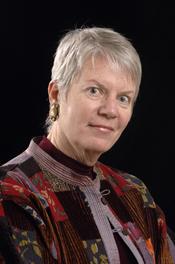
Jill Tarter’s TED® Award Speech. As scientific study reveals new answers, the odds favor a more vibrant cosmic neighborhood. However, until the initial moment of contact occurs, the answer remains elusive—but tantalizing with promise.
How many planets might support life? Indeed, what is required for life to exist? How does life start? How does it evolve, and what fabulous creatures can evolution produce? How often do intelligent creatures appear in the giant tapestry of life? Do we even know what life would be like elsewhere? These are the questions being addressed by the scientists at The SETI Institute.
How close are we? Jill Tarter joined us for The Luncheon Society for a fourth gathering, this time in Manhattan at Prime House, where we had a distinguished group, including Dr. Neil deGrasse Tyson and Dr. Jeremiah P. Ostriker. This luncheon was hosted by our good friend Jim Day, who once again proved to be a wonderful host.
There are more stars than there are grains on sands on all of our beaches. When Jill Tarter made her first presentation before The Luncheon Society in San Francisco back in 2004, there were only 85 extra solar planets. As of March 13, 2012, a total of 760 confirmed exoplanets are listed in the Extrasolar Planets Encyclopedia, including a few that were confirmations of controversial claims from the late 1980s. That count includes 609 planets in planetary systems and 100 planets within multiple planetary systems. A system has been discovered in which a planet orbits around two stars, which orbit around each other. As of February 2012, NASA’s Kepler mission had identified 2,321 unconfirmed planetary candidates associated with 1,790 host stars, based on the first sixteen months of data from the space-based telescope. It’s a veritable gold rush. Continue reading →
From Taylor Branch’s vantage point, the shame of the NCAA is that it has grown into a multi-billion-dollar monopoly that benefits everybody except those who play the game.
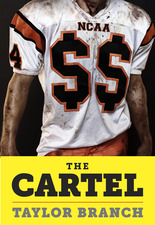
The sum total of the tickets, jerseys, corporate sponsors, shoe contracts, boosters, luxury boxes, and other souvenirs has made collegiate sports branding in a multi-billion dollar enterprise. Even with the baby steps of reform, the players will get next to nothing. To Branch, the contrast of poverty from those who pay the game against the backdrop of overflowing riches of the universities and the NCAA who acts as the judge, jury, and executioner is overpowering. This premise underscores his latest book, The Cartel: Inside the Rise and Immenent Fall of the NCAA, which was serialized in The Atlantic.
Thirty five years ago, nobody could have foreseen the explosion of cable sports and how it funneled a Comstock Lode of money into the NCAA as well as the university sports programs. According to Taylor Branch, all of that money creates the opportunity for large-scale fraud and nobody should be surprised that this environment has produced scandal after scandal. Cam Newton fell under a cloud because his father allegedly tried to broker a deal that would have his son return to a top-ranked collegiate program. Reggie Bush returned his Heisman Trophy because of an inappropriate relationship with sports boosters who paid his expenses while at USC. Countless coaches have been fined, fired, or had their programs sanctioned due to various violations. As more dollars enter into the fray, the scale of corruption only increases.
Branch joined The Luncheon Society for his third appearance over the years, this time at Prime House in Manhattan. We were thankful our friend Steve Schlesinger was able to host the gathering and it was a filmed affair, part of a larger documentary on Taylor’s book.
Taylor Branch is not some disdainful academic who looks down his nose at college athletics. While growing up in the Atlanta area, Taylor Branch was one of the top ranked high school football players in the state and turned down a scholarship to Georgia Tech. He then ran a post-pattern into academia and has distinguished himself as one of the best historians of his age. Continue reading →
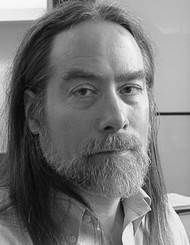
Most people view urban crime from the safety of the own living rooms. However, criminologist David Kennedy grabs the problem by the scruff of the neck and has created a template, if deployed correctly, might end the cycle of violence that has become commonplace for so many lawless urban neighborhoods.
David Kennedy joined us in Manhattan after a wonderful luncheon late last year in San Francisco. We hope to have him join us in Los Angeles as well as Boston near term.
The Luncheon Society has looked at crime (its sources and its impact) though a number of authors. Our friend and sociologist Peter Moskos published a book detailing his field world as a police officer in Baltimore’s roughest neighborhoods, which was seen in HBO’s The Wire titled, “Cop in the Hood.” This year he published a sly polemic titled, “In Praise of the Lash” which takes another look at how we punish offenders. Time magazine’ Ioan Grillo joined us in San Francisco and Manhattan for a stark conversation about the growth of “El Narco,” the drug-fueled insurgency that is slowly strangling Mexico’s national sovereignty.
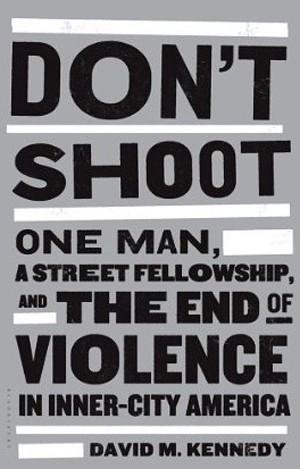
In Kennedy’s book , Don’t Shoot: One Man, A Street Fellowship, and the End to Violence in Inner-City America, hepens an impassioned memoir of how his approach had improved the worst of neighborhoods plagued by drug violence.
Crime is down—but where is it up? When you look at FBI statistics, crime rates—including violent crime—continue to decrease incrementally. However, this is not the case in some of the roughest urban communities, where an African-American male has a 1:200 chance to getting killed by gunfire. It has devolved to the point where some first responders may think twice before entering into some of the neighborhoods. Traditional law enforcement of governmental assistance has failed to stem the tide and as a result, these neighborhoods are essentially written off by municipal leaders. As a result, the festering cancer of criminal behavior becomes multigenerational in scope with no jobs, no future, and no hope.
What David Kennedy has done—even though he is an academic as director of the Center for Crime Prevention and Control at CUNY’s John Jay College of Criminal Justice—is to immerse himself into the worst of the neighborhoods and figure out answers to build solutions. Continue reading →
Every so often, I’ll Google James Blake Miller and hope he has risen above his personal demons. He’s largely faded from the public view, but the image of a young and exhausted soldier who took a smoke break after prolonged firefight in Fallujah found itself on the front page of most newspapers and the cover of Time. Miller, who appeared as an anonymous everyman covered with mud, blood, and exhaustion, became a metaphor for every American in daily combat.
Just as quickly, James Blake Miller became another type of metaphor. After returning home to his family, it became clear he was suffered from Post-Traumatic Stress Disorder (PTSD) and the subsequent stories chronicled a downward tailspin. A storybook marriage to his high school sweetheart quickly imploded and there several incidents which later resulted in a medical discharge from the armed forces. Living on disability, he joined a motorcycle club that law enforcement felt was suspicious. When the LA Times photographer who took the iconic photograph intervened to get him admitted into a long-term counseling program for veterans, Miller soon left and was last heard of living alone, a far different person from when he shipped out.
The IAVA’s founder, Paul Rieckhoff, joined The Luncheon Society for his fourth gathering; our last luncheon took place in San Francisco in 2010. For Manhattan , our old friend and therapist Shari Foos moderated. Rieckhoff, who founded the IAVA when he returned from the theater of operations in 2004 from his apartment in Greenwich Village, is now focused on the next phase of his mission. With the general drawdown in both theaters, combat deaths and injuries will fade to the background to be replaced by The Next Big Story that dominates Basic Cable. The IAVA will have its hands full making sure that the needs of vets do not fall between the cracks.
James Blake Miller is not alone. Today’s returning veterans face higher unemployment, greater numbers of homelessness, and epidemic levels of undiagnosed PTSD. A vet with PTSD will have three times the chance of an alcohol problem, four times the chance of ending up with a serious drug addiction, and worse, six times the chance of suicide than the average American. While PTSD has been following soldiers home since antiquity, the epidemic levels among returning combat soldiers is not getting the attention it deserved from the VA.
Their mission is to ensure that every soldier who returns from the combat theater has the tools to reintegrate into civilian society. Their website states, “IAVA is the country’s first and largest nonprofit, nonpartisan organization for veterans of the wars in Iraq and Afghanistan. With more than 200,000 Member Veterans and civilian supporters nationwide, IAVA is building the next greatest generation with a three-pronged model based on advocacy, awareness, and assistance. IAVA programs empower our community online and offline, and include Smart Job Fairs, our signature New GI Bill calculator and Community of Veterans, a veteran’s only social network.” Continue reading →
Being present at the creation has its own rewards. Thankfully, Pamela Des Barres had the presence of mind to write everything down. Long before she became “The Queen of the Rock and Roll Groupies” and hung out with Whisky-a-Go-Go house bands that soon became household names, Pamela Des Barres was a compulsive diarist who filled up notebooks and pined about the musicians she idolized.
She desperately wanted to meet them. And she did.
Joining us in Los Angeles, Pamela Des Barres and her close friend Catherine James gave us the inside view of a rock and roll courtesan (Des Barres prefers the term groupie) during the late 1960’s and early 1970’s when we let our hair grow, loosened our conventions, and rock and roll simply ruled. It was a life lived out-loud and it took place in London, Paris, New York, Los Angeles, and all parts in-between.
How it began for Pamela. A high school friend of Pamela’s was the cousin of Captain Beefheart, who along with Frank Zappa, influenced a generation of musicians during the 1960’s. Pamela eventually went to work for the Zappa family as their nanny before founding The GTOs (Girls Together Outrageously), which served as an opening act for Zappa’s Mothers of Invention. The GTOs were young women who hung out on The Sunset Strip and were very much part of the scene. Within the space of a couple of years, she had gone from fantasizing about popular music to being in the eye of the hurricane. She remained somewhat anonymous to those outside of the LA music scene until she published I’m with the Band in 1986. It was an immediate best-seller and she followed up with two other memoirs, Take Another Little Piece of My Heart, and “Rock Bottom: Dark Moments in Music Babylon.”
Catherine James emerged from a difficult childhood. She was abandoned by both parents but after a chance meeting with a young Bob Dylan, who said that “it was her life, her gift, and she did not have to follow anybody’s rules.” She escaped from the orphanage and made her way to Greenwich Village. She was 15. By 19, she had a son with Denny Laine of the Moody Blues and later with Paul McCartney’s Wings, lived with Mick Jagger in London, modeled for Wilhelmina, and found herself in Andy Warhol’s crowd. When she doubled for Diane Keaton on a number of her films, the actress encouraged her to write and Catherine published “Dandelion the Memoir of a Free Spirit” in 2007. Continue reading →
After a two year absence, Thomas Frank rejoined The Luncheon Society in San Francisco to discuss his latest book, “Pity the Billionaire, The Hard Time Swindle and the Unlikely comeback of the Right.”
Called “The Thinking Man’s Michael Moore” by Michael Kinsley and the author of What’s the Matter with Kansas and The-Wrecking-Crew , Frank took us through the deregulatory environment that turned a blind eye to the housing bubble that finally burst in 2008, only weeks before the national election. This started the long chain of events that became The Great Recession, the biggest economic mess since the Herbert Hoover gave us The Great Depression.
However, the big surprise came in the spring of 2009, when the Tea Party movement purged their moderates and demanded a return, with a sense of amnesiac incredulity, to the same circumstances that led to the “Train Wreck of 2008.”
It would be, as Frank describes, “as if the public had demanded dozens of new nuclear power plants in the days after the Three Mile Island disaster.”
On NPR, Franked continued, “The central paradox of our time is that we’ve just come through this extraordinary financial collapse. We know that this was almost directly the result of 30 years of bank deregulation and of all the sort of financial experimentation that our government encouraged. This disaster was caused by this ideology.”
And what the Tea Party movement and what the conservative revival generally is telling us to do,” Frank notes, “is instead of reversing course, instead of going back and saying, OK, maybe we should have a well-funded Securities Exchange Commission. Maybe we should go back and break up the too-big-to-fail banks.”
He concludes, “What they’re saying is, no, no. Get government out of the picture altogether. We need not to reverse course. We need to double down on that ideology that we’ve been following all these years. Only when we get to that sort of pure state of complete free markets, then our problems will be solved. And until that day, none of this stuff matters.” Continue reading →
Lady Caroline may have described Lord Byron that way but it certainly fits The Luncheon Society. We had two wonderful luncheons on both coasts. These are smart women who are great writers.
The History. Back in 2008, I called a couple of LA writer friends to have a reading. Joining us around the table at La Terza were Erika Schickel, who read from just-published memoir, “You’re Not the Boss of Me,” a whip-smart tome on being a hip parent. Anne Beatts , a pioneering writer who became the first woman to helm The Harvard Lampoon and the first female writer at Saturday Night Live, read from her unpublished memoir about attending a funeral with John Belushi. It screams to be published. Writer and memoirist Eve Brandstein, who with Anne has created a ton of stellar television, read poetry and reflected upon her childhood in New York City. Rachel Resnick read from the galleys of her soon-to-be-published memoir titled “Love Junkie,” a harrowing life story of somebody coming to grips with her own demons as a love and sex addict. Rounding out the group was our old pal Colleen Wainwright, an LA blogger extraordinaire who did something wonderful in 2011 by raising $50,000 for Writegirl, an LA nonprofit which partners women writers with at-risk teenage girls for creative writing workshops and one-on-one mentoring. It was part of her milestone birthday; when she exceeded the figure, she gladly shaved her head as a crowd of friends cheered. All five are equal parts vibrant, brilliant, and cool.
For some reason, I never got around to scheduling another “Mad, Bad, and Dangerous to Know” (MBDTK) gathering until I sent out a few emails in late summer 2011. Eve Brandstein was directing a play in Los Angeles and mentioned that one of her actors, Jamie Rose, was ready to publish a memoir on how Tango allowed her to “let go.” A few phone calls later and we had luncheons scheduled in Los Angeles and Manhattan; I hosted the gathering in Los Angeles and Eve ran the show in Manhattan. Jamie was critical in building out the roster of writers.
Perhaps The Great Recession sapped the marketing guts from the publishing industry because good writing remains unsupported and stillborn on the shelf. So The Luncheon Society will step in and do what it can. As we move forward, MBDTK will be one of those fun gatherings, the kind where calendars are kept open and people disappear down into our world of “Adult Drop-In Daycare,” a Luncheon Society stylemark since 1997. Continue reading →


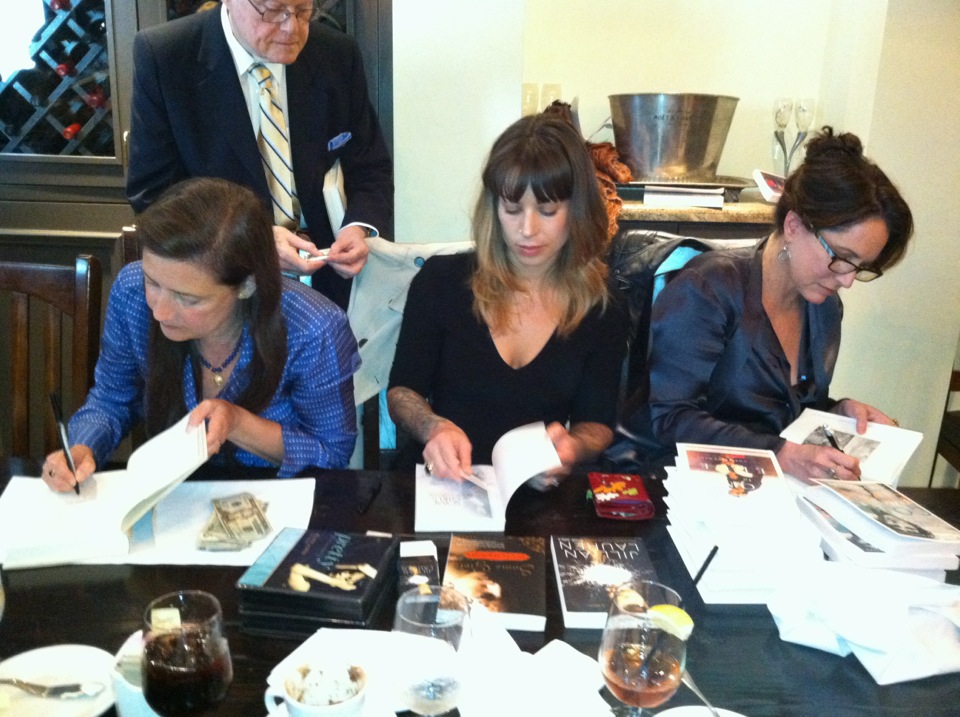 The Mad, Bad, and Dangerous to Know Series returned for its third outing, once again in Los Angeles. Thus far there have been two gatherings in LA and a third in Manhattan, and there will be more to come. These gatherings are a wonderful opportunity to highlight writers who should have their books on every nightstand.


















 The Luncheon Society