The Luncheon Society/”French Women Don’t Get Fat” author Mireille Guiliano/SF-Palio D’Asti/May 7, 2010

Add to FacebookAdd to DiggAdd to Del.icio.usAdd to StumbleuponAdd to RedditAdd to BlinklistAdd to TwitterAdd to TechnoratiAdd to Yahoo BuzzAdd to Newsvine

Not every topic discussed by The Luncheon Society ™  needs to be weighty; in fact many of our best gatherings surround unexpected delights.

For example last year, writer Ayelet Waldman joined for a conversation after her column  in the New York Times set off a firestorm because she loved her husband more than her children. A year or two earlier, Bob Hass, the former American Poet Laureate spoke about his new set of poems, Time and Materials, which would win the National Book Award and the Pulitzer Prize.

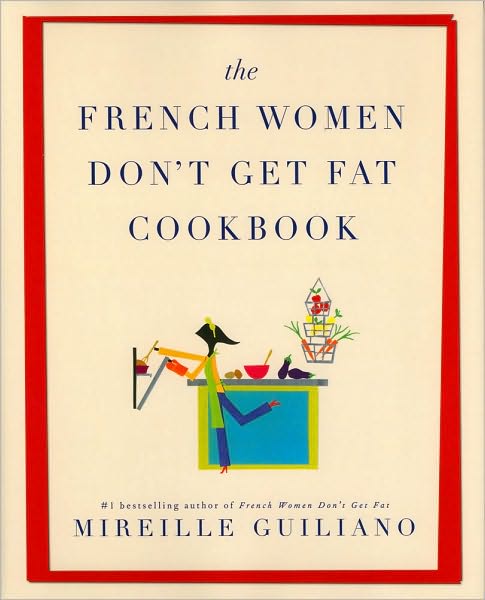
Mireille Guiliano took a backhand comment and created several New York Times best-sellers. Years ago when asked how she could dine out nightly without putting on any weight, she simply replied, “Well, French Women do not get fat.”

With that staircase rejoinder, a literary franchise was launched.
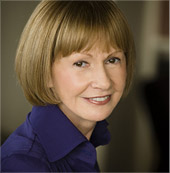
In 2004, Mireille published “French Women Don’t Get Fat,” which was a lifestyle book that explores the four basic food loves, freshness, variety, balance, and always pleasure.   Janet Maslin of the New York Times noted, “Ms. Guiliano turns out to be eminently level headed. She combines reasonable thoughts about nutrition with a general endorsement of joie de vivre, and her tone is girl friendly enough to account for the book’s runaway popularity.”

Since then she has published three more books on the joie de vivre that the French (especially French women) bring to their daily lives.  They include French Women For All Seasons, Women, Work & the Art of Savoir Faire: Business Sense & Sensibility, and her latest, The French Women Don’t Get Fat Cookbook. Each has done well and her initial book has been translated into 37 languages after spending a good deal of time atop The New York Times.  Her writing has resonated with those who are turned off after reading through forests of yo-yo fad diets, where the weight often returns with a vengeance.  Although counterintuitive at first blush, Mireille recommended bread, Champagne, chocolate and romance as key ingredients to a balanced diet and joyous lifestyle. Continue reading

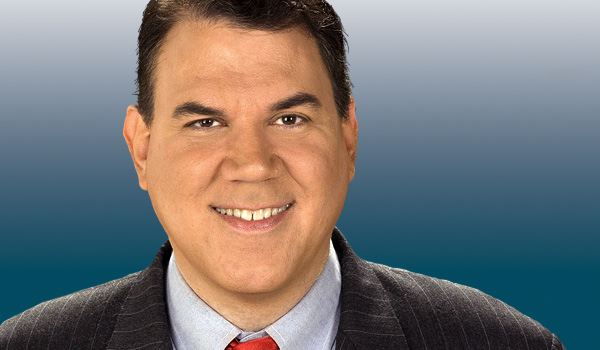
The Luncheon Society/Congressman Alan Grayson on Healthcare/LA-Napa Valley Grille/April 24, 2010

Add to FacebookAdd to DiggAdd to Del.icio.usAdd to StumbleuponAdd to RedditAdd to BlinklistAdd to TwitterAdd to TechnoratiAdd to Yahoo BuzzAdd to Newsvine

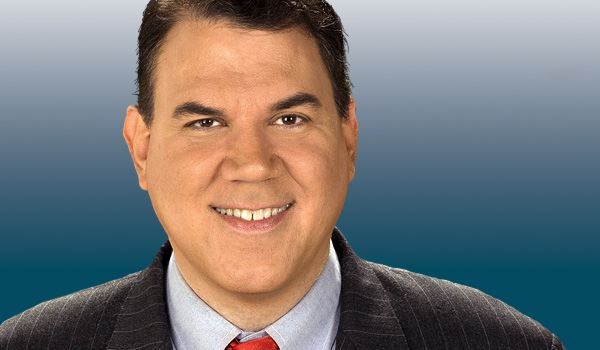
For Congressman Alan Grayson, the current representative from Florida’s 8th congressional district, Sam Rayburn’s cardinal rule of “to get along, go along” has little use to him. Instead Grayson has charted another path, freely speaking his mind on healthcare, Iraq, Afghanistan as well as other items on his mind. He is a man in a hurry.

An Unfiltered Progressive. Last year during the heat of the debate on healthcare, Alan Grayson suggested that the Republican alternative was thus: Don’t get sick, and if you do get sick, die quickly.”

The partisan response was swift and white hot. Some Republicans demanded that he apologize on the House floor.  “I would like to apologize,” he said. “I would like to apologize to the dead.”

Stating that 44,789 Americans die each year due to their inability to get healthcare insurance, the Congressman continued, “That is more than ten times the number of Americans who died in the war in Iraq, it’s more than ten times the number of Americans who died on 9/11. It happens every year. I apologize to the dead and their families that we haven’t voted sooner,” he said. Continue reading

The Luncheon Society/Mary Buffett on Warren Buffett’s Management Secrets/SF-One Market/March 31, 2010

Add to FacebookAdd to DiggAdd to Del.icio.usAdd to StumbleuponAdd to RedditAdd to BlinklistAdd to TwitterAdd to TechnoratiAdd to Yahoo BuzzAdd to Newsvine

Whenever Warren Buffett speaks at an event, somebody in the audience usually asks for a stock tip.  Buffett will pause, only to reply, “Please forgive me, I really don’t follow the stock market.”

The house will convulse in laughter, as it always does when the questions is posed. On the surface, it might appear odd or even counterintuitive that one of the world’s richest investors does not follow the stock market. However, what Buffett does—and does so well—is that he researches the company’s revenue picture and more importantly, searches for organizations that offers a durable competitive advantage for the long term.

It was a pleasure to have Mary Buffett , an old friend, join The Luncheon Society for a conversation on how Warren Buffett’s investment mind works. Mary, along with co-author David Clark have created a series of books under the banner of Buffettology, to help investors better understand how he grew Berkshire Hathaway into the investment powerhouse that it is today. 


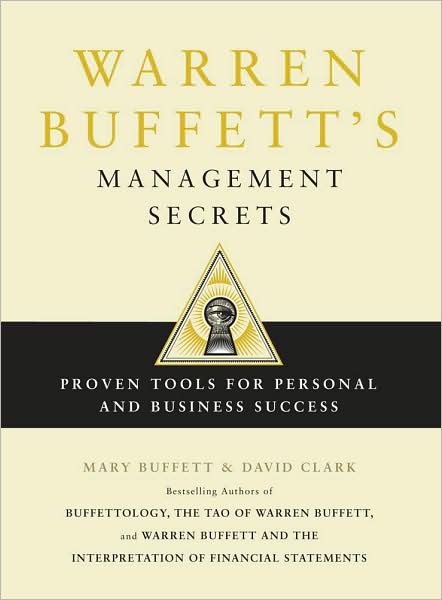
Mary’s latest best-selling book is “Warren Buffett’s Management Secrets: Proven Tools for Personal and Business Success,” which has had a smashing run on the business best seller lists and her books have been translated into 17 languages and published internationally by over a dozen publishing houses.   The question they ask is this: Can Warren Buffett’s decision-making offer a keyhole into how he makes his investment choices.  The answer is “yes.”

It is fair to say that Mary Buffett has lived an interesting life.  At a young age, she found herself working in the music industry alongside a variety of people including Phil Spector. Later, she served as the Managing Director at Playboy/After Dark Records and managed Hef’s music businesses. She later co-founded a post-production company called Independent Sound, which provided musical content for a wide range of clients, including a wide variety of commercials as well as motion pictures, like “Dancing with Wolves.” Continue reading

The Luncheon Society/ Film Historian, documentary filmmaker, and critic Richard Schickel on Clint Eastwood/LA-Chez Mimi, March 20, 2010

Add to FacebookAdd to DiggAdd to Del.icio.usAdd to StumbleuponAdd to RedditAdd to BlinklistAdd to TwitterAdd to TechnoratiAdd to Yahoo BuzzAdd to Newsvine

Richard Schickel tells a great story that reveals Clint Eastwood’s loyalty to Warner Brothers; it’s a tale few see in the entertainment industry, where players change agents as fast as their wives and “A list” actors get thrown under the bus after a subpar opening weekend.

Film has always been a major role in The Luncheon Society.  Whether it was Roger Ebert talking about the Oscars right before he fell ill in 2006, John Sayles discussing The Graduate while sitting next to the film’s producer Larry Turman, or Academy Award winner Lee Grant walking us through her struggles with the Hollywood Blacklist in the 1950’s, film is the keyhole that best understands the American psyche, complete with our catalogued strengths and weaknesses.

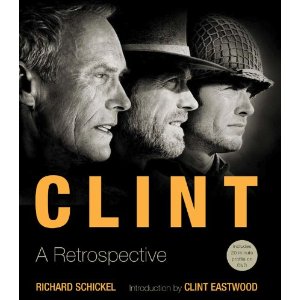
Schickel is one of the preeminent film historians in the industry and has reviewed films for Time and Life Magazine for the better part of four decades. Earlier this year, he penned a wonderful piece in Vanity Fair about Robert De Niro, Martin Scorsese, and how their partnership cemented Raging Bull as a film classic.  Schickel has authored over 30 books, produced, written and directed over 30 documentary films; and is found on the commentaries of over 40 DVDs.  He holds an honorary doctorate from The American Film Institute, won a British Film Institute Prize, based on his contribution to the art form. Richard’s latest book, a retrospective on Clint Eastwood’s long career with Warner Brothers, was published several weeks ago to wonderful reviews. We were thankful for the intercession of our friend Erika Schickel who put “the arm” on her father to meet The Luncheon Society.

Go ahead, make my movie. According to Schickel, after completing three “Dirty Harry” features during the 1970’s, Eastwood and his production company wanted to give the franchise a break and explore new ideas. He politely begged off repeated requests by Warner’s executive team to produce and direct another installment.


However during the early 1980’s, Warners made a number of ill-timed investments which included purchase of Atari. For awhile, the video game company flourished but soon tanked badly and dragged the Warner stock down nearly 70% from the previous high. Senior management was in deep trouble and Clint Eastwood had a long relationship to protect.  Everybody knew that another Dirty Harry sequel would be smash hit and it would staunch the hemorrhaging on Warner’s balance sheet. This time, Eastwood agreed to move forward.

The rest was history; the movie was called Sudden Impact and Eastwood’s signature line, Go ahead, make my day,” became the 6th most memorable line in a film according to the American Film Institute. Most importantly, the box office receipts helped Warners out of a tough scrape.

  Continue reading

The Luncheon Society/ Paul Rieckhoff Executive Director of Iraq Afghanistan Veterans of America (IAVA), on issues facing returnees/SF-Palio D’Asti, March 4, 2010

Add to FacebookAdd to DiggAdd to Del.icio.usAdd to StumbleuponAdd to RedditAdd to BlinklistAdd to TwitterAdd to TechnoratiAdd to Yahoo BuzzAdd to Newsvine 

Three days before the 82nd annual Academy Awards, Paul Rieckhoff discussed how American soldiers were portrayed in the Oscar-nominated film “The Hurt Locker,” As the founder and Executive Director of the Iraq Afghanistan Veterans of America  (IAVA), Rieckhoff has become the voice for those who fought overseas and are now readjusting to a new life stateside.

The Luncheon Society sat down with Paul when he was in San Francisco for his third meeting with us in three years, the prior being in Los Angeles and Manhattan.  The latter gathering shared with former Slate.com military affairs writer, Phil Carter, who later served during the early months of the Obama White House as the Assistant Secretary Defense for Detainee Affairs.

As “The Hurt Locker” tallied up 6 Academy Award after being nominated for 9, you could sense Paul’s frustration grow throughout the evening from comments posted on Facebook; in the final analysis, he believed, the filmmakers did not get Iraq right.

Rieckhoff rarely moonlights as a movie critic. However, he leads of the first and largest non-profit organization to support those who have fought in Iraq and Afghanistan. During the recent legislation to overhaul the GI Bill of Rights, Paul and the IAVA performed a pivotal service. They were the human face to the long-needed policy upgrade. Today, the IAVA has over 125,000 members and the organization is critical to those vets coming home.  

After Rieckhoff returned home in 2004 from his tour in Iraq, where he led hundred of combat patrols throughout Baghdad, he penned a critically acclaimed memoir Chasing Ghosts.   When he could not find an organization that he felt met the need to today’s returning troops, he founded the IAVA.

Why would Rieckhoff be frustrated by the movie portrayal of those fighting on the streets of Iraq? We live in a disengaged nation where the war effort is carried by the broad shoulders of the ½ of 1% who are doing the fighting and dying overseas.  The rest of us show our support through ribbons placed on our SUVs, which hardly constitutes a home front. With media coverage on the wane in Iraq and muted in Afghanistan, movie portrayals of those “in country” may be the only connection that bridges that narrow minority with the rest of us. Continue reading

The Luncheon Society/Gov. Michael Dukakis/LA-Napa Valley Grille, January 9, 2010/SF-One Market, February 26, 2010

Add to FacebookAdd to DiggAdd to Del.icio.usAdd to StumbleuponAdd to RedditAdd to BlinklistAdd to TwitterAdd to TechnoratiAdd to Yahoo BuzzAdd to Newsvine

At a Luncheon Society ™ event several years ago, Michael Dukakis talked about walking precincts. He could not understand those who favored high cost television ads or mailings over the elbow grease of building a grassroots operation. He believed that the best way to know the voters was to knock on their doors and ask for their support.

Dukakis insisted that a good grassroots organization could deliver an extra 5% turnout, which could be the difference between a win and a loss. Massachusetts, Dukakis noted, had 2,300 voter precincts and each precinct could have 5 block captains. If you built a volunteer army of 10,000 people, Dukakis noted, you became unbeatable. Those who solely relied on media campaigns and direct mail pieces often discovered their support was often a mile wide and an inch deep.  

However, one person took issue.  He said that California was too big, too much a “media state” and walking precincts was on the wane because there were too many high tech approaches to drive voter contact. Los Angeles was not like Boston or New York, the person continued. LA was 88 communities held together by miles of double-ribbon freeway and at the end of the day, walking all of those neighborhoods was just too hard.

“That’s not hard. I used to walk precincts when The Boston Strangler was on the loose,” Dukakis replied. “Now that’s hard.”

The Luncheon Society Regular.   Mike Dukakis has joined The Luncheon Society on a regular basis since 1999. In January, he led a discussion in Los Angeles for his 13th appearance and a month later in San Francisco for his 14th visit. In 2010, we hope to get him into Manhattan to visit the third pod of The Luncheon Society.

Over the years, The Luncheon Society  has quietly convened hundreds times for movable feasts at over 40 restaurants like Palio D’Asti, which is hidden away on California Street in San Francisco or Chez Mimi, which caters to the entertainment industry in Santa Monica. The kindness of a gracious friend allowed us to use The Lotos Club, one of the oldest literary clubs in the United States, frequented by the likes of Mark Twain and today residing in a Manhattan mansion once owned by the Vanderbilt family. Continue reading

The Luncheon Society/ The passing of Liz Carpenter.

Add to FacebookAdd to DiggAdd to Del.icio.usAdd to StumbleuponAdd to RedditAdd to BlinklistAdd to TwitterAdd to TechnoratiAdd to Yahoo BuzzAdd to Newsvine

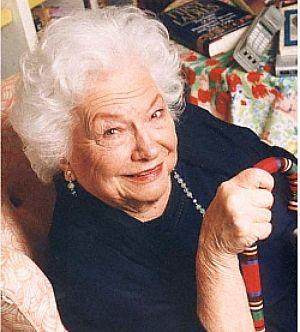
Last week, a wonderful person passed away after a long and rewarding life, both to her family and our nation.  How Liz Carpenter managed to shoehorn roughly six or seven lives into her nine decades remains a mystery, but we are better for it

In 2005, thanks to Liz’s daughter Christy Carpenter and her great friend Martha Whetstone, we were able to have a wonderful Luncheon Society gathering with her in San Francisco. She had just written a book, one of the many she had published over the years, and even though she told stories of the past, she was focused on the future.

Her mobility had been slowed by arthritis and she was now using a scooter to move around.  After we parked the car at a garage in Downtown San Francisco, she asked me if I wanted to ride along with her. I replied there was only room for one, but she convinced me to hop on the back.  So there I was, being escorted to a luncheon, standing on the back of her scooter, surfing our way through lunchtime pedestrian traffic on the sidewalk, and having a blast.

People forget that that behind her Texas humor, she saw some of life tough moments.  She was in Dallas when John Kennedy was assassinated.  When Lyndon Johnson emerged at Andrews Air Force Base and spoke as president for the first time, his first words were written by Liz Carpenter, who by then was serving as the Vice President’s Administrative Assistant, the first woman to hold that role. Those simple words captured the moment with humility and grace. It allowed Johnson to begin to heal the wounds of a nation still stunned by those terrible moments. Continue reading

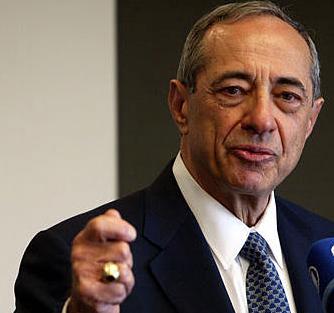
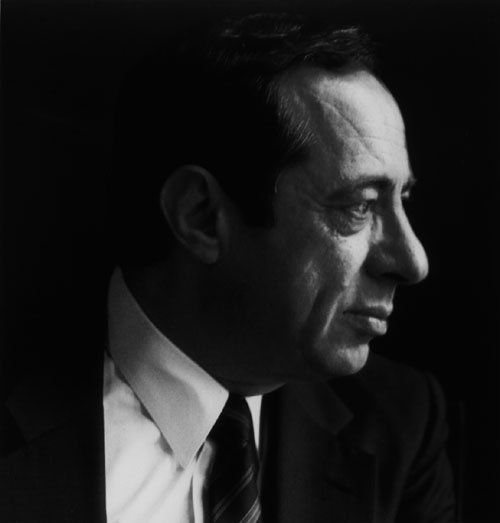
The Luncheon Society/Gov. Mario Cuomo/Blue Fin (Dinner) /February 19, 2010

Add to FacebookAdd to DiggAdd to Del.icio.usAdd to StumbleuponAdd to RedditAdd to BlinklistAdd to TwitterAdd to TechnoratiAdd to Yahoo BuzzAdd to Newsvine

We started the evening where we began lunch; The Blue Fin Restaurant in Manhattan’s Times Square.  Unlike lunch, our private room was no match for the dinner rush outside, but things quieted as people left for Broadway plays and musicals, which began promptly at 8 PM.

Regardless, the exterior din was well worth the wonderful crowd we had inside that room that evening; a number of folks came from Los Angeles to see both Cavett and Cuomo. As for me, I found myself sitting between one of my favorite writers, Gay Talese, and former supermodel Carmen Dell’Orefice, who could (and should) run a finishing school on how people are supposed to behave. It just does not get any better than that.

I think we will put something together in New York so we can gather for a nightcap (or two) after experiences like these.

Rather than describe the dinner in great detail, I will let Governor Cuomo’s gracious words speak for themselves. 

REMARKS BY GOVERNOR MARIO M. CUOMO
“THE LUNCHEON SOCIETY” DINNER

We were invited by Bob McBarton to respond to the question: “Has political bi-partisanship completely broken down in the nation’s Capitol because ideological purity too often replaces intelligent collaboration?”

It is a vital question that every day becomes more serious.  Most recently it was focused upon by Evan Bayh. I believe I have had some experience with that kind of troublesome rigidity ─ Bayh ─ and many others are talking about.

In my early years as a lawyer I enjoyed the struggle called “litigation” immensely. Don’t give an inch!  The competitiveness, the court as coliseum… “The thrill of victory; the agony of defeat”. 

That muscular intellectual kind of combat had a primal attraction for me.  I thought things like mediation and arbitration that displaced litigation were a concession of weakness that should be carefully avoided.

Over time however, I’ve been able to overcome a number of different primal instincts… an obsession with the virtues of rigidity and litigation is one of them. 

After years of experience I concluded that relentless insistence on vigorous litigation reflects a human failure to be able to arrive at a wiser consensus, compromise, and peaceful coexistence.

Continue reading

The Luncheon Society/Dick Cavett/Blue Fin/New York/February 19, 2010

Add to FacebookAdd to DiggAdd to Del.icio.usAdd to StumbleuponAdd to RedditAdd to BlinklistAdd to TwitterAdd to TechnoratiAdd to Yahoo BuzzAdd to Newsvine

Dick Cavett can tell a great story. The best ones center on his long friendship with Groucho Marx, who he met after the funeral of playwright George S. Kaufman.  In one, Groucho was about to introduce his brother Chico to Tallulah Bankhead, the reigning Queen of Broadway and daughter of then-Speaker of the House William Bankhead. To understand Chico Marx (which is pronounced Chick-o), he was a profligate skirt chaser, vaudevillian, gambler, and orchestra leader whose wife knew that he slept with anything that moved.

Tallulah Bankhead, who was at the start of her career, was no slouch herself in that department, but few knew it yet. She was an attractive and wild force of nature, the kind of tornado that took out farms, mobile home parks, and marriages of all shapes and sizes. To describe Bankhead to a modern audience, she was the “Mother of all Train Wrecks,” equal parts Paris Hilton, Amy Winehouse and Lindsay Lohan but also had a tremendous talent that spanned four decades on stage and screen. Even after death she lives on, being played by Kathleen Turner and others in various stage productions of her life.

That night, Groucho pleaded with his brother not to sully the reputation of Miss Bankhead and he promised to behave. According to Cavett’s book, the conversation began innocently enough with a simple introduction.

“Miss Bankhead,” Chico said. “Mr. Marx,” Tallulah replied.

Grateful the storm had passed, everybody relaxed until Chico said, “You know, I really want to sleep with you (which was the PG version).” Without missing a beat, she replied, “And so you shall, you old-fashioned boy.”

Now, that’s a story.

Continue reading
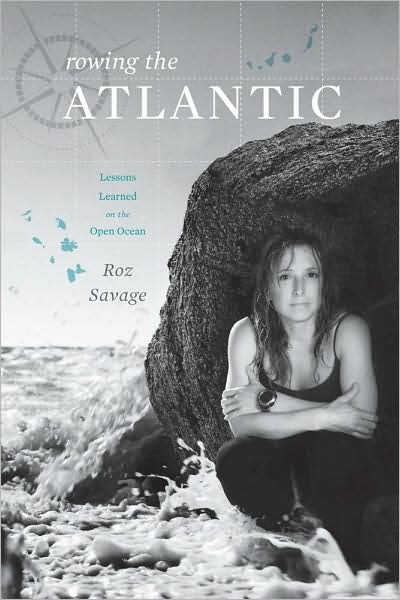
The Luncheon Society/Adventurer Roz Savage/SF-Fior D’Italia/February 8, 2010/Santa Monica-Chez Mimi/April 10, 2010

Add to FacebookAdd to DiggAdd to Del.icio.usAdd to StumbleuponAdd to RedditAdd to BlinklistAdd to TwitterAdd to TechnoratiAdd to Yahoo BuzzAdd to Newsvine

Imagine you are on the adventure of a lifetime, rowing across the Atlantic Ocean alone in a 24 foot rowboat to test yourself against the elements.  You are completely isolated except for a satellite phone a GPS transponder and the occasional visit from one of the support craft. Halfway through, your two primary oars (plus both backups) have snapped, your camp stove has stopped working, and your satellite phone is cold dead.  

Lashed by fierce storms and the occasional rogue wave, your only connection to humanity is a small GPS blip that charts your daily path to friends back home.  There is no going back.

How do you cope with isolation and loneliness when you still have two months worth of rowing in front of you? With a fist full of calluses and a body that is wracked by aches and pains, do you even consider rowing across the Pacific?  Of course.

The Luncheon Society ™ has been home to those who have climbed life’s tall peaks. Jim Sano led treks that followed the footpaths of Sir Ernest Shackleton and Didrik Johnck snapped the Time Magazine cover photo of Erik Weihenmeyer, a blind mountain climber who successfully made it to the summit of Mount Everest in 2001.  When you add the mix the astronauts, cosmonauts, and other space pioneers that have joined us over the years, we’ve cheered them all from the safety of a private room at a great restaurant. Continue reading