The Luncheon Society/ Jill Tarter and SETI Research/SF-Fior d’Italia February 21, 2013/LA-Napa Valley Grille December 17, 2013

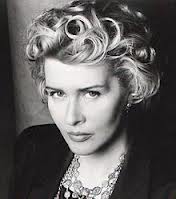
Jill TarterJill Tarter only needs to be right once.  In a universe where there are more stars in the sky than grains of sand on our beaches, is does intelligent life exists out there?

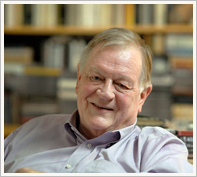
As a longtime member of The Luncheon Society, we were pleased that she was able to join us in both San Francisco and Los Angeles for an update on SETI as well as the latest findings from the Kepler spacecraft.

As the retiring Director of SETI Research at the SETI Institute and the winner of the 2009 TED Award, Jill believes that time is on her side.  We concur.

Jill served as the model for Jodie Foster in the Robert Zemeckis movie Contact , a fictional account of what might happen should an alien message find its way to our home planet, based on a novel  written by Carol Sagan. Much is to be discovered.

It is a good bet that microbial life will be found within the moons orbiting the gaseous outer planets of Saturn and Jupiter.  As you read this, there is a hunt for microbial life or existence of past life on Mars, especially since unmistakable signs of ancient rivers and lakes have been discovered.

Kepler’s planet hunting probe studied a section of sky no larger than your extended fist and found 134 confirmed exoplanets in 76 stellar systems, with another 3,200 potential planets that are awaiting further study.  With that in mind, NASA has concluded that there might be as many as 40 million earth-sized planets, with roughly a quarter of them orbiting around star not unlike our sun.  Astronomers have identified 1,055 exoplanets, and more are on the way. Continue reading

The Luncheon Society-NY/Andrew Blum on “Tubes: A Journey to the center of the Internet.”/Blue Water Grill/2.20.13

Tubes coverThe Luncheon Society kicked off its New York gatherings with Andrew Blum, the author of “Tubes, A Journey to the center of the Internet.”

Last year, I found myself listening to a Terry Gross interview with Andrew and it was a wonderful and enlightening conversation about the mechanics of the internet, something we take for granted but cannot explain how it works.

It just is.   Watch his TED talk on the Internet to get an idea about the platform of “old fashioness” that drives our modern communications.

The title comes from a quote from former Alaska Senator Ted Stevens, who believed that  the internet was comprised of a whole bunch of “tubes.”  While he was ridiculed at the time, Andrew Blum essentially confirms Stevens assessment.  Beneath the internet protocols, the fiber optic relays, and whatever else is down there that nobody understands, he essentially got it right.

Here is the book jacket synopsis:  “When your Internet cable leaves your living room where does it go?

Andrew BlumAlmost everything about our day-to-day lives—and the broader scheme of human culture—can be found on the Internet. But what is it physically? And where is it really? Our mental map of the network is as blank as the map of the ocean that Columbus carried on his first voyages. The Internet, its material nuts and bolts, is an unexplored territory. Until now. Continue reading

The Luncheon Society-LA/Tere Tereba on “Mickey Cohen: The Life”/Napa Valley Grille/1.26.13

mickey-cohen-resize

It is always great to support a member of The Luncheon Society when they have a book that comes out to well-deserved acclaim.  Such was the case of Tere Tereba, who we first met several years ago at a TLS gathering in Santa Monica at Mimi’s—a restaurant that is long-missed for its bungalow style rooms as wonderful owner—where she was the longtime companion of Jerry Leiber, of Leiber and Stoller.

Tere TerebaFor us, Mickey Cohen is still one of the great mysteries of the underworld and films of the days focused on the five families of New York and often turned a blind eye to what was going on in their own backyards—for good reason.  Unlike the fictional version portrayed by Sean Penn in Gangster Squad, the real Mickey Cohen was a far more complex figure, who operated and socialized on many levels.

Her book jacket synopsis gives you a good background of what her book is all about.

“Mickey Cohen: The Life and Times of LA’s Notorious Mobster” is a seductive, premium octane blend of true crime and Hollywood lore that spins around a wildly eccentric mob boss.  When Bugsy Segal was executed, ruthless Mickey Cohen a former pro boxer and cunning provocateur, took over the criminal activity in LA, a move sanctioned by Meyer Lansky and frank Costello.  Attaining immense power and dominance from the late 1940’s until the 1976, the semi-literate Angelino became an above –the-fold-newspaper name, accumulating 1,000 front pages in Los Angeles papers alone, and hundreds of articles in national and international periodicals. Continue reading
The Luncheon Society–SF/Richard Schickel on Steven Spielberg/1.15.13/Palio d’Asti

SpielbergFilm has long played a paramount role with The Luncheon Society.  This year, we were pleased that Richard Schickel joined The Luncheon Society for another great gathering, this time to talk about his retrospective on Steven Spielberg.

Schickel’s books remind readers of a more glamorous time in Hollywood because they are these large glossy endeavors that draw the reader into a great film story.

Schickel has a deft touch of capturing the full arc of a creative life and nobody knows the inner working of the studios (especially Warner Brothers where he created the well-received documentary “You Must Remember This.”) and I am pleased to have gotten to know him over the years.

We gave lost couSchickelnt on the number of books Richard Schickel has written over the years and we believe that the number is somewhere north of 40.  He has been equally prodigious in creating documentary films and commentary for DVD’s, a market which has sadly crashed in this Netflix era. Some of the books, like that of Bette Davis, look back at one of the giants of Hollywood, who kept acting long after she outlived most of her rivals. Others, like Schickel’s “Conversations with Scorsese,” breaks each of his films into a series on in-depth conversations between the subject and author.  It represents the sum total of an artist’s progress and each film has its own chapter. Continue reading
The Luncheon Society-SF/James Owen Weatherall/The Physics of Wall Street/1.9.13/Fior d’Italia

Weatherall bookWe are catching up on our narratives on The Luncheon Society for 2013 and we know that we are terribly behind.  We should be quickly caught up. 

James Owen WeatherallPerhaps the real Masters of the Universe are physicists after all.  Author James Owen Weatherall joined us for a conversation in San Francisco for his new book,  “The Physics of Wall Street, a Brief History of Predicting the Unpredictable.”

What made gathering with James Owen Weatherall more fun is that we were joined by long-time Luncheon Society member Elwyn Berlekamp , one of the founders of The Medallion Fund as well as professor emeritus of mathematics and EECS at the University of California, Berkeley. Berlekamp is known for his work in coding theory and combinatorial game theory.

James Owen Weatherall is a physicist, philosopher, and mathematician. He holds graduate degrees from Harvard, the Stevens Institute of Technology, and the University of California, Irvine, where he is presently an assistant professor of logic and philosophy of science and a member of the Institute for Mathematical Behavioral Sciences. He has written for Slate and Scientific American.

Below is the opening excerpt from James Owen Weatherall’s, “The Physics of Wall Street, a Brief History of Predicting the Unpredictable.”

Introduction: Of Quants and Other Demons 

WARREN BUFFETT ISN’T the best money manager in the world. Neither is George Soros or Bill Gross. The world’s best money manager is a man you’ve probably never heard of — unless you’re a physicist, in which case you’d know his name immediately. Jim Simons is co-inventor of a brilliant piece of mathematics called the Chern-Simons 3-form, one of the most important parts of string theory. It’s abstract, even abstruse, stuff — some say too abstract and speculative — but it has turned Simons into a living legend. He’s the kind of scientist whose name is uttered in hushed tones in the physics departments of Harvard and Princeton. Continue reading
The Luncheon Society/Michael Dukakis/LA-Napa Valley Grille 1.5.13/SF-Palio D’Asti 2.23.13

Add to FacebookAdd to DiggAdd to Del.icio.usAdd to StumbleuponAdd to RedditAdd to BlinklistAdd to TwitterAdd to TechnoratiAdd to Yahoo BuzzAdd to Newsvine

Editor’s note—Look for a bunch of narratives coming up quickly as we update our TLS site.  There are roughly 20 new ones on their way.

Michael DukakisFor Mike Dukakis, the 2012 election was one of the happiest in his life, and that includes a number of successful campaigns on his own behalf.  Pleased as he was, he was certain that it would be a close night. Over the years, be it in state or national races, Democrats found ways to let leads slip away in the 11th hour.  In 1968, Nixon would have lost had the race taken place 48 hours later. In 1976, Carter almost lost the race after building up a 34 point lead at convention.

The 2012 election provided a double-win with Elizabeth Warren for the Senate and Barack Obama meant a victory for grass roots politics, something that Mike Dukakis has preached since he began his entire political career as a Selectman from Brookline.

Michael Dukakis 2003Mike Dukakis joins us on several occasions each year, with an early January meeting in Los Angeles and a San Francisco gathering in late February to coincide with his granddaughter’s birthday. The three-time Massachusetts Governor and 1988 Presidential nominee notes that the Obama team learned from their mistakes and missteps in 2010 midterms and came roaring back to win.

The economy is still a long way from its full cylinder strength of the late 1990’s.  We are coming out of the worst economic mess since the Great Depression.  Worse for Obama, the collapse took place only months before he won the presidency in 2008, as opposed to Herbert Hoover, whose economic collapse took place early in his term.

Being the first African-American President at a time of economic instability, where members of the opposition did not even both to hide the polite bigotry of code words only made things worse.   In short order Obama, restructured the auto industry, engineered draw-downs in both Afghanistan and Iraq, engineered a risky take-down of Osama bin Laden, passed healthcare reform, and doubled the stock market.  Had any Republican accomplished that, they would be chiseling out his profile on the side of Mt Rushmore. Continue reading

The Luncheon Society—SF/Academy Award winning Jeremy Larner and the 40th anniversary of “The Candidate”/Palio d’Asti/November 5, 2012

“Son, you’re a politician.”

It’s the look of horror that appears on Robert Redford’s face that says it all.  Redford’s character, Bill McKay, has beaten up Crocker Jarmon in a statewide debate.  Jarmon, now running for his 4th term as Senator, now realizes that he is the race of his life.

After the debate, McKay’s father—a former California Governor—pays him the ultimate compliment, knowing that his comments would probably cut to the bone.  By becoming a politician, McKay has now gone the route that he would never travel; he has essentially sold his soul for little in return.  On the evening when Redford’s McKay pulls off the upset over Jarmon, he escapes to an empty hotel room with his mercenary campaign manager, a Stanford classmate played by Peter Boyle, and asks, “What do we do now?”

Since we were on the eve of the 2012 presidential election, we thought it would be fun to look back at a political campaign classic.  In 1972, director Michael Ritchie and Robert Redford debuted “The Candidate,” a film released to strong reviews.  It was a script written by Jeremy Larner and we got together with him at Palio d’Asti in San Francisco.

“The Candidate” is to political junkies as “The Godfather” is for everybody else. There are certain moments within that movie that are acted so realistically and filmed with an eye of a documentarian.  Most films about political campaigns have an artificial feel about them as if they were created by those whose only connection with the political world came from stepping into a voting booth. Continue reading

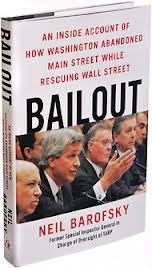
The Luncheon Society-NY/Neil Barofsky–Chief Watchdog of the government’s TARP program and author of “Bailout: An Inside Account of How Washington Abandoned Main Street While Rescuing Wall Street/Blue Water Grill/October 18, 2012

Bailout Book CoverJim Day, a great lawyer, a good friend, and longtime member of The Luncheon Society suggested that we should have Neil Barofsky join The Luncheon Society for a conversation.  It was a wise choice. His book, Bailout: An Inside Account of How Washington Abandoned Main Street While Rescuing Wall Street, was published in July 2012.  In this excerpt, Barofsky explains the problems he saw with the Home Affordable Modification Program. HAMP — implemented in March 2009 as part of the Making Homes Affordable Program — was a loan modification program designed to reduce monthly payments for homeowners who were delinquent or at risk for delinquency in repaying their mortgages.  This excerpt was “borrowed” from the Bill Moyers.

Below is an excerpt from Bailout

“The flood of trial modifications caused the servicers’ systems to first buckle and then break as borrowers seeking to make their modifications permanent flooded the underequipped servicers with millions of pages of documents. The servicers’ performance was abysmal: they routinely “lost” or misplaced borrowers’ documents, with one servicer telling us that a subcontractor had lost an entire trove of HAMP materials. Borrowers routinely complained that they’d had to send their documents to their servicers multiple times — a survey by ProPublica found that borrowers had to submit documents on average six times — but the servicers would still claim that the documents had never been received and then foreclose. The sheer volume also meant that fully qualified borrowers got lost in the storm; servicers would later confess to us that the sheer volume from Treasury’s verbal trial modification surge made it nearly impossible for them to separate the modifications that fully qualified and had a chance to be successful from those that were hopeless.

Making matters even worse, Treasury all but paved the way for outright fraud by ignoring my recommendation that it kick off HAMP with a broad nationwide television and radio advertising campaign that would educate home owners about program details and warn them of the dangers of program-related fraud. Continue reading

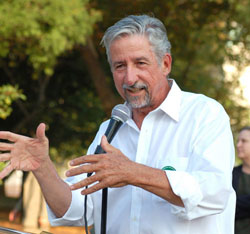
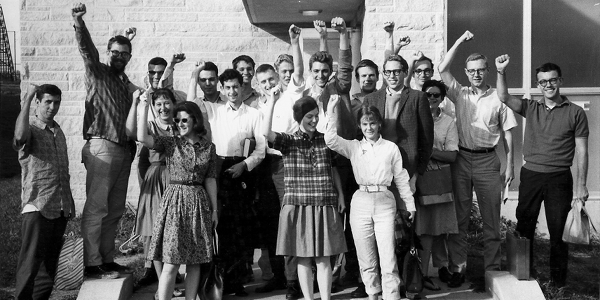
The Luncheon Society—LA/Tom Hayden and the 50th anniversary The Port Huron Statement/Napa Valley Grille/October 8, 2012

tom-haydenThe 1960’s began when The Port Huron Statement was completed.

Years ago, folksinger Phil Ochs wrote a biting song titled, “Love me I’m a Liberal,” that skewers the 1950’s and early 1960’s suburban liberals whose actions never rose to their ideals.  Ochs wrote about liberals who were in favor of Civil Rights so long as it happened in somebody else’s neighborhood or people who favored their union but would not fight for others as they strived for social change.

What Tom Hayden and his colleagues crafted in 1962 was an attempt to put these abstracts into action. With that, The Port Huron Statement was born. He document became the founding statement of the Students for a Democratic Society (SDS).  Written in the Michigan community that bears its name, it was a series of thought pieces that desired to address the racial segregation and Cold War ethic that drove decisions coming out of Washington.  As we look back with modern eyes, some of the most glaring social ills of the 1960’s are one yet others remain.Port Huron Statement

We forget that when the decade began, we still lived with our own explicit version of apartheid in the South and a quiet more subtle and implicit variety up North. If you were African American or non-white in the South, there were daily reminders of antebellum life seen through modern slights and social insults because life might have been separate but it was never ever equal. African Americans in the South were legislatively barred from many of the fruits of liberty those on the other side of the color line freely enjoyed.  While Jim Crow did not legislatively extend itself into the North, racism was alive in well in places like Chicago, Boston, and New York, as well as in towns and hamlets throughout every state north of the Rappahannock. It was easier for Northern fingers to point at the South because the Bull Connors and the Orville Faubus’ of the world never cloaked their hatred in the polite language used elsewhere.

Below is an excerpt from “Eyes on the Prize” from PBS

Continue reading

The Luncheon Society—SF/ Hanna Rosin and The End of Men/Palio D’Asti/September 20, 2012

Add to FacebookAdd to DiggAdd to Del.icio.usAdd to StumbleuponAdd to RedditAdd to BlinklistAdd to TwitterAdd to TechnoratiAdd to Yahoo BuzzAdd to Newsvine

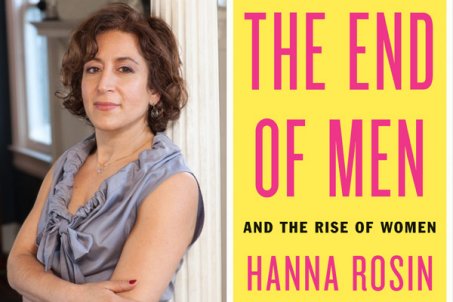
End of Men bookEditor’s Note: We are catching up on our narratives after a long absence. Over the next few weeks we will have updates from our past Luncheon Society gatherings.

Since the dawn of time, it seemed that women always found themselves several paces behind men.  Part of it was societal, most was legislative, but writer Hanna Rosin makes the case that in this Post-Industrial Information Age, women have the intuitive tools, the skills, and the drive to pull ahead.

Only a generation ago, women found it hard to get their own credit cards or to purchase a home, without the signature of a husband or the explicit consent of her father.  However, as Hanna writes, something earth-changing took place in 2010 which was essentially ignored in the mainstream media.  This was first year that women surpassed men in the workplace.  More tellingly, the trendlines suggest that this is not some fluke.  When it comes to earning undergraduate degrees, three of the five diplomas issued go to female graduates.  In her book “The End of Men,” Hanna Rosin makes the chase that we are living in the eye of one of the most transformative gender shifts since man emerged from the caves built the modern world; women are poised to take over.

So what does this mean? In Rosin’s book, she makes the case that women have latched on to the opportunities unavailable to their mothers and grandmothers generations earlier. Her book began as a 10,000 word thought piece in The Atlantic in the summer of 2010 and based on the chatter that developed, she was encouraged to expand it into a full length book.  Rosin is no stranger to the revolutionary idea and as the co-founder of Double X Blog for Slate Magazine, she has explored gender issues for more than a decade. While she may paint with a broad brush at times, she elevates a discussion both men and women alike should read.  She even brings the gender conversation into clearer focus by including her husband and son.

We have lived in a world where there has been an appreciation for things male.  Who can forget the opening scene of The Godfather, when Luco Brazi—who served as The Don’s brutal muscle—practiced his lines, hoping that Connie’s first child be a masculine son.  We see it in the crowned heads of Europe who proffered the rights of succession to a male child, even if there were several older (and able) princesses in the wings.  Had George VI and Queen Elizabeth produced a male child—even years after the birth of Princess Margaret—he and not the then-Princess Elizabeth would have succeeded her father. This week in The Netherlands, Queen Beatrix abdicated in favor of her son Willem-Alexander.  After serving 33 years after her mother in 1980, the rights of succession of the Dutch Royal family are now gender neutral.  Princess Catharina-Amalia will someday succeed her father, regardless of gender and any other children which may emerge. Change even comes to institutions that have been frozen by centuries of tradition. Continue reading