Category Archives: Uncategorized

POSTPONED /The Luncheon Society/Christopher Hitchens/Los Angeles and San Francisco

I had a conversation with the publisher for Christopher Hitchens and he told me that his west coast tour has been postponed. I am told he has a personal issue that requires his attention. Sadly that means that the planned luncheons for San Francisco for June 26th and Los Angeles on June 29th are also postponed.

The book tour (and the luncheons that come with it) will be rebooted sometime in the summer or early fall. Once we get the details I will communicate them outward and the usual merriment and mayhem will follow.

In the meantime enjoy this tidbit


Postponements happen from time to time and while they are disappointing, there are other amazing luncheons that are in the planning process.

So stay tuned!

The Luncheon Society ™ is a series of private luncheons and dinners that take place in San Francisco, Los Angeles, Manhattan, and Boston.  We essentially split the costs of gathering and we meet in groups of 20-25 people. Discussions center on politics, art, science, film, culture, and whatever else is on our mind. Think of us as “Adult Drop in Daycare.” We’ve been around since 1997 and we’re purposely understated. These gatherings takes place around a large table, where you interact with the main guest and conversation becomes end result.  There are no rules, very little structure, and the gatherings happen when they happen. Join us when you can.

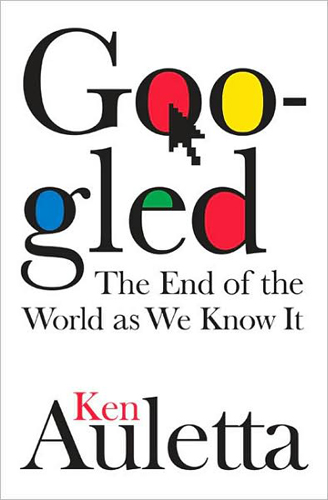
The Luncheon Society/ The New Yorker’s Ken Auletta on Google and the Media/Manhattan-The Century Club/June 3, 2010

Add to FacebookAdd to DiggAdd to Del.icio.usAdd to StumbleuponAdd to RedditAdd to BlinklistAdd to TwitterAdd to TechnoratiAdd to Yahoo BuzzAdd to Newsvine

In 1998, Ken Auletta sat down with Bill Gates for a extended New Yorker interview while Microsoft was on trial for allegedly violating the Sherman Anti-Trust Act.  At issue was a question as simple as it was complex: had Microsoft abused its de facto monopoly within the PC operating system market?

During the interview, Auletta asked Gates “what scared him, what kept him up late at night?” The answer surprised Auletta because it ripped away the veneer of paranoia that pervaded every corner of high tech. As Gates grabbed a Diet Coke for himself (and neglected to offer one to Auletta) he was worried about innovations he could not see.


Gates believed Microsoft could handle Apple, Netscape, or Yahoo; it could acquire what it could not crush. However, Gates worried that somewhere, some place there were a couple of young kids in a garage inventing something that would render Microsoft obsolete. Continue reading

The Luncheon Society/Roz Savage completes her solo Pacific row.

Add to FacebookAdd to DiggAdd to Del.icio.usAdd to StumbleuponAdd to RedditAdd to BlinklistAdd to TwitterAdd to TechnoratiAdd to Yahoo BuzzAdd to Newsvine

Our Luncheon Society friend Roz Savage completed her solo row across the Pacific Ocean last week.  She broke the voyage into three legs, the first from San Francisco to Hawaii in 2008, the second, from Hawaii to Kiribati in 2009, and finally the third leg from Kiribati to Madang in Papua New Guinea, which she completed on Friday.

All in all, Roz covered 8,000 miles in a 23ft boat. To view the Luncheon Society summary from her meetings with the Los Angeles and San Francisco groups, link here.  


As quoted in today’s London Daily Mail, “I’m already starting to think about the next one.” Roz previously crossed the Atlantic in 103 days and uses her trips to promote environmental causes.

Well done, Roz; well done indeed.

The Luncheon Society ™ is a series of private luncheons and dinners that take place in San Francisco, Los Angeles, Manhattan, and Boston.  We essentially split the costs of gathering and we meet in groups of 20-25 people. Discussions center on politics, art, science, film, culture, and whatever else is on our mind. Think of us as “Adult Drop in Daycare.” We’ve been around since 1997 and we’re purposely understated. These gatherings takes place around a large table, where you interact with the main guest and conversation becomes end result.  There are no rules, very little structure, and the gatherings happen when they happen. Join us when you can.

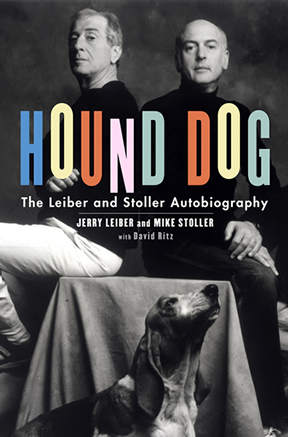
The Luncheon Society/Rock and Roll Hall of Fame Songwriters Jerry Leiber and Mike Stoller/LA-Chez Mimi/May 13 2010

Add to FacebookAdd to DiggAdd to Del.icio.usAdd to StumbleuponAdd to RedditAdd to BlinklistAdd to TwitterAdd to TechnoratiAdd to Yahoo BuzzAdd to Newsvine

It’s an amazing story, one of those great tales from the early days of Rock and Roll. 

In 1956, Mike Stoller took his wife to France for 3 months.  After wandering around the countryside in late spring and early summer they return home on the Italian liner, the  SS Andrea Doria. It was the largest, the most spectacular, and safest of all of the Italian liners.  As Mike and his wife crossed the Atlantic, he purchased a copy of A Night to Remember, a best-seller by Walter Lord and considered the definitive reading on the sinking of the Titanic.

At 11 pm on July 26th, the Stockholm, a smaller passenger liner, crashed into the Andrea Doria and it began to list starboard and take on water. So instead of reading about the Titanic in Walter Lord’s book, he is actually living it. He thought, “That’s it; I’m a goner and I’m going down on the Titanic just like all of those poor souls who perished at the bottom of the Atlantic.” 

However, the crash took place off the coast of Massachusetts in a heavy shipping lane and within a short period, there was a massive effort to rescue the passengers before if sank to the bottom of the Atlantic 11 hours later.

Mike Stoller and his wife were rescued and they met Jerry Leiber at the dock in New York.  Leiber brought a full set of dry clothes for both Mike and his wife and once he made sure that his friends were okay, he exclaimed, “You won’t believe this, but Hound Dog  is a #1 hit!” Stoller was taken aback and said, “You mean Big Mama Thornton’s version,” who did it in 1953?  “No,” Leiber replied, “Its Elvis Presley.”  “Elvis Presley?” Stoller replied incredulously, “who’s that?”

Watch Big Mama’s version.  She simply whacks Elvis with big ol’ purse of hers. Look for a young Buddy Guy on that video. Nobody messed with her.


Stoller had been out of the country and had not seen the explosion of “Black Music” that was recorded by White Artists like Elvis.  In the span of 12 hours, Mike Stoller went from the brink of death to superstardom. Continue reading

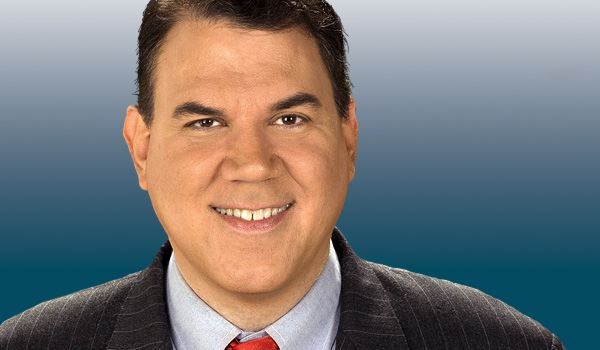
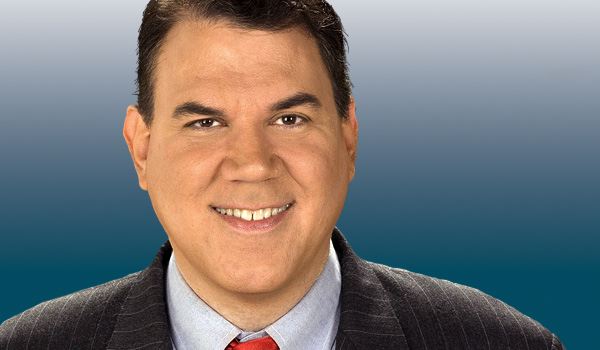
The Luncheon Society/Congressman Alan Grayson on Healthcare/LA-Napa Valley Grille/April 24, 2010

Add to FacebookAdd to DiggAdd to Del.icio.usAdd to StumbleuponAdd to RedditAdd to BlinklistAdd to TwitterAdd to TechnoratiAdd to Yahoo BuzzAdd to Newsvine

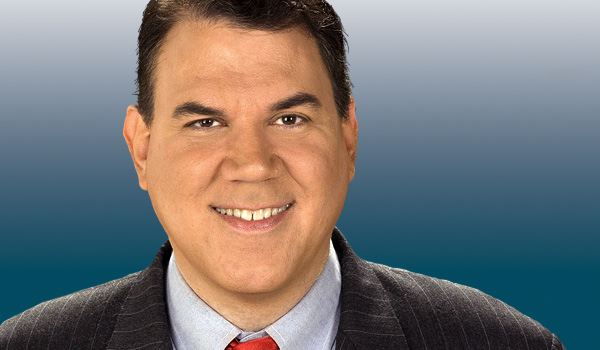
For Congressman Alan Grayson, the current representative from Florida’s 8th congressional district, Sam Rayburn’s cardinal rule of “to get along, go along” has little use to him. Instead Grayson has charted another path, freely speaking his mind on healthcare, Iraq, Afghanistan as well as other items on his mind. He is a man in a hurry.

An Unfiltered Progressive. Last year during the heat of the debate on healthcare, Alan Grayson suggested that the Republican alternative was thus: Don’t get sick, and if you do get sick, die quickly.”

The partisan response was swift and white hot. Some Republicans demanded that he apologize on the House floor.  “I would like to apologize,” he said. “I would like to apologize to the dead.”

Stating that 44,789 Americans die each year due to their inability to get healthcare insurance, the Congressman continued, “That is more than ten times the number of Americans who died in the war in Iraq, it’s more than ten times the number of Americans who died on 9/11. It happens every year. I apologize to the dead and their families that we haven’t voted sooner,” he said. Continue reading

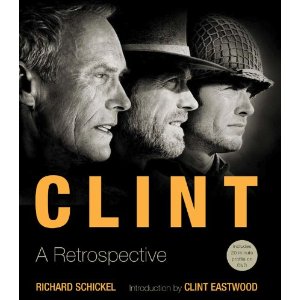
The Luncheon Society/ Film Historian, documentary filmmaker, and critic Richard Schickel on Clint Eastwood/LA-Chez Mimi, March 20, 2010

Add to FacebookAdd to DiggAdd to Del.icio.usAdd to StumbleuponAdd to RedditAdd to BlinklistAdd to TwitterAdd to TechnoratiAdd to Yahoo BuzzAdd to Newsvine

Richard Schickel tells a great story that reveals Clint Eastwood’s loyalty to Warner Brothers; it’s a tale few see in the entertainment industry, where players change agents as fast as their wives and “A list” actors get thrown under the bus after a subpar opening weekend.

Film has always been a major role in The Luncheon Society.  Whether it was Roger Ebert talking about the Oscars right before he fell ill in 2006, John Sayles discussing The Graduate while sitting next to the film’s producer Larry Turman, or Academy Award winner Lee Grant walking us through her struggles with the Hollywood Blacklist in the 1950’s, film is the keyhole that best understands the American psyche, complete with our catalogued strengths and weaknesses.

Schickel is one of the preeminent film historians in the industry and has reviewed films for Time and Life Magazine for the better part of four decades. Earlier this year, he penned a wonderful piece in Vanity Fair about Robert De Niro, Martin Scorsese, and how their partnership cemented Raging Bull as a film classic.  Schickel has authored over 30 books, produced, written and directed over 30 documentary films; and is found on the commentaries of over 40 DVDs.  He holds an honorary doctorate from The American Film Institute, won a British Film Institute Prize, based on his contribution to the art form. Richard’s latest book, a retrospective on Clint Eastwood’s long career with Warner Brothers, was published several weeks ago to wonderful reviews. We were thankful for the intercession of our friend Erika Schickel who put “the arm” on her father to meet The Luncheon Society.

Go ahead, make my movie. According to Schickel, after completing three “Dirty Harry” features during the 1970’s, Eastwood and his production company wanted to give the franchise a break and explore new ideas. He politely begged off repeated requests by Warner’s executive team to produce and direct another installment.


However during the early 1980’s, Warners made a number of ill-timed investments which included purchase of Atari. For awhile, the video game company flourished but soon tanked badly and dragged the Warner stock down nearly 70% from the previous high. Senior management was in deep trouble and Clint Eastwood had a long relationship to protect.  Everybody knew that another Dirty Harry sequel would be smash hit and it would staunch the hemorrhaging on Warner’s balance sheet. This time, Eastwood agreed to move forward.

The rest was history; the movie was called Sudden Impact and Eastwood’s signature line, Go ahead, make my day,” became the 6th most memorable line in a film according to the American Film Institute. Most importantly, the box office receipts helped Warners out of a tough scrape.

  Continue reading

The Luncheon Society/ Paul Rieckhoff Executive Director of Iraq Afghanistan Veterans of America (IAVA), on issues facing returnees/SF-Palio D’Asti, March 4, 2010

Add to FacebookAdd to DiggAdd to Del.icio.usAdd to StumbleuponAdd to RedditAdd to BlinklistAdd to TwitterAdd to TechnoratiAdd to Yahoo BuzzAdd to Newsvine 

Three days before the 82nd annual Academy Awards, Paul Rieckhoff discussed how American soldiers were portrayed in the Oscar-nominated film “The Hurt Locker,” As the founder and Executive Director of the Iraq Afghanistan Veterans of America  (IAVA), Rieckhoff has become the voice for those who fought overseas and are now readjusting to a new life stateside.

The Luncheon Society sat down with Paul when he was in San Francisco for his third meeting with us in three years, the prior being in Los Angeles and Manhattan.  The latter gathering shared with former Slate.com military affairs writer, Phil Carter, who later served during the early months of the Obama White House as the Assistant Secretary Defense for Detainee Affairs.

As “The Hurt Locker” tallied up 6 Academy Award after being nominated for 9, you could sense Paul’s frustration grow throughout the evening from comments posted on Facebook; in the final analysis, he believed, the filmmakers did not get Iraq right.

Rieckhoff rarely moonlights as a movie critic. However, he leads of the first and largest non-profit organization to support those who have fought in Iraq and Afghanistan. During the recent legislation to overhaul the GI Bill of Rights, Paul and the IAVA performed a pivotal service. They were the human face to the long-needed policy upgrade. Today, the IAVA has over 125,000 members and the organization is critical to those vets coming home.  

After Rieckhoff returned home in 2004 from his tour in Iraq, where he led hundred of combat patrols throughout Baghdad, he penned a critically acclaimed memoir Chasing Ghosts.   When he could not find an organization that he felt met the need to today’s returning troops, he founded the IAVA.

Why would Rieckhoff be frustrated by the movie portrayal of those fighting on the streets of Iraq? We live in a disengaged nation where the war effort is carried by the broad shoulders of the ½ of 1% who are doing the fighting and dying overseas.  The rest of us show our support through ribbons placed on our SUVs, which hardly constitutes a home front. With media coverage on the wane in Iraq and muted in Afghanistan, movie portrayals of those “in country” may be the only connection that bridges that narrow minority with the rest of us. Continue reading

The Luncheon Society/Gov. Michael Dukakis/LA-Napa Valley Grille, January 9, 2010/SF-One Market, February 26, 2010

Add to FacebookAdd to DiggAdd to Del.icio.usAdd to StumbleuponAdd to RedditAdd to BlinklistAdd to TwitterAdd to TechnoratiAdd to Yahoo BuzzAdd to Newsvine

At a Luncheon Society ™ event several years ago, Michael Dukakis talked about walking precincts. He could not understand those who favored high cost television ads or mailings over the elbow grease of building a grassroots operation. He believed that the best way to know the voters was to knock on their doors and ask for their support.

Dukakis insisted that a good grassroots organization could deliver an extra 5% turnout, which could be the difference between a win and a loss. Massachusetts, Dukakis noted, had 2,300 voter precincts and each precinct could have 5 block captains. If you built a volunteer army of 10,000 people, Dukakis noted, you became unbeatable. Those who solely relied on media campaigns and direct mail pieces often discovered their support was often a mile wide and an inch deep.  

However, one person took issue.  He said that California was too big, too much a “media state” and walking precincts was on the wane because there were too many high tech approaches to drive voter contact. Los Angeles was not like Boston or New York, the person continued. LA was 88 communities held together by miles of double-ribbon freeway and at the end of the day, walking all of those neighborhoods was just too hard.

“That’s not hard. I used to walk precincts when The Boston Strangler was on the loose,” Dukakis replied. “Now that’s hard.”

The Luncheon Society Regular.   Mike Dukakis has joined The Luncheon Society on a regular basis since 1999. In January, he led a discussion in Los Angeles for his 13th appearance and a month later in San Francisco for his 14th visit. In 2010, we hope to get him into Manhattan to visit the third pod of The Luncheon Society.

Over the years, The Luncheon Society  has quietly convened hundreds times for movable feasts at over 40 restaurants like Palio D’Asti, which is hidden away on California Street in San Francisco or Chez Mimi, which caters to the entertainment industry in Santa Monica. The kindness of a gracious friend allowed us to use The Lotos Club, one of the oldest literary clubs in the United States, frequented by the likes of Mark Twain and today residing in a Manhattan mansion once owned by the Vanderbilt family. Continue reading

The Luncheon Society/ The passing of Liz Carpenter.

Add to FacebookAdd to DiggAdd to Del.icio.usAdd to StumbleuponAdd to RedditAdd to BlinklistAdd to TwitterAdd to TechnoratiAdd to Yahoo BuzzAdd to Newsvine

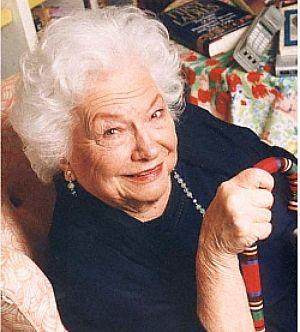
Last week, a wonderful person passed away after a long and rewarding life, both to her family and our nation.  How Liz Carpenter managed to shoehorn roughly six or seven lives into her nine decades remains a mystery, but we are better for it

In 2005, thanks to Liz’s daughter Christy Carpenter and her great friend Martha Whetstone, we were able to have a wonderful Luncheon Society gathering with her in San Francisco. She had just written a book, one of the many she had published over the years, and even though she told stories of the past, she was focused on the future.

Her mobility had been slowed by arthritis and she was now using a scooter to move around.  After we parked the car at a garage in Downtown San Francisco, she asked me if I wanted to ride along with her. I replied there was only room for one, but she convinced me to hop on the back.  So there I was, being escorted to a luncheon, standing on the back of her scooter, surfing our way through lunchtime pedestrian traffic on the sidewalk, and having a blast.

People forget that that behind her Texas humor, she saw some of life tough moments.  She was in Dallas when John Kennedy was assassinated.  When Lyndon Johnson emerged at Andrews Air Force Base and spoke as president for the first time, his first words were written by Liz Carpenter, who by then was serving as the Vice President’s Administrative Assistant, the first woman to hold that role. Those simple words captured the moment with humility and grace. It allowed Johnson to begin to heal the wounds of a nation still stunned by those terrible moments. Continue reading

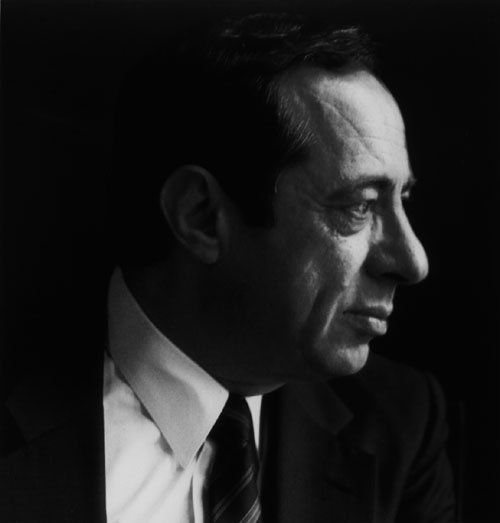
The Luncheon Society/Gov. Mario Cuomo/Blue Fin (Dinner) /February 19, 2010

Add to FacebookAdd to DiggAdd to Del.icio.usAdd to StumbleuponAdd to RedditAdd to BlinklistAdd to TwitterAdd to TechnoratiAdd to Yahoo BuzzAdd to Newsvine

We started the evening where we began lunch; The Blue Fin Restaurant in Manhattan’s Times Square.  Unlike lunch, our private room was no match for the dinner rush outside, but things quieted as people left for Broadway plays and musicals, which began promptly at 8 PM.

Regardless, the exterior din was well worth the wonderful crowd we had inside that room that evening; a number of folks came from Los Angeles to see both Cavett and Cuomo. As for me, I found myself sitting between one of my favorite writers, Gay Talese, and former supermodel Carmen Dell’Orefice, who could (and should) run a finishing school on how people are supposed to behave. It just does not get any better than that.

I think we will put something together in New York so we can gather for a nightcap (or two) after experiences like these.

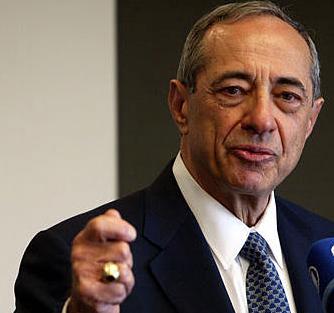
Rather than describe the dinner in great detail, I will let Governor Cuomo’s gracious words speak for themselves. 

REMARKS BY GOVERNOR MARIO M. CUOMO
“THE LUNCHEON SOCIETY” DINNER

We were invited by Bob McBarton to respond to the question: “Has political bi-partisanship completely broken down in the nation’s Capitol because ideological purity too often replaces intelligent collaboration?”

It is a vital question that every day becomes more serious.  Most recently it was focused upon by Evan Bayh. I believe I have had some experience with that kind of troublesome rigidity ─ Bayh ─ and many others are talking about.

In my early years as a lawyer I enjoyed the struggle called “litigation” immensely. Don’t give an inch!  The competitiveness, the court as coliseum… “The thrill of victory; the agony of defeat”. 

That muscular intellectual kind of combat had a primal attraction for me.  I thought things like mediation and arbitration that displaced litigation were a concession of weakness that should be carefully avoided.

Over time however, I’ve been able to overcome a number of different primal instincts… an obsession with the virtues of rigidity and litigation is one of them. 

After years of experience I concluded that relentless insistence on vigorous litigation reflects a human failure to be able to arrive at a wiser consensus, compromise, and peaceful coexistence.

Continue reading