The New York Times has called David Finkel’s latest book, The Good Soldiers , one of best non-fiction entries about the fighting in Iraq and it paints a gripping portrait from the soldier’s point of view.
Finkel’s book, which was a “top ten book of 2009” selection by The New York Times, The Chicago Tribune, Slate.Com, The Boston Globe, The Kansas City Star, The Cleveland Plain Dealer The Christian Science Monitor as well as several other news organizations, has now been published in soft cover. Finkel won a 2006 Pulitzer Prize for the Washington Post based on his reporting on American efforts to fund democracy projects within Yemen and he lives with his family in Maryland.
On tour to support the release, Finkel sat down with The Luncheon Society in San Francisco at Palio d’Asti, a long time favorite locale for our group.
Finkel argues that every war is fought on two levels. The first is found within the corridors of power that flow between the White House, Congress, and the Pentagon. This is a world where paper battles rage between the participants and the only front-line casualties are wounded egos and reputations. These conflicts fill the tomeswritten by people like Bob Woodward and when compared to the battle theater, they read as if the real fighting was some far-off abstraction. Continue reading →
“If you think the night sky is a tranquil place,” former Apollo astronaut Rusty Schweickart says, “consider what may tumble down from the heavens.”
65 Million years ago, a Near Earth Asteroid (NEA) 6 miles in diameter, slammed into the Earth along the Yucatan peninsula, near Chicxulub. It had the power of a 100 Million megaton nuclear blast (the largest man-made nuclear bomb is only 50 megatons) and over 75% of life on Earth, including the dinosaurs, plants, and other life forms vanished. Life hung by a thread.
The Discovery Channel created a stark video which detailed what would happen if a 500 km NEA crashed into the Earth.
There have been at least 5 ELEs (Extinction Level Events) during the last 500 million years of Earth’s history, not counting the Big Daddy of them all when a Mars-sized object slammed into a young Earth 4.5 billion years ago. The collision was so immense that the Earth’s surface melted, was blasted into space and the core was exposed. Over the next millions of years, the Earth slowly healed. However there is a nightly reminder of what took place; the gravitational pull of the debris coalesced into the current consensus of how the Moon was formed.
These events have happened before and they will most certainly happen again. “We live in a cosmic shooting gallery, Rusty Schweickart noted, “and that being hit by a ‘big one’ is simply a matter of time. We have in our sister planet, the Moon, an excellent history of the visitation record of NEAs and comets to our local neighborhood.” Those craters on the Moon are the results of direct strikes.
Consider this. On Friday April 13, 2029 (yes, Friday the 13th) 99942 Apophis, a Near Earth Asteroid, will pass within 24,000 miles of Earth, just under our geosynchronous satellite field. In astronomical terms, this is an incredibly close call. When first discovered in 2004, there were global concerns that it might hit the planet in 2029 or on its return trip on Easter Sunday 2036. NASA has since downgraded the strike percentage to 1:233,000 and they will better refine their calculations in 2013 when the orbit of 99942 Apophis next brings it within tracking range. While the NEA is only three football fields in length and no more than 300 meters across, its packs a punch. If it were to collide with Earth, it would unleash the equivalent of a 510 megaton nuclear blast. Continue reading →
To understand the political despair found in the African nation of Cameroon, look at those who have left the county.
Not only are the Best and Brightest are leaving, the brain drain is accelerating, and those who travel overseas to further their education rarely return home. Within a short period of time, they join the growing ranks of Cameroon’s Diaspora, which now numbers in the tens of thousands. They have resettled across the globe but in the United States, most live in Boston, New York, Washington, Houston, San Francisco and Los Angeles. They have become successful in their chosen fields and they are raising their families with one foot in the United States and one foot back home in Cameroon.
They are wonder aloud why the political reform is succeeding in neighboring countries like Ghana but has floundered in their own homeland.
The Diaspora Outreach. That is why reform-minded Presidential Candidate Bernard Muna is traveling around the United States, reaching out to members of the Cameroonian expatriate community, as he prepares for the 2011 national elections. Muna is here to make his case why his coalition can transform Cameroon politically and economically.
It is a rare to be present as democracy stirs in the hearts of those who want change. Roughly half who joined The Luncheon Society ™ gatherings in Los Angeles and San Francisco were members of the Diaspora. They came to hear Muna, an international attorney, who is early stages of running for President. He is running against Paul Biya, whose corrosive three decade dictatorship has driven Cameroon into the ground. Continue reading →
Those deeply involved with The Civil Rights Movement had one thing in common; they were quite young and they chose not to accept inequality because of skin color.
Those who integrated Little Rock’s Central High School were in their teens. Those who sat with quiet dignity in Woolworth luncheonettes throughout the South or organized voters in Mississippi during Freedom Summer were college-aged. Even Martin Luther King Jr. was only in his mid-twenties when he led the Montgomery Bus Boycott before rising to national prominence. It was a young movement and their idealism buoyed them through good times and bad.
The Luncheon Society has sat down with two members of the Little Rock Nine , Melba Beals Patillo and Terrence Roberts, to remind us of their courage and to remand their stories from being paved over by the next chapter of American history. Taylor Branch sat down with us last year in San Francisco and Los Angeles for a conversation about Bill Clinton as well as his trilogy of the Civil Rights Movement.
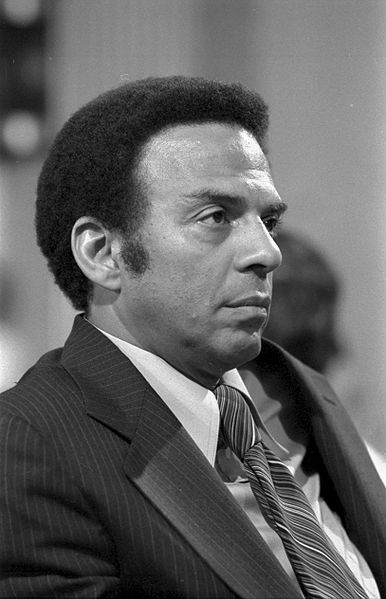
Thanks to the kindness of Christy Carpenter at The Paley Center in Manhattan, The Luncheon Society sat down with former UN Ambassador Andrew Young and his godson Kabir Sehgal for a conversation about their new book , “Walk in My Shoes: Conversations between a Civil Rights Legend and his Godson on the Journey .” We were also thankful that our great friend, Cari Beauchamp of Vanity Fair, was able to moderate the event in my absence. Continue reading →
I thought I would quickly touch base now that we have completed the first half of 2010.Thus far there have been 19 gatherings San Francisco, Los Angeles, and Manhattan. We look for an equal number in the second half and should round out the year at 38-40.
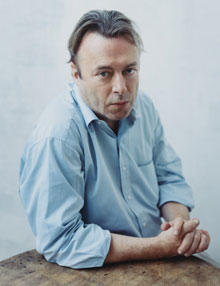
Reminder.To remind everybody, the SF and the LA Luncheon Society gatherings for Christopher Hitchens have been postponed and will be rescheduled later in 2010.
The Luncheon Society website.For those who are unable to join us around the table, you can subscribe to have The Luncheon Society summaries sent via email. Click on the links below to learn more about the luncheons. Continue reading →
I had a conversation with the publisher for Christopher Hitchens and he told me that his west coast tour has been postponed. I am told he has a personal issue that requires his attention. Sadly that means that the planned luncheons for San Francisco for June 26th and Los Angeles on June 29th are also postponed.
The book tour (and the luncheons that come with it) will be rebooted sometime in the summer or early fall. Once we get the details I will communicate them outward and the usual merriment and mayhem will follow.
In the meantime enjoy this tidbit
Postponements happen from time to time and while they are disappointing, there are other amazing luncheons that are in the planning process.
So stay tuned!
The Luncheon Society ™ is a series of private luncheons and dinners that take place in San Francisco, Los Angeles, Manhattan, and Boston. We essentially split the costs of gathering and we meet in groups of 20-25 people. Discussions center on politics, art, science, film, culture, and whatever else is on our mind. Think of us as “Adult Drop in Daycare.” We’ve been around since 1997 and we’re purposely understated. These gatherings takes place around a large table, where you interact with the main guest and conversation becomes end result. There are no rules, very little structure, and the gatherings happen when they happen. Join us when you can.
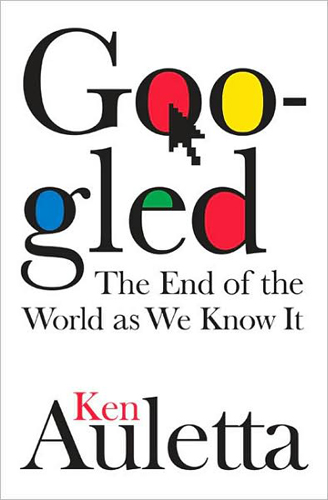
In 1998, Ken Auletta sat down with Bill Gates for a extended New Yorker interview while Microsoft was on trial for allegedly violating the Sherman Anti-Trust Act. At issue was a question as simple as it was complex: had Microsoft abused its de facto monopoly within the PC operating system market?
During the interview, Auletta asked Gates “what scared him, what kept him up late at night?” The answer surprised Auletta because it ripped away the veneer of paranoia that pervaded every corner of high tech. As Gates grabbed a Diet Coke for himself (and neglected to offer one to Auletta) he was worried about innovations he could not see.
Gates believed Microsoft could handle Apple, Netscape, or Yahoo; it could acquire what it could not crush. However, Gates worried that somewhere, some place there were a couple of young kids in a garage inventing something that would render Microsoft obsolete. Continue reading →
Our Luncheon Society friend Roz Savage completed her solo row across the Pacific Ocean last week. She broke the voyage into three legs, the first from San Francisco to Hawaii in 2008, the second, from Hawaii to Kiribati in 2009, and finally the third leg from Kiribati to Madang in Papua New Guinea, which she completed on Friday.
All in all, Roz covered 8,000 miles in a 23ft boat. To view the Luncheon Society summary from her meetings with the Los Angeles and San Francisco groups, link here.
As quoted in today’s London Daily Mail, “I’m already starting to think about the next one.” Roz previously crossed the Atlantic in 103 days and uses her trips to promote environmental causes.
Well done, Roz; well done indeed.
The Luncheon Society ™ is a series of private luncheons and dinners that take place in San Francisco, Los Angeles, Manhattan, and Boston. We essentially split the costs of gathering and we meet in groups of 20-25 people. Discussions center on politics, art, science, film, culture, and whatever else is on our mind. Think of us as “Adult Drop in Daycare.” We’ve been around since 1997 and we’re purposely understated. These gatherings takes place around a large table, where you interact with the main guest and conversation becomes end result. There are no rules, very little structure, and the gatherings happen when they happen. Join us when you can.
One of the great things about The Luncheon Society ™ is we can take a seminal issue and look at it from a variety of angles and perspectives in a conversational tone.
This is what The Luncheon Society is all about. It’s especially the case with the current military operations in Iraq and Afghanistan. Former Secretaries of State George Schulz and Warren Christopher gave their own individual thoughts on the statecraft behind the decisions to invade. William Perry, former Secretary of Defense under Clinton, worried that the movement of assets from Afghanistan to Iraq would harm the mission against the Taliban in the long-term. Paul Rieckhoff, Craig Mullaney, and Phil Carter wrote at length to give us their viewpoint of the soldier in the field. Journalists like Ahmed Rashid, Christopher Hitchens, Jonathan Alter, and The New Yorker’s Jane Mayer chimed in on the political lay of the land as well as the use of torture. Ambassador Joe Wilson and Valerie Plame joined The Luncheon Society on several occasions to discuss being unmasked as a CIA operative as political payback. Janis Karpinski spoke of abu Ghraib and Dan Ellsberg compared the secrets of the battlefield that so often papered over in times of war. More will join us in the future.
Sebastian Junger’s War. With that in mind, we especially pleased to sit with journalist and writer Sebastian Junger, who while not writing for Men’s Journal, The National Geographic or Vanity Fair, pens books and articles about people with dangerous jobs. Most are familiar with his work about the fishermen aboard the Andrea Gail, as well as the Coast Guard’s efforts to save them, which were detailed in his book (which later became the movie) The Perfect Storm. In fact, his description of what takes place when a person drowns is one of the more harrowing reads found in non-fiction.
In his new book titled, “War,” Junger follows a small group of soldiers for a better part of a year into one of the most distant outposts in Afghanistan. Junger steers clear from the political and burrows down into their daily lives. It’s backbreaking and dangerous stuff; Junger spends a great deal of time discussing the stresses and intense pressures that come with combat. Continue reading →
It’s an amazing story, one of those great tales from the early days of Rock and Roll.
In 1956, Mike Stoller took his wife to France for 3 months. After wandering around the countryside in late spring and early summer they return home on the Italian liner, the SS Andrea Doria. It was the largest, the most spectacular, and safest of all of the Italian liners. As Mike and his wife crossed the Atlantic, he purchased a copy of A Night to Remember, a best-seller by Walter Lord and considered the definitive reading on the sinking of the Titanic.
At 11 pm on July 26th, the Stockholm, a smaller passenger liner, crashed into the Andrea Doria and it began to list starboardand take on water. So instead of reading about the Titanic in Walter Lord’s book, he is actually living it. He thought, “That’s it; I’m a goner and I’m going down on the Titanic just like all of those poor souls who perished at the bottom of the Atlantic.”
However, the crash took place off the coast of Massachusetts in a heavy shipping lane and within a short period, there was a massive effort to rescue the passengers before if sank to the bottom of the Atlantic 11 hours later.
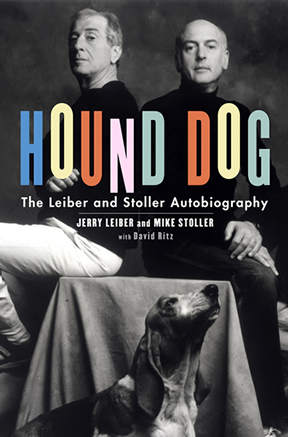
Mike Stoller and his wife were rescued and they met Jerry Leiber at the dock in New York. Leiber brought a full set of dry clothes for both Mike and his wife and once he made sure that his friends were okay, he exclaimed, “You won’t believe this, but Hound Dog is a #1 hit!” Stoller was taken aback and said, “You mean Big Mama Thornton’s version,” who did it in 1953? “No,” Leiber replied, “Its Elvis Presley.” “Elvis Presley?” Stoller replied incredulously, “who’s that?”
Watch Big Mama’s version. She simply whacks Elvis with big ol’ purse of hers. Look for a young Buddy Guy on that video. Nobody messed with her.
Stoller had been out of the country and had not seen the explosion of “Black Music” that was recorded by White Artists like Elvis. In the span of 12 hours, Mike Stoller went from the brink of death to superstardom. Continue reading →


 The New York Times has called David Finkel’s latest book, The Good Soldiers , one of best non-fiction entries about the fighting in Iraq and it paints a gripping portrait from the soldier’s point of view.









 The Luncheon Society

