The Luncheon Society/NY Times Best-Selling author Dava Sobel on the importance of Copernicus/San Francisco—Palio D’Asti /November 4, 2011

Add to FacebookAdd to DiggAdd to Del.icio.usAdd to StumbleuponAdd to RedditAdd to BlinklistAdd to TwitterAdd to TechnoratiAdd to Yahoo BuzzAdd to Newsvine

How do you propose a new idea when current thinking is so institutionalized and so engrained that anything else would be blasphemous? As he neared the publication of his life’s work, that is what worried Nicolaus Copernicus the most.

Writer Dava Sobel has the ability to compress complex scientific precepts into engrossing reading without dumbing down the subject matter. Her book, Longitudes , continues to be in print long after the date of its first edition.  In fact, Neil Armstrong will write the foreword for the anniversary edition. Her recent book, “A More Perfect Heaven: How Copernicus Revolutionized the Cosmos,” takes us through the challenges the Polish-born cleric encountered as he brought his life’s work to center stage.

We look back at yesterday’s scientific achievements and they are seen as today’s inevitabilities.  It was inevitable that the first flight by the Wright Brothers would lead to Man walking on the surface of the moon. It made logical sense that the discovery of nuclear fission would lead to weaponization within a few short years. 

Yet, when that first flight took place in North Carolina, nobody could envision daily flights to London. When Leó Szilárd first proposed that atoms could be split in 1933 to form nuclear chain reaction, few could calculate the unintended consequences.


So when Nicolaus Copernicus suggested that centuries of scientists and mathematicians had it all wrong and that the sun—not the earth—anchored our solar system, he called the basic tenets of civilization into question. Continue reading

The Luncheon Society/ Time Magazine’s Ioan Grillo on his book “El Narco”—the growth of the drug insurgency in Mexico/SF—Palio D’Asti/October 26, 2011/Manhattan—Primehouse November 29, 2011

Add to FacebookAdd to DiggAdd to Del.icio.usAdd to StumbleuponAdd to RedditAdd to BlinklistAdd to TwitterAdd to TechnoratiAdd to Yahoo BuzzAdd to Newsvine

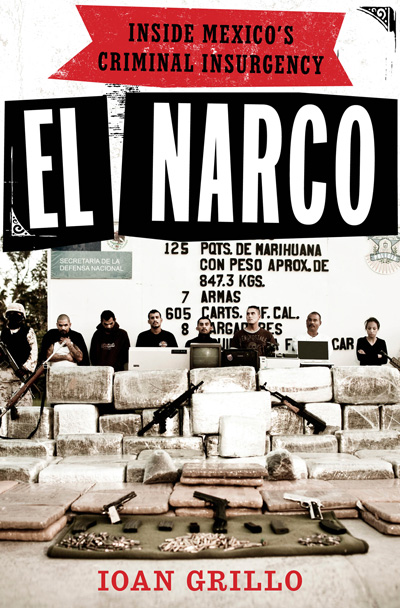
As Mexico continues to sink into the hell of its own Narco Terror, Time Magazine’s Ioan Grillo details how things got violent so quickly. 

Since 2006, when President Felipe Calderon launched the first concentrated attack against the drug cartels, nearly 40,000 people have been killed and another 90,000 have been wounded. With an annual estimated revenue beyond $30 Billion annually, the cartels have no plans to quiet the violence.  

It is hard to believe, but at the dawn of the new century, Mexico was evolving from a one-party semi-democracy to a multi-party state.  Border cities like Juarez and Tijuana were primed to take advantage of the benefits from NAFTA and American brands built factories where low—waged Mexican workers built high-ticket good designed for American tastes.


It should have been a Golden Age for Mexico, but as Grillo notes in his book El Narco ,” Mexico runs the risk of being wholly coopted by the ruthless nature of groups like the Sinaloa Cartel their rivals, the Gulf Cartel, La Familia Michoacana, Los Zetas Cartel, or some other offshoot or reconstituted gang. Now that we are on the eve of the 2012 Mexican national elections, there are enough dead in Mexico to sell-out Dodger Stadium. Continue reading

The Luncheon Society/Joyce Carol Oates on “A Widow’s Story, a Memoir”/San Francisco—One Market Restaurant/March 21, 2011/Manhattan—The Century Club October 14, 2011

Add to FacebookAdd to DiggAdd to Del.icio.usAdd to StumbleuponAdd to RedditAdd to BlinklistAdd to TwitterAdd to TechnoratiAdd to Yahoo BuzzAdd to Newsvine

Joyce Carol Oates fights for the underdog.  In “Black Water,” she imagines a fictionalized version of Chappaquiddick seen through the eyes of a thinly veiled character drawn to resemble Mary Jo Kopechne, hoping that the Senator would return to rescue her as her life ticks away.  In an upcoming post-modern novel, she is re-imagines the friendship between two doomed Hollywood personae, Marilyn Monroe and Elizabeth Short, as they moved in the some of the same circles. Monroe became a Hollywood icon and died famously in 1962. Short emerged as famous the victim in “The Black Dahlia,” a murder that haunts Los Angeles to this very day.

In her latest work, she is the underdog we root for as she moves through a difficult chapter of her own life.


The Luncheon Society sat down with Joyce at One Market in San Francisco and The Century Association, thanks to the kind intercession of Enzo Viscusi.

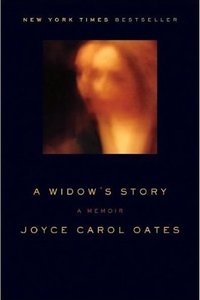
Her output is nothing short of prodigious. At the moment, Joyce Carol Oates has penned 60 novels, 30 collections of short stories, 10 volume of poetry, and all are written by hand. She joined The Luncheon Society in San Francisco and Manhattan to discuss her latest personal and moving book titled, “A Widow’s Story, A Memoir,” which detailed her descent into widowhood.

“My Husband died, my life collapsed.” As the book jacket notes, “A Widow’s Story illuminates one woman’s struggle to comprehend a life without the partnership that had sustained and defined her for nearly half a century. As never before, Joyce Carol Oates shares the derangement of denial, the anguish of loss, the disorientation of the survivor amid a nightmare of “death-duties,” and the solace of friendship. She writes unflinchingly of the experience of grief—the almost unbearable suspense of the hospital vigil, the treacherous “pools” of memory that surround us, the vocabulary of illness, the absurdities of commercialized forms of mourning. Here is a frank acknowledgment of the widow’s desperation—only gradually yielding to the recognition that this is my life now.” Continue reading

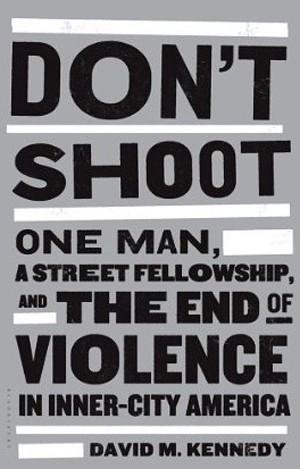
The Luncheon Society/Criminologist David Kennedy on his memoir “Don’t Shoot” on how to decrease urban violence/San Francisco-Palio d’Asti/October 4, 2011

Add to FacebookAdd to DiggAdd to Del.icio.usAdd to StumbleuponAdd to RedditAdd to BlinklistAdd to TwitterAdd to TechnoratiAdd to Yahoo BuzzAdd to Newsvine

Most people view urban crime from the safety of the own living rooms. However, criminologist David Kennedy grabs the problem by the scruff of the neck and has created a template, if deployed correctly, might end the cycle of violence that has become commonplace for so many lawless urban neighborhoods. 

The Luncheon Society has looked at crime  (its sources and its impact) though a number of authors.  Our friend and sociologist Peter Moskos published a book detailing his field world as a police officer in Baltimore’s roughest neighborhoods, which was seen in HBO’s The Wire titled, “Cop in the Hood.”  This year he published a sly polemic titled, “In Praise of the Lash” which takes another look at how we punish offenders.  Time magazine’ Ioan Grillo joined us in San Francisco and Manhattan for a stark conversation about the growth of “El Narco,” the drug-fueled insurgency that is slowly strangling Mexico’s national sovereignty.

In Kennedy’s book , Don’t Shoot: One Man, A Street Fellowship, and the End to Violence in Inner-City America, he pens an impassioned memoir of how his approach had improved the worst of neighborhoods plagued by drug violence.

Crime is down—but where is it up? When you look at FBI statistics, crime rates—including violent crime—continue to decrease incrementally.  However, this is not the case in some of the roughest urban communities, where an African-American male has a 1:200 chance to getting killed by gunfire. It has devolved to the point where some first responders may think twice before entering into some of the neighborhoods.  Traditional law enforcement of governmental assistance has failed to stem the tide and as a result, these neighborhoods are essentially written off by municipal leaders. As a result, the festering cancer of criminal behavior becomes multigenerational in scope with no jobs, no future, and no hope.


What David Kennedy has done—even though he is an academic as director of the Center for Crime Prevention and Control at CUNY’s John Jay College of Criminal Justice—is to immerse himself into the worst of the neighborhoods and figure out answers to build solutions. Continue reading

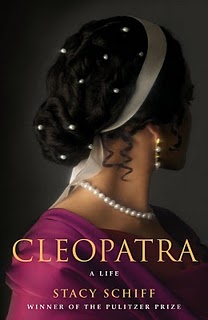
The Luncheon Society/Pulitzer Prize winning biographer Stacy Schiff on “Cleopatra, A Life”/San Francisco—Credo September 12, 2011

Add to FacebookAdd to DiggAdd to Del.icio.usAdd to StumbleuponAdd to RedditAdd to BlinklistAdd to TwitterAdd to TechnoratiAdd to Yahoo BuzzAdd to Newsvine

There’s a great movie line that says, “When the legend becomes fact, print the legend.” However, when looking at Cleopatra, her life outpaces any legend.

In contemporary terms, Cleopatra is seen through the refracted lens of Elizabeth Taylor’s Hollywood portrayal.  Bits and pieces were added into the stew throughout the centuries, with generous helpings from Plutarch and William Shakespeare. She wasn’t the classic beauty as seen through modern eyes, but she had the guile and smarts to outmaneuver her enemies and build an empire.  It kept her in power for a generation and launched the persona that remains until this very day.  

Unlike many leaders of antiquity, there are no source documents for Cleopatra’s reign or even her life. Only one word from Cleopatra has survived the centuries, “Genesthoi,” which means, “Let it be done.”   The ensuing stories were written by Cleopatra’s enemies during and after her fall written by Romans and were largely fiction. They portrayed her as the libidinous tramp who used her wiles to entrap and weaken the two main leaders of her generation, Julius Caesar and Mark Antony.  


Cleopatra, A Life,” written by Pulitzer Prize Winning author Stacy Schiff, takes us into her world by compiling the source documents of that era to give us the best understanding of her times. Wedged into history three centuries after Alexander the Great but only a generation before the birth of Christ, Schiff constructs an ancient world and examines her life—right up to her death. When the facts present two alternatives, she explores them all in great detail. Did Cleopatra die of an asp bite to the breast or by drinking a cocktail of poison? Is either just another piece of fiction that embellishes the legend but hides the fact? Continue reading

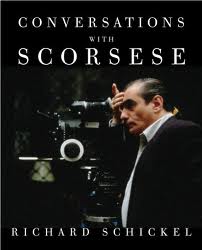
The Luncheon Society/Dean of Film Writers, Richard Schickel, on Martin Scorsese/San Francisco—Fior D’Italia/May 9, 2011/Los Angeles—Napa Valley Grille/September 10, 2011

Add to FacebookAdd to DiggAdd to Del.icio.usAdd to StumbleuponAdd to RedditAdd to BlinklistAdd to TwitterAdd to TechnoratiAdd to Yahoo BuzzAdd to Newsvine

It is fair to say that “Conversations with Scorsese,” places one of the best film writers aside one of the industry’s best directors. Over the past four decades, Martin Scorsese has delivered gem after gem on the screen and having our old friend Richard Schickel talk us through his career helps to better understand his artistic genius.

Thankfully, Scorsese likes to talk. We’re ever thankful that Schickel loves to ask penetrating questions. Together they create a 400 page oral history that sums the director’s career thus far. At the end, you have the feeling that you’ve been riding shotgun at every location shoot; that you’re there at every tortured edit; and you’ve been present for both the good and the tough times.

For the past four decades, spanning his tenure at Life, then Time Magazine, and now at Vanity Fair, Richard has given readers the best seat in the house when it comes to the movie industry.  When he joined us last year for lunch at Chez Mimi in Santa Monica to discuss his book about Clint Eastwood’s relationship with Warner Brothers, it was oneHollywood story after the next. On a sunny afternoon in May, Richard delivered in San Francisco and did it again in early September in Los Angeles.


Richard Schickel brings them alive.  Nobody knows the industry like the Dean of Film Writers.  Richard has written over 40 books, created over 40 films, and has narrated the filmmakers comments for countless DVDs. His film, “You Must Remeber This,”  serves and the unofficial history of Warner Brothers. Continue reading

The Luncheon Society/The New Yorker’s Ken Auletta on the Murdoch Phone Hacking Scandal/Manhattan—Danal/July 14, 2011

Add to FacebookAdd to DiggAdd to Del.icio.usAdd to StumbleuponAdd to RedditAdd to BlinklistAdd to TwitterAdd to TechnoratiAdd to Yahoo BuzzAdd to Newsvine

Ken Auletta, who writes the influential “Annals of Communications” column for The New Yorker, joined  The Luncheon Society in Manhattan for a return visit. 

Last year he talked about Googled, his New York Times best-seller how Sergey Brin’s and Larry Page’s endeavor redefined the mantle of leadership within Silicon Valley, especially now that Facebook has emerged as its greatest challenger. 

This year he talked about Rupert Murdoch and the phone hacking scandal that is mushrooming mushroomed over London.  Executive after executive within Murdoch’s empire have walked the plank.  The most painful departure was Rebekah Brooks the editor of News of the World, his signature London tabloid. Added to the list were Tom Crone, who ran legal affairs for the far flung empire, and Les Hinton, who ran Dow Jones. The question remained: would the scandal move from one side of the Atlantic to another?

Note: Special thanks to our friend Shari Foos, who hosted the Luncheon Society gathering in Manhattan.

Humble Start. The first chapter of the phone hacking scandal bubbled into public view mid-decade when members of the Royal Family discovered that their voicemails had been pilfered, which was a violation of British law. The subsequent investigation soon circled the offices of The News of the World. Within months, their Royal Editor and an investigator pled guilty to the charges and were shuttled off for short jail sentences. Mistakes were acknowledged, apologies were made, and promises were made that nothing like this would ever happen again. Continue reading

The Luncheon Society/Veteran Political Analyst Jeff Greenfield on his new book “Then Everything Changed”/Los Angeles—Napa Valley Grille/July 9, 2011


Add to FacebookAdd to DiggAdd to Del.icio.usAdd to StumbleuponAdd to RedditAdd to BlinklistAdd to TwitterAdd to TechnoratiAdd to Yahoo BuzzAdd to Newsvine

Jeff Greenfield likes to say, “History doesn’t turn on a dime; it turns on a plugged nickel.”  As a veteran political commentator for ABC, CBS, and CNN, Greenfield makes the case that we underplay the role of dumb luck and random chance in current events. 

In his new book Then Everything Changed,”Greenfield builds three very plausible scenarios of how minor shifts could generate far reaching results in American politics.

We tend to look at history from the resultant first and walk backwards to explain events in rational detail; C = A + B. However, the events are so fluid and so ever-changing that a close election could go in several different directions because of movements that take place below the waterline.


Kennedy vs. Nixon; Nixon vs. Kennedy. When we look back to the race between Nixon and Kennedy, the narrative always favors the Massachusetts Senator because he won.  However, a simple trip here or a stumble there and John Kennedy would have returned to the Senate; his narrative would have been “too much, too soon.”

Likewise, President-Elect Franklin D. Roosevelt survived an assassination attempt  in Miami Beach in early 1933, a month prior to taking his oath of office. Had he stood a foot to either side of the microphone while giving an impromptu speech, he would have been shot and killed before delivering his first oath of office. Instead the bullet found its way into Chicago Mayor Anton Cermak’s  chest, who was in town and shaking FDR’s hand. Cermak died en route to the hospital; his last words to FDR were, “I am glad it was me and not you.”  Had FDR died, his Vice President—a very conservative John Nance Garner —would have been a very different leader and would have killed any New Deal legislation. The Great Reforms that built The Greatest Generation would have died stillborn. Continue reading

The Luncheon Society/John Callas, JPL Project Manager for Mars Rovers on Spirit, Opportunity and the Future of Exploration on the Red Planet/Los Angeles-Maria’s/June 26,2011

Add to FacebookAdd to DiggAdd to Del.icio.usAdd to StumbleuponAdd to RedditAdd to BlinklistAdd to TwitterAdd to TechnoratiAdd to Yahoo BuzzAdd to Newsvine

It is the most amazing cell phone; it gives the term “long distance” a whole new meaning.  Each morning, Opportunity the remaining Mars Rover, sends a text to John Callas’s  cell phone that shows its movements during the previous Martian day or “sol.” Even though the two planets are separated by an average distance of 142 million miles and the rover crawls at a speed of 1 cm per minute, it is always good to keep a close eye on your children.


Callas, who has been the Project Manager of the Rovers since 2006, continues to drive breathtaking discoveries on only a shoestring budget. Opportunity and the now-silent Spirit have revolutionized unmanned spacecraft and robotic exploration in ways few could have imagined a decade earlier. It was always understood that man would have to step foot on Mars to be able to grasp its terra firma, but no more. Thanks to these two rovers, we now know that Mars is not the dead rock concluded by both Viking missions in the 1970’s. Not only was Mars alive with oceans of ancient water, but thanks to the subsequent Phoenix lander, samples of the polar ice cap were melted and water vapor appeared; where there is water, there is often life. We also know that the real action surrounding life on Mars might take below the surface, something that only patient and sustained exploration could unearth.

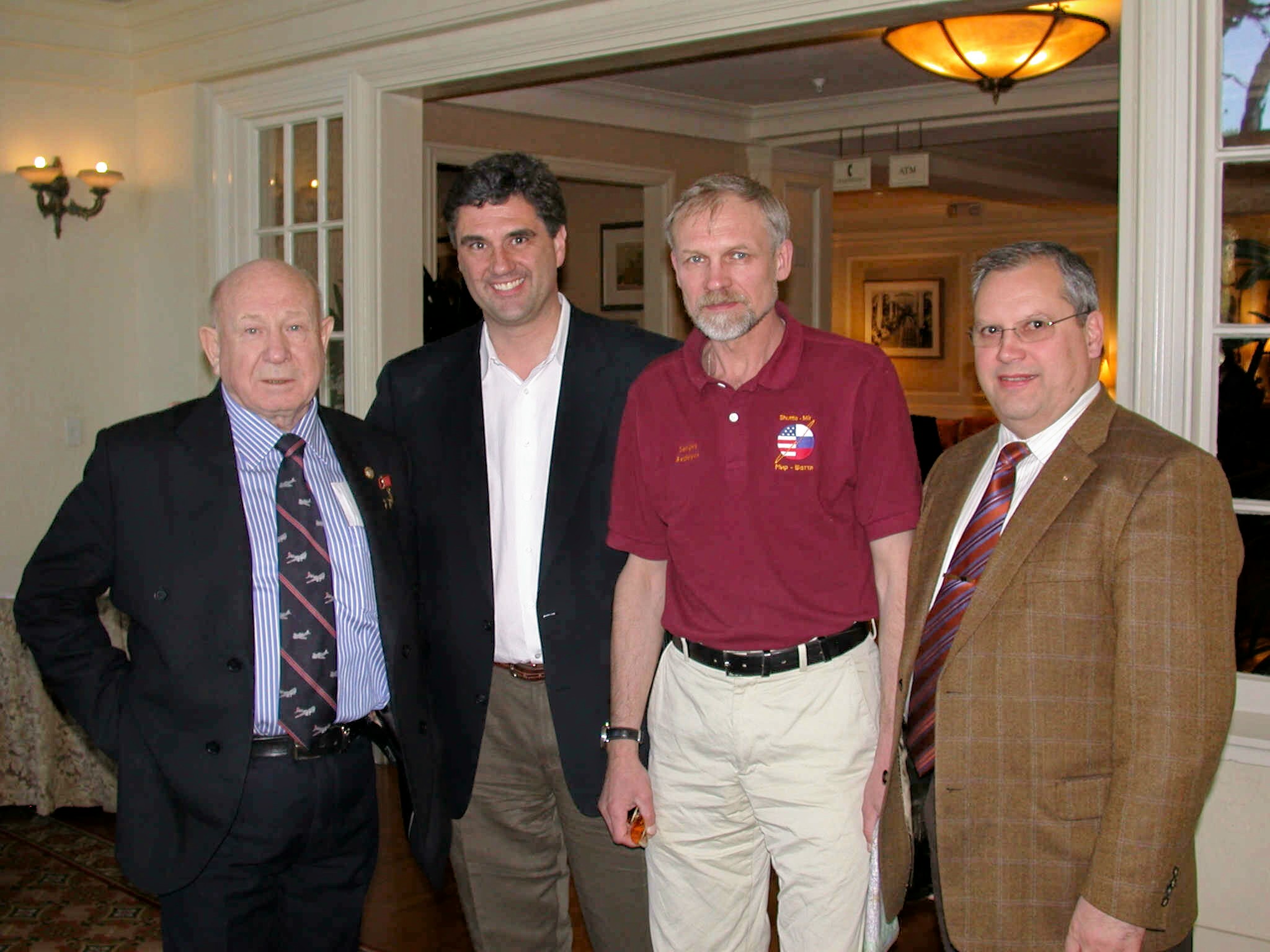
Space flight has long been a fixture of The Luncheon Society. Apollo Astronaut Rusty Schweickart has joined us on several occasions for conversations about Near Earth Objects and in January 2007 brought along Mercury Astronauts Wally Schirra,  Scott Carpenter, and Soviet space pioneer Alexei Leonov, the first man to walk in space. Mission Control head Christopher Kraft talked about the challenges of a manned space flight to the Moon and the herculean challenges to Mars. Former NASA Ames head Scott Hubbard joined us twice, first for a conversation about rebuilding the Mars programs after the failure of the late 1990’s and later with Nobel laureate Doug Osheroff, to help us understand the managerial failures that took place as members of the Columbia Accident Investigation Board  after the shuttle disintegrated in the upper atmosphere. The Principal Scientist of the Mars Rovers, Steven Squyres joined us in San Francisco and most famously  in Los Angeles where Buzz Aldrin, the second man to walk on the moon, sat with us around the table.  A longtime friend of The Luncheon Society, John Callas has joined us at two intervals during the Rover’s time on Mars, first in 2006 and now in July 2011. Continue reading

Redford Biographer Michael Feeney Callan on the actor, his films, and the impact of Sundance/San Francisco—Palio D’Asti/June 20, 2011

Add to FacebookAdd to DiggAdd to Del.icio.usAdd to StumbleuponAdd to RedditAdd to BlinklistAdd to TwitterAdd to TechnoratiAdd to Yahoo BuzzAdd to Newsvine

To say Robert Redford is merely a pretty face is a shopworn cliché—but to say his profile launched a thousand indie movies is a spot-on fact.

Icon as Iconoclast. No person has done more to engender the spirit of independent filmmaking over the past generation than Redford and Michael Feeney Callan has written a wonderful Hollywood tale that has encapsulated his long-awaiting biography.

Excerpted in Vanity Fair, Callan tees up Redford’s life in the book jacket, “Among the most widely admired Hollywood stars of his generation, Redford has appeared onstage and on-screen, in front of and behind the camera, earning Academy, Golden Globe, and a multitude of other awards and nominations for acting, directing, and producing, and for his contributions to the arts. His Sundance Film Festival transformed the world of filmmaking; his films defined a generation. America has come to know him as the Sundance Kid, Bob Woodward, Johnny Hooker, Jay Gatsby, and Roy Hobbs. But only now, with this revelatory biography, do we see the surprising and complex man beneath the Hollywood façade.”

“From Redford’s personal papers—journals, script notes, correspondence—and hundreds of hours of taped interviews, Michael Feeney Callan brings the legendary star into focus. Here is his scattered family background and restless childhood, his rocky start in acting, the death of his son, his star-making relationship with director Sydney Pollack, the creation of Sundance, his political activism, his artistic successes and failures, his friendships and romances. This is a candid, surprising portrait of a man whose iconic roles on-screen (Butch Cassidy and the Sundance Kid, All the President’s Men, The Natural) and directorial brilliance (Ordinary People, Quiz Show) have both defined and obscured one of the most celebrated, and, until now, least understood, public figures of our time.”


Continue reading