In many respects, both Lanny Davis and Michael Steele serve as political anthropologists for the other side; Lanny helps those who watch Fox understand Democrats while Michael Steele helps those who watch MSNBC understand Republicans.
Both Lanny and Michael have held high-profile positions over the years. During the Clinton White House—especially during Monica Lewinsky mess—it was not uncommon to see Lanny Davis defend the President from those who wanted his prosecution and resignation. Much of what he learned during that period was turned into an earlier book, “Truth to Tell: Tell it Early, Tell it Yourself” and later “Scandal: How ‘Gotcha’ Politics is Destroying America.” After leaving the White House, Lanny built a successful practice advising people and organizations how to deal with the political and media fallout that comes from messy and embarrassing situations.
This year, Lanny and Michael joined The Luncheon Society for two gatherings. The first took place in San Francisco for a lunch over at One Market on September 10th. On the following evening—September 11th—we sat down in Los Angeles for a wonderful dinner at Napa Valley Grille. Lanny has joined The Luncheon Society on numerous occasions and one of the most memorable was on the eve of the 2008 California Primary, when the Obama people sat at one end while the Hillary people sat on the other. There were passionate arguments that last long after the desserts were collected.
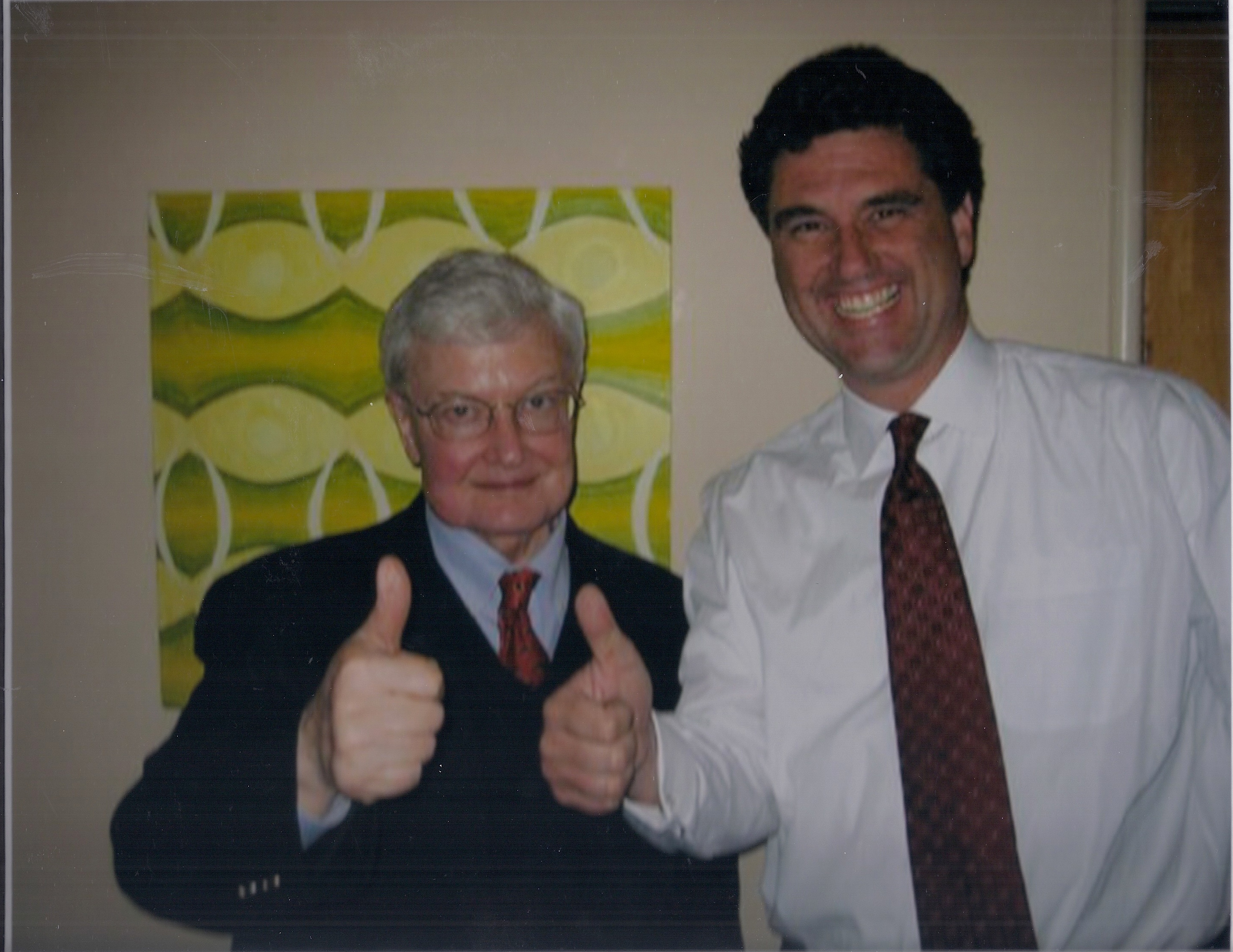
“This is my happening and it freaks me out!” For those who follow cinema, they know the catchphrase from “Beyond the Valley of the Dolls,” a script that Ebert wrote for Russ Meyer.
This was one of the most fun Luncheon Society gatherings that I had ever planned. It took place, two days after the 2006 Academy Award Ceremony at Michael’s, a entertainment industry-friendly restaurant in Santa Monica.
The big brouhaha was who really deserved the Oscar for best picture, “Brokeback Mountain” or “Crash.” It was a dinner, which started at 7 PM and was supposed to run until 9 PM. It was at Michaels in Santa Monica, which is staffed by struggling actors and filmmakers. However, by the time we finally staggered out at 12 midnight, every waiter ran home to get his screenplay or her headshots. He had an early flight to Chicago and I had an early flight to San Jose.
There were 5 Academy Award winners around the table, not to mention Larry Turman, who produced one of my favorite movies, “The Graduate.” With Ebert, the talk also centered on Russ Meyer, Super Vixens, and “Beyond the Valley of the Dolls” (which was the one screenplay that Ebert wrote. Sadly it was completely off the record and most of the juicy stuff has been lost to time and addled memory. However, I have some notes around and will try to rebuild that amazing night for our readers.
Sadly, Roger Ebert would fall deathly ill a couple of months after the luncheon but in that terrible moment, he began the bravest chapter of his life. Never had he shone more brightly than when his health was the most fragile.
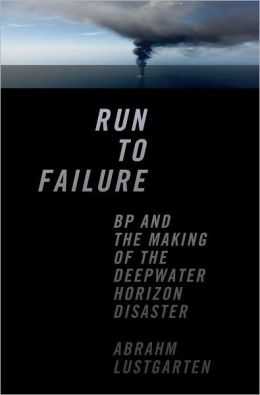
To fully understand what took place during the Deepwater Horizon disaster, when 4.9 million barrels of oil spewed into the Gulf of Mexico during the summer of 2010, you have to look at the corporate culture of BP and how its senior management team blundered into a terrible chain of events.
Reporter Abrahm Lustgarten demonstrates how BP’s series of cascading failures, far beyond the disaster in the Gulf, shows how senior management turned a blind eye to the growing number of risks that were turning up within their American subsidiaries. By choosing to grow their brand through a series of highly leveraged acquisitions, BP aimed to retire the debt by gutting the budgets for safety and quality control. By failing to listen to their American subsidiaries, BP played a callous game of Russian Roulette when proportioning risk against gain. This is an indictment of a corporate culture gone rouge.
Lustgarten, a former staff writer for Fortune Magazine who now writers for Pro Publica, penned Run to Failure: BP and the Making of the Deepwater Horizon Disaster. For a deeper understanding of what took place at BP, feel free to watch the PBS documentary on Frontline. Below is the promo
Unlike their television commercials, the oil industry is a grimy business, from the extraction of varying flavors of crude to the refined product that fuels your car and heats your home. Many are obvious to how it arrives until there is a massive disaster. In an industry chocked full of inherent risks, most oil producers are dead serious when it comes to safety management because they understand the true costs of a disaster when something goes terribly wrong. Many Alaskans still talk of the Exxon Valdez disaster as if it happened last week because the coastline is still dealing with the aftereffects over two decades later.
That was a lesson, Lustgarten says, BP never got around to learning. Continue reading →
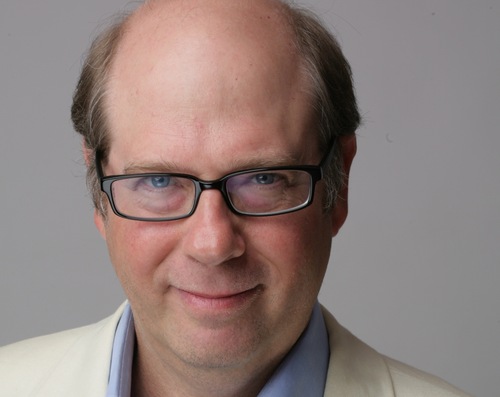
Stephen Tobolowsky speaks the truth when he says “don’t fear castrophe.”
For the past quarter century, Stephen Tobolowsky has been one of the most in-demand character actors found on film and television. He is one those select few who we’ve all seen in a variety of film and movies, even if we cannot remember his name. Tobolowsky is a rare find; he is one of those character actors who unpack the sum total of all of his roles whenever he shows up on screen. Now that our viewing habits are taking us into webisodes and other niche forms of streamed content, I am sure that Stephen’s ability to develop a minor character into a memorable role will only increase.
Character actors have long been the staple of any film. They are the glue that has held many productions together, especially when the writing was weak. Whenever you pick up a script, the main characters have everything fleshed out for them. We now their name, their job, and what they have for breakfast; we know what they drink in the morning and who they sleep with at night. These actors are found above the title and the great ones are paid millions to grace the screen, but unless you’re headlining “Mark Twain Tonight,” the relationship between the plot and the star is cemented and reinforced by the character actor.
When you think of many of the great character roles that you’ve seen over the years, they crawl off a screenwriter’s laptop as one or two dimensional roles. They are fleshed out further by the imagination and the freedom of those character actors. Character roles in comedies seem to find their way into the script as job titles (the plumber) or as last names in dramas (Mr. Jones) and they would act as reminders to the main stars (and the audience) to the audience of where the plot was heading. Often killed off with a tap of a keyboard, they never get the girl and may only rise to the level of best friend or coworker.
Those who doubt the power of great character actors should reflect back on The Godfather, where a majority of the moments that made the film a classic where interactions driven by the supporting characters, not Al Pacino or Marlon Brando.
Most presidential biographies have arc upwards over several generations. They combine parental ambition, native drive, and glorious luck; and we have also seen this dream play out over and over again.
After Joe Kennedy’s presidential aspirations went up in flames, he transferred his ambition to the next generation, first to his son Joe and later to John. Some say Jeb and George W. Bush entered politics to avenge their father’s loss, after he was soundly beaten by Bill Clinton. Nobody entered the White House with more Brahmin entitlement than Franklin Roosevelt, back when old wealth, old-boy connections, and family lineage really mattered. For these families, rising to the Oval Office remained a birthright, even long after it became elusive dream for successive generations.
Some Presidents like Richard Nixon or Harry Truman began with hardscrabble origins but Barack Obama’s story takes the cake.
Eight years before he was accepted the nomination in Denver and four years before he electrified the delegates at the 2004 Boston Convention, an unknown Illinois State Senator named Barack Obama was stuck at the Hertz counter at Los Angeles International Airport trying to rent a car because his American Express Card was denied.
How could somebody rise so fast? In David Maraniss’s new book, “Barack Obama: The Story,” we get to the heart of his early influences. We were very fortunate that our old friend Stephen Schlesinger was able to moderate a delightful discussion at Prime House in Manhattan. This is David Maraniss’s third gathering with the Luncheon Society.
Okay Gang, we’re behind again on our Luncheon Society narratives. We had great gatherings with David Maraniss in Manhattan and a knockout gathering with character actor extraordinaire Stephen Tobolowsky in LA. We also had a great one with Abrahm Lustgartenin San Francisco on the problems with BP’s management that led to the disaster in the Gulf. Then we had wonderful gatherings with Lanny Davis and Michael Steele in Los Angeles and San Francisco. Hanna Rosin, who wrote “The End of Men,” stopped down in San Francisco. Neil Barofsky, the former Enforcement Czar of TARP talked about real transparency in a “too big to fail age.” We finished things off with a 40th anniversary conversation with Academy Award winning screenwriter Jeremy Larner, who wrote “The Candidate.”
More to come. I am spending some extra time getting them up on line.
A complicated subject always makes for a fascinating biography. When it comes to John Lennon, the fascination only multiplies.
With Lennon, there is the dichotomy between the art and the artist, an understanding of the “London and New York John Lennons,” complete with the annoying contradictions and prickly outbursts that drove his persona. Finally we are left with a guess of what might have been as Lennon was emerging from a mid-decade sabbatical from recording and performing before he was killed outside his home in 1980.
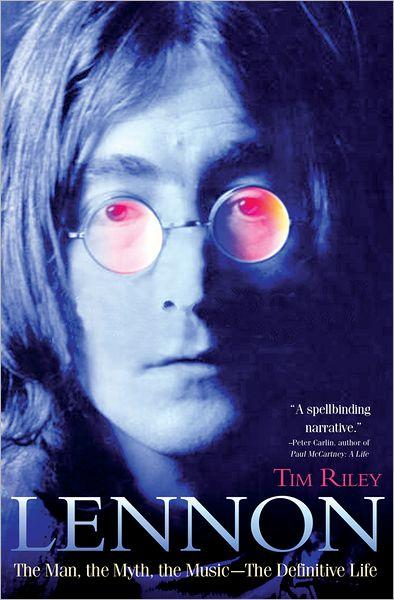
Lennon’s early death meant that thirty years later, most of the primary sources are still alive and willing to share stories that would have kept to themselves. Now that some of the horrible biographies on Lennon–like Albert Goldman’s–have passed through our systems, perhaps it’s time for a reflective biography that covers the arc of his life. It take time and distance to make sense of life’s most complex subjects but Tim Riley brings it together in his well-regarded biography, “John Lennon, The Man, the Myth, The Music—The Definitive Life.”
Graciously hostng the luncheon in Boston was our old friend Rucker Alex; Heading the table in Manhattan was the always-amazing Shari Foos.
Why the Beatles were different. Unlike Elvis or the pop stars of the early 1960’s, the Beatles wrote their own material; it wasn’t Lieber and Stoller but Lennon-McCartney. They made it mandatory for anybody who followed to do the same if they ever wanted to be taken seriously.
They were neatly packaged by Brian Epstein and blessed by Ed Sullivan in their televised American debut. They were nice working class boys with haircuts just long enough to be edgy and their two movies, “A Hard Day’s Night” and “Help!” stayed clear of the psychedelics and protest that drove youth culture in the second half of the decade.
More importantly, the Beatles got better because of the natural competition between Lennon and McCartney. While everything written was published as Lennon-McCartney, their competitive juices matured into who could build the better song. It is hard to believe that only five years passed between when “Love Me Do” hit the shelves and when “Sgt. Pepper’s Lonely Hearts Club Band” transformed the social landscape. Continue reading →
Where does our brain end and where does our mind begin? Are we controlled by our own internal wiring or can we rise above our circumstances through free will? This is a luncheon where the physical collides with the metaphysical.
In the novel (and later a movie) “The Boys from Brazil,” a fictional Joseph Mengele implants genetic clones of Adolf Hitler into a the wombs of over 90 women in the hopes of creating the Next Reich. However, Mengele takes things one more step because he tries to recreate the emotional mindset of the young Hitler, complete with a domineering older father against the backdrop of a much younger and pliant mother. As the novel winds through the jungles of Brazil and then spirals outward to where these genetic Hitlers are growing up in a modern world, Mengele engineers the sudden deaths of the fathers to mirror the sudden death of Hitler’s father when he was a teen. A fictional version of Simon Wiesenthal is able to break up Mengele’s final medical experiment, but the novel leaves you hanging because in the final pages, one of the surviving teenage-Hitlers now begins to exhibit delusions of grandeur.
Can you replicate past behavior? Can the mind be that predictive? Does one impact the other—does the mind enable or constrain the brain?
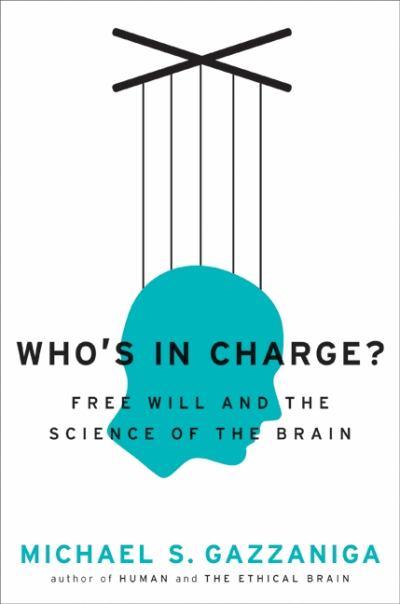
Located in the private room at Palio D’asti to an overflow group of guests in January and in June to a group of group of smart Manhattan diners at Prime House, Dr. Michael Gazzaniga spent a good two hours with us debating that very point. In his latest book, “Who’s in Charge: Free Will and the Science of the Brain,” he tackles this subject in book form, based on the series of his Gifford Lectures, which for the past century has been the home prestigious conversations on religion, science, and philosophy.
As author of “The Ethical Brain,” his current introduction reads, “Known as the father of Cognitive Neuroscience, Gazzaniga makes a powerful argument for free will. The question of free will versus determinism continues to vex scientists, psychologists and philosophers, but the biological evidence is not as stridently deterministic as it is often presented. Dr. Gazzaniga argues that the human mind constrains the brain and monitors our behavior, much as a government constrains its citizens. Drawing on cutting-edge neuroscience and psychology, as well as ethics and law, he offers a deeply considered case for human responsibility.”
We have moved miles since the popularization of pseudo-sciences like Phrenology, that suggested that bumps on our head would determine our behavior. However, as we learn more about the physiology of the brain and unlock those secrets, we will soon wander to where the black-and-white meets the grey—understanding how the mind works. Meshing science with philosophy will be the great race of the 21st century but advertising aggregators, like Google and others, are hard at work building out algorithmic proxies on how we think based on what we buy.
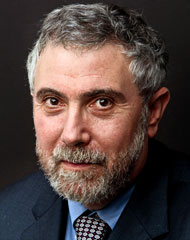
We said good-bye to an old friend in late May when Fior D’Italia closed. It seemed to be extra poignant that our Luncheon Society conversation with Nobel Laureate Paul Krugman on the current economic troubles also coincided with the final day that the oldest continuously run Italian restaurant west of the Mississippi.
After our luncheon, the staff prepared for their final dinner before the locks were placed on the front door. We hope that they will return under new ownership. If we were going to have a last bash with Fior, the Paul Krugman would be a grand way to bid farewell to a long time San Francisco favorite.
We were pleased that Paul Krugman joined us to discuss his new book End This Recession Now. In the largest Luncheon Society gathering to date, we all managed to huddle together for a great conversational “back and forth” that took the better part of two hours.
As the nation’s most elegant Keynesian economist, what frustrates Paul Krugman most was that during the Collapse of 2008 and its aftermath, the lessons learned from The Great Depressions are equally applicable to the Great Recession but policymakers (especially those on the far right) aimed for an austerity program, even if it does more harm than good.
Krugman makes the case that the United States would find full employment within a 2 year period and fund it with an inflationary rate in the 3-4% range. Runaway inflation is a scary matter for those who went through the 1970’s and now worry that any savings might be wiped away, but to those who worry about their 401K retirement programs, the lack of progress from the global economy upward has more of a financial drag.
Instead of supporting an austerity budgetary plan that fires teachers, firefighters and other civil servants, Krugman argues that policymakers should double-down on investing in people and projects. He felt that Obama’s actions amounted to half-measures when he arrived in office as the wheels were coming off the economy were too little, almost too late. Krugman argues that Obama lost an opportunity to be truly bold on the economic front and that made things far worse. Continue reading →
Each year, Michael Dukakis kicks off the first Southern California Luncheon Society gathering and this year was no different. Joining us in Los Angeles at Napa Valley Grille on Saturday January 14th and then making the trek up to San Francisco on February 24th at Credo, Mike Dukakis has always brought an informative and self-deprecatory approach to getting his message out. Each year he has mentioned that if he had beaten Bush in 1988, he would be speaking to us in another capacity—and says that if he beaten the Old Man, nobody would have ever heard about The Son. In Boston, the former Governor talked about the business of statecraft and why it matters.
Both Mike and Kitty Dukakis were early Barack Obama supporters and were impressed that they built a grass roots campaign to connect with voters, something the DNC forgot about in the 2010 midterm elections. Dukakis believes that Democrats needs to organize down to the small precinct. He believes that six-to-eight block captains per precinct must organize repeated door-knocking excursions and report any supporters or potential supporters back to a precinct captain. In turn, they must be responsible for getting those supporters to the polls on Election Day. “It’s neighbors seeing neighbors. It’s putting a human face on the political process. It’s engaging people in conversations on issues they care about and responding to them.”
The first question Dukakis will ask anybody running for office is “How many precincts do you have? How many of those precincts have captains?”
Grass Roots campaigns based on old-fashioned-precinct-walking shoe leather will deliver a 5-10% incremental lift each and every time. Colorado Senator Michael Bennet personally credits “The Dukakis Lecture” to getting him to retool his campaign to incorporate a grassroots effort which resulted in a narrow come-from-behind win on Election Night 2010.


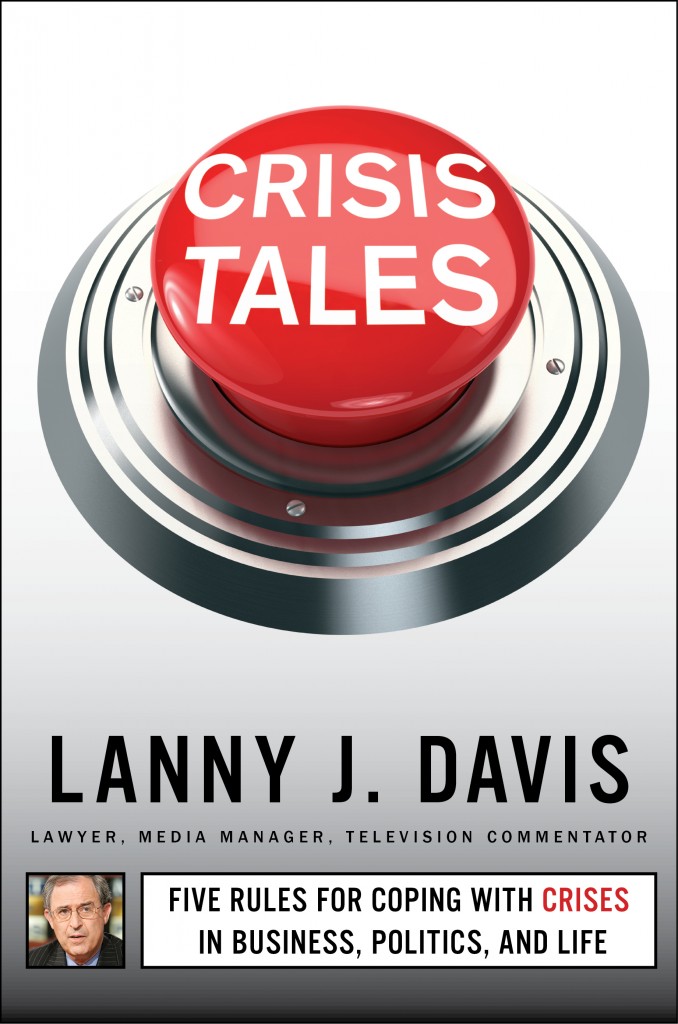 In many respects, both Lanny Davis and Michael Steele serve as political anthropologists for the other side; Lanny helps those who watch Fox understand Democrats while Michael Steele helps those who watch MSNBC understand Republicans.
 This year, Lanny and Michael joined The Luncheon Society for two gatherings. The first took place in San Francisco for a lunch over at One Market on September 10th. On the following evening—September 11th—we sat down in Los Angeles for a wonderful dinner at Napa Valley Grille. Lanny has joined The Luncheon Society on numerous occasions and one of the most memorable was on the eve of the 2008 California Primary, when the Obama people sat at one end while the Hillary people sat on the other. There were passionate arguments that last long after the desserts were collected.















 The Luncheon Society