Category Archives: Uncategorized

The Luncheon Society/Lanny Davis and Michael Steele on the 2012 Election/San Francisco—One Market Restaurant, September 10, 2012/Los Angeles—Napa Valley Grille, September 11, 2012

Add to FacebookAdd to DiggAdd to Del.icio.usAdd to StumbleuponAdd to RedditAdd to BlinklistAdd to TwitterAdd to TechnoratiAdd to Yahoo BuzzAdd to Newsvine

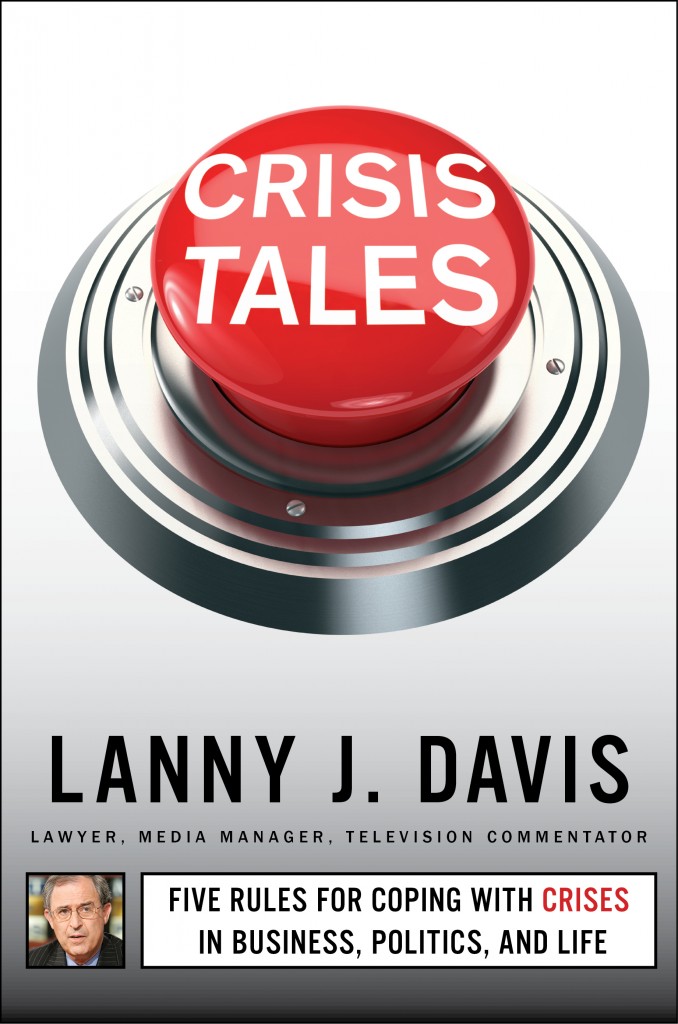
Crisis-TalesIn many respects, both Lanny Davis and Michael Steele serve as political anthropologists for the other side; Lanny helps those who watch Fox understand Democrats while Michael Steele helps those who watch MSNBC understand Republicans.

Both Lanny and Michael have held high-profile positions over the years. During the Clinton White House—especially during Monica Lewinsky mess—it was not uncommon to see Lanny Davis defend the President from those who wanted his prosecution and resignation.  Much of what he learned during that period was turned into an earlier book, “Truth to Tell: Tell it Early, Tell it Yourself” and  later “Scandal: How ‘Gotcha’ Politics is Destroying America.”   After leaving the White House, Lanny built a successful practice advising people and organizations how to deal with the political and media fallout that comes from messy and embarrassing situations.
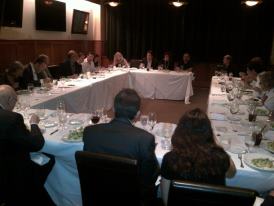
TLS Dinner in LAThis year, Lanny and Michael joined The Luncheon Society for two gatherings.  The first took place in San Francisco for a lunch over at One Market on September 10th.  On the following evening—September 11th—we sat down in Los Angeles for a wonderful dinner at Napa Valley Grille.  Lanny has joined The Luncheon Society on numerous occasions and one of the most memorable was on the eve of the 2008 California Primary, when the Obama people sat at one end while the Hillary people sat on the other.  There were passionate arguments that last long after the desserts were collected.

Continue reading

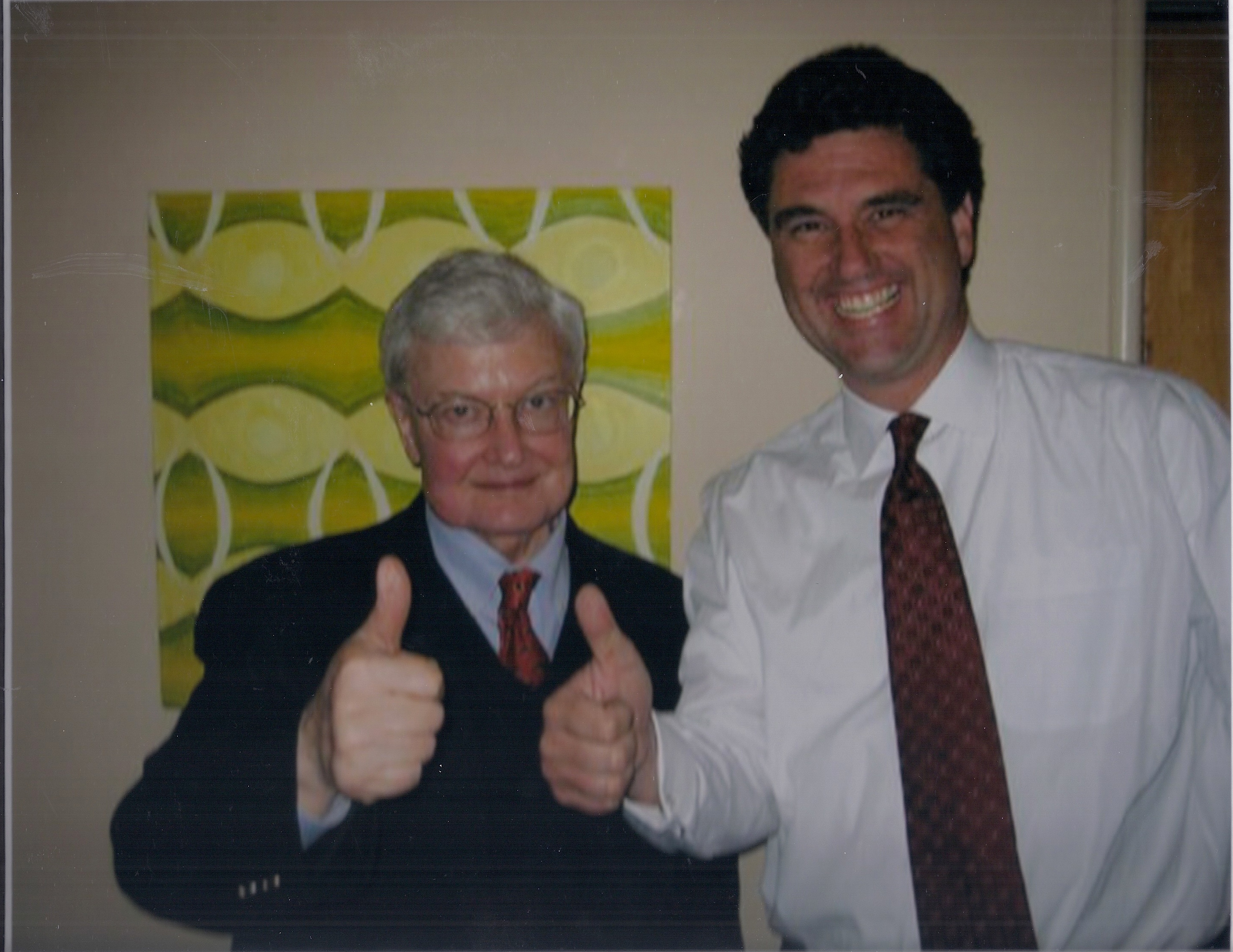
Roger Ebert (1942-2013) A Luncheon Society Appreciation from 2006

Add to FacebookAdd to DiggAdd to Del.icio.usAdd to StumbleuponAdd to RedditAdd to BlinklistAdd to TwitterAdd to TechnoratiAdd to Yahoo BuzzAdd to Newsvine

Roger Ebert“This is my happening and it freaks me out!”  For those who follow cinema, they know  the catchphrase from “Beyond the Valley of the Dolls,” a script that Ebert wrote for Russ Meyer.

This was one of the most fun Luncheon Society gatherings that I had ever planned. It took place, two days after the 2006 Academy Award Ceremony at Michael’s, a entertainment industry-friendly restaurant in Santa Monica.

The big brouhaha was who really deserved the Oscar for best picture, “Brokeback Mountain” or “Crash.” It was a dinner, which started at 7 PM and was supposed to run until 9 PM.  It was at Michaels in Santa Monica, which is staffed by struggling actors and filmmakers.  However, by the time we finally staggered out at 12 midnight, every waiter ran home to get his screenplay or her headshots. He had an early flight to Chicago and I had an early flight to San Jose.


luncheon-logo-fcThere were 5 Academy Award winners around the table, not to mention Larry Turman, who produced one of my favorite movies, “The Graduate.” With Ebert, the talk also centered on Russ Meyer, Super Vixens, and “Beyond the Valley of the Dolls” (which was the one screenplay that Ebert wrote.  Sadly it was completely off the record and most of the juicy stuff has been lost to time and addled memory.  However, I have some notes around and will try to rebuild that amazing night for our readers.

Sadly, Roger Ebert would fall deathly ill a couple of months after the luncheon but in that terrible moment, he began the bravest chapter of his life.  Never had he shone more brightly than when his health was the most fragile.

Thanks for a wonderful evening.


The Luncheon Society-SF/Abrahm Lustgarten author of Run to Failure: BP and the Making of the Deepwater Horizon Disaster/Palio d’Asti Restaurant/August 17, 2012

Add to FacebookAdd to DiggAdd to Del.icio.usAdd to StumbleuponAdd to RedditAdd to BlinklistAdd to TwitterAdd to TechnoratiAdd to Yahoo BuzzAdd to Newsvine

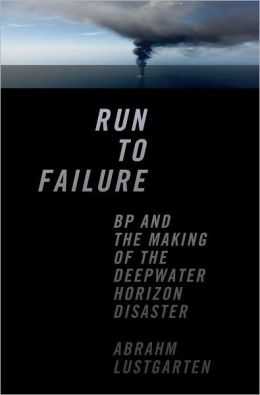
Run to FailureTo fully understand what took place during the Deepwater Horizon disaster, when 4.9 million barrels of oil spewed into the Gulf of Mexico during the summer of 2010, you have to look at the corporate culture of BP and how its senior management team blundered into a terrible chain of events.

Reporter Abrahm Lustgarten demonstrates how BP’s series of cascading failures, far beyond the disaster in the Gulf, shows how senior management turned a blind eye to the growing number of risks that were turning up within their American subsidiaries.  By choosing to grow their brand through a series of highly leveraged acquisitions, BP aimed to retire the debt by gutting the budgets for safety and quality control.  By failing to listen to their American subsidiaries, BP played a callous game of Russian Roulette when proportioning risk against gain.  This is an indictment of a corporate culture gone rouge.

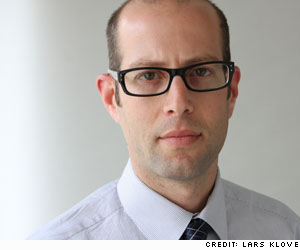
Lustgarten, a former staff writer for Fortune Magazine who now writers for Pro Publica, penned Run to Failure: BP and the Making of the Deepwater Horizon Disaster.  For a deeper understanding of what took place at BP, feel free to watch the PBS documentary on Frontline. Below is the promo

Here is the link for the full broadcast from PBS http://video.pbs.org/video/1625293496/

Abrahm LustgartenUnlike their television commercials, the oil industry is a grimy business, from the extraction of varying flavors of crude to the refined product that fuels your car and heats your home.  Many are obvious to how it arrives until there is a massive disaster.   In an industry chocked full of inherent risks, most oil producers are dead serious when it comes to safety management because they understand the true costs of a disaster when something goes terribly wrong.  Many Alaskans still talk of the Exxon Valdez disaster as if it happened last week because the coastline is still dealing with the aftereffects over two decades later.

That was a lesson, Lustgarten says, BP never got around to learning. Continue reading

The Luncheon Society-LA/Stephen Tobolowsky and power of character acting/Napa Valley Grille/July 7, 2012

Add to FacebookAdd to DiggAdd to Del.icio.usAdd to StumbleuponAdd to RedditAdd to BlinklistAdd to TwitterAdd to TechnoratiAdd to Yahoo BuzzAdd to Newsvine

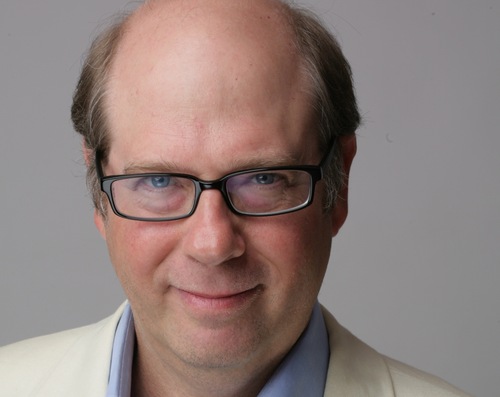
Stephen TobolowskyStephen Tobolowsky speaks the truth when he says “don’t fear castrophe.”

For the past quarter century, Stephen Tobolowsky has been one of the most in-demand character actors found on film and television.  He is one those select few who we’ve all seen in a variety of film and movies, even if we cannot remember his name.  Tobolowsky is a rare find; he is one of those character actors who unpack the sum total of all of his roles whenever he shows up on screen.  Now that our viewing habits are taking us into webisodes and other niche forms of streamed content, I am sure that Stephen’s ability to develop a minor character into a memorable role will only increase.

Character actors have long been the staple of any film. They are the glue that has held many productions together, especially when the writing was weak.  Whenever you pick up a script, the main characters have everything fleshed out for them.  We now their name, their job, and what they have for breakfast; we know what they drink in the morning and who they sleep with at night.  These actors are found above the title and the great ones are paid millions to grace the screen, but unless you’re headlining “Mark Twain Tonight,” the relationship between the plot and the star is cemented and reinforced by the character actor.

When you think of many of the great character roles that you’ve seen over the years, they crawl off a screenwriter’s laptop as one or two dimensional roles.  They are fleshed out further by the imagination and the freedom of those character actors.  Character roles in comedies seem to find their way into the script as job titles (the plumber) or as last names in dramas (Mr. Jones)  and they would act as reminders to the main stars (and the audience) to the audience of where the plot was heading.  Often killed off with a tap of a keyboard, they never get the girl and may only rise to the level of best friend or coworker.

Those who doubt the power of great character actors should reflect back on The Godfather, where a majority of the moments that made the film a classic where interactions driven by the supporting characters, not Al Pacino or Marlon Brando.

Continue reading

The Luncheon Society-NY/Pulitzer Prize Winning Author David Maraniss and Barack Obama’s early years/ PrimeHouse Restaurant/June 19, 2012

Add to FacebookAdd to DiggAdd to Del.icio.usAdd to StumbleuponAdd to RedditAdd to BlinklistAdd to TwitterAdd to TechnoratiAdd to Yahoo BuzzAdd to Newsvine

17maraniss</p> <p>"Barack Obama" by David MaranissMost presidential biographies have arc upwards over several generations. They combine parental ambition, native drive, and glorious luck; and we have also seen this dream play out over and over again.

After Joe Kennedy’s presidential aspirations went up in flames, he transferred his ambition to the next generation, first to his son Joe and later to John.  Some say Jeb and George W. Bush entered politics to avenge their father’s loss, after he was soundly beaten by Bill Clinton.  Nobody entered the White House with more Brahmin entitlement than Franklin Roosevelt, back when old wealth, old-boy connections, and family lineage really mattered.  For these families, rising to the Oval Office remained a birthright, even long after it became elusive dream for successive generations.

Some Presidents like Richard Nixon or Harry Truman began with hardscrabble origins but Barack Obama’s story takes the cake.

Eight years before he was accepted the nomination in Denver and four years before he electrified the delegates at the 2004 Boston Convention, an unknown Illinois State Senator named Barack Obama was stuck at the Hertz counter at Los Angeles International Airport trying to rent a car because his American Express Card was denied.
How could somebody rise so fast?  In David Maraniss’s new book, “Barack Obama:  The Story,” we get to the heart of his early influences.  We were very fortunate that our old friend Stephen Schlesinger was able to moderate a delightful discussion at Prime House in Manhattan. This is David Maraniss’s third gathering with the Luncheon Society.

Continue reading

The Luncheon Society–we are catching up.

Okay  Gang, we’re behind again on our Luncheon Society narratives.  We had  great gatherings with  David Maraniss in Manhattan and a knockout gathering with character actor extraordinaire Stephen Tobolowsky in LA.  We also had a great one with Abrahm Lustgartenin San Francisco on the problems with BP’s management that led to the disaster in the Gulf. Then we had wonderful gatherings with Lanny Davis and Michael Steele in Los Angeles and San Francisco.  Hanna Rosin, who wrote “The End of Men,” stopped down in San Francisco.  Neil Barofsky, the former Enforcement Czar of TARP talked about real transparency in a “too big to fail age.” We finished things off with a 40th anniversary conversation with Academy Award winning screenwriter Jeremy Larner, who wrote “The Candidate.” 

More to come.  I am spending some extra time getting them up on line.

The Luncheon Society/Joyce Carol Oates on “A Widow’s Story, a Memoir”/San Francisco—One Market Restaurant/March 21, 2011/Manhattan—The Century Club October 14, 2011

Add to FacebookAdd to DiggAdd to Del.icio.usAdd to StumbleuponAdd to RedditAdd to BlinklistAdd to TwitterAdd to TechnoratiAdd to Yahoo BuzzAdd to Newsvine

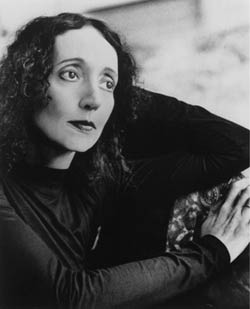
Joyce Carol Oates fights for the underdog.  In “Black Water,” she imagines a fictionalized version of Chappaquiddick seen through the eyes of a thinly veiled character drawn to resemble Mary Jo Kopechne, hoping that the Senator would return to rescue her as her life ticks away.  In an upcoming post-modern novel, she is re-imagines the friendship between two doomed Hollywood personae, Marilyn Monroe and Elizabeth Short, as they moved in the some of the same circles. Monroe became a Hollywood icon and died famously in 1962. Short emerged as famous the victim in “The Black Dahlia,” a murder that haunts Los Angeles to this very day.

In her latest work, she is the underdog we root for as she moves through a difficult chapter of her own life.


The Luncheon Society sat down with Joyce at One Market in San Francisco and The Century Association, thanks to the kind intercession of Enzo Viscusi.

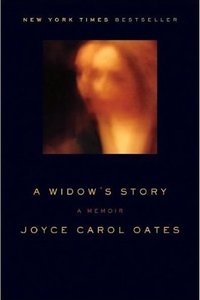
Her output is nothing short of prodigious. At the moment, Joyce Carol Oates has penned 60 novels, 30 collections of short stories, 10 volume of poetry, and all are written by hand. She joined The Luncheon Society in San Francisco and Manhattan to discuss her latest personal and moving book titled, “A Widow’s Story, A Memoir,” which detailed her descent into widowhood.

“My Husband died, my life collapsed.” As the book jacket notes, “A Widow’s Story illuminates one woman’s struggle to comprehend a life without the partnership that had sustained and defined her for nearly half a century. As never before, Joyce Carol Oates shares the derangement of denial, the anguish of loss, the disorientation of the survivor amid a nightmare of “death-duties,” and the solace of friendship. She writes unflinchingly of the experience of grief—the almost unbearable suspense of the hospital vigil, the treacherous “pools” of memory that surround us, the vocabulary of illness, the absurdities of commercialized forms of mourning. Here is a frank acknowledgment of the widow’s desperation—only gradually yielding to the recognition that this is my life now.” Continue reading

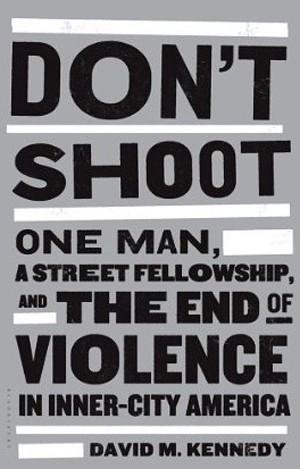
The Luncheon Society/Criminologist David Kennedy on his memoir “Don’t Shoot” on how to decrease urban violence/San Francisco-Palio d’Asti/October 4, 2011

Add to FacebookAdd to DiggAdd to Del.icio.usAdd to StumbleuponAdd to RedditAdd to BlinklistAdd to TwitterAdd to TechnoratiAdd to Yahoo BuzzAdd to Newsvine

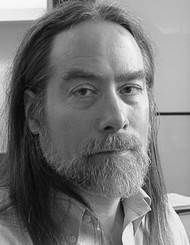
Most people view urban crime from the safety of the own living rooms. However, criminologist David Kennedy grabs the problem by the scruff of the neck and has created a template, if deployed correctly, might end the cycle of violence that has become commonplace for so many lawless urban neighborhoods. 

The Luncheon Society has looked at crime  (its sources and its impact) though a number of authors.  Our friend and sociologist Peter Moskos published a book detailing his field world as a police officer in Baltimore’s roughest neighborhoods, which was seen in HBO’s The Wire titled, “Cop in the Hood.”  This year he published a sly polemic titled, “In Praise of the Lash” which takes another look at how we punish offenders.  Time magazine’ Ioan Grillo joined us in San Francisco and Manhattan for a stark conversation about the growth of “El Narco,” the drug-fueled insurgency that is slowly strangling Mexico’s national sovereignty.

In Kennedy’s book , Don’t Shoot: One Man, A Street Fellowship, and the End to Violence in Inner-City America, he pens an impassioned memoir of how his approach had improved the worst of neighborhoods plagued by drug violence.

Crime is down—but where is it up? When you look at FBI statistics, crime rates—including violent crime—continue to decrease incrementally.  However, this is not the case in some of the roughest urban communities, where an African-American male has a 1:200 chance to getting killed by gunfire. It has devolved to the point where some first responders may think twice before entering into some of the neighborhoods.  Traditional law enforcement of governmental assistance has failed to stem the tide and as a result, these neighborhoods are essentially written off by municipal leaders. As a result, the festering cancer of criminal behavior becomes multigenerational in scope with no jobs, no future, and no hope.


What David Kennedy has done—even though he is an academic as director of the Center for Crime Prevention and Control at CUNY’s John Jay College of Criminal Justice—is to immerse himself into the worst of the neighborhoods and figure out answers to build solutions. Continue reading

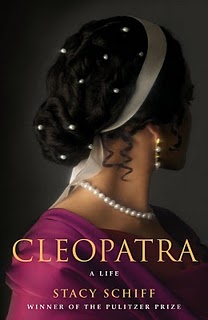
The Luncheon Society/Pulitzer Prize winning biographer Stacy Schiff on “Cleopatra, A Life”/San Francisco—Credo September 12, 2011

Add to FacebookAdd to DiggAdd to Del.icio.usAdd to StumbleuponAdd to RedditAdd to BlinklistAdd to TwitterAdd to TechnoratiAdd to Yahoo BuzzAdd to Newsvine

There’s a great movie line that says, “When the legend becomes fact, print the legend.” However, when looking at Cleopatra, her life outpaces any legend.

In contemporary terms, Cleopatra is seen through the refracted lens of Elizabeth Taylor’s Hollywood portrayal.  Bits and pieces were added into the stew throughout the centuries, with generous helpings from Plutarch and William Shakespeare. She wasn’t the classic beauty as seen through modern eyes, but she had the guile and smarts to outmaneuver her enemies and build an empire.  It kept her in power for a generation and launched the persona that remains until this very day.  

Unlike many leaders of antiquity, there are no source documents for Cleopatra’s reign or even her life. Only one word from Cleopatra has survived the centuries, “Genesthoi,” which means, “Let it be done.”   The ensuing stories were written by Cleopatra’s enemies during and after her fall written by Romans and were largely fiction. They portrayed her as the libidinous tramp who used her wiles to entrap and weaken the two main leaders of her generation, Julius Caesar and Mark Antony.  


Cleopatra, A Life,” written by Pulitzer Prize Winning author Stacy Schiff, takes us into her world by compiling the source documents of that era to give us the best understanding of her times. Wedged into history three centuries after Alexander the Great but only a generation before the birth of Christ, Schiff constructs an ancient world and examines her life—right up to her death. When the facts present two alternatives, she explores them all in great detail. Did Cleopatra die of an asp bite to the breast or by drinking a cocktail of poison? Is either just another piece of fiction that embellishes the legend but hides the fact? Continue reading

Redford Biographer Michael Feeney Callan on the actor, his films, and the impact of Sundance/San Francisco—Palio D’Asti/June 20, 2011

Add to FacebookAdd to DiggAdd to Del.icio.usAdd to StumbleuponAdd to RedditAdd to BlinklistAdd to TwitterAdd to TechnoratiAdd to Yahoo BuzzAdd to Newsvine

To say Robert Redford is merely a pretty face is a shopworn cliché—but to say his profile launched a thousand indie movies is a spot-on fact.

Icon as Iconoclast. No person has done more to engender the spirit of independent filmmaking over the past generation than Redford and Michael Feeney Callan has written a wonderful Hollywood tale that has encapsulated his long-awaiting biography.

Excerpted in Vanity Fair, Callan tees up Redford’s life in the book jacket, “Among the most widely admired Hollywood stars of his generation, Redford has appeared onstage and on-screen, in front of and behind the camera, earning Academy, Golden Globe, and a multitude of other awards and nominations for acting, directing, and producing, and for his contributions to the arts. His Sundance Film Festival transformed the world of filmmaking; his films defined a generation. America has come to know him as the Sundance Kid, Bob Woodward, Johnny Hooker, Jay Gatsby, and Roy Hobbs. But only now, with this revelatory biography, do we see the surprising and complex man beneath the Hollywood façade.”

“From Redford’s personal papers—journals, script notes, correspondence—and hundreds of hours of taped interviews, Michael Feeney Callan brings the legendary star into focus. Here is his scattered family background and restless childhood, his rocky start in acting, the death of his son, his star-making relationship with director Sydney Pollack, the creation of Sundance, his political activism, his artistic successes and failures, his friendships and romances. This is a candid, surprising portrait of a man whose iconic roles on-screen (Butch Cassidy and the Sundance Kid, All the President’s Men, The Natural) and directorial brilliance (Ordinary People, Quiz Show) have both defined and obscured one of the most celebrated, and, until now, least understood, public figures of our time.”


Continue reading