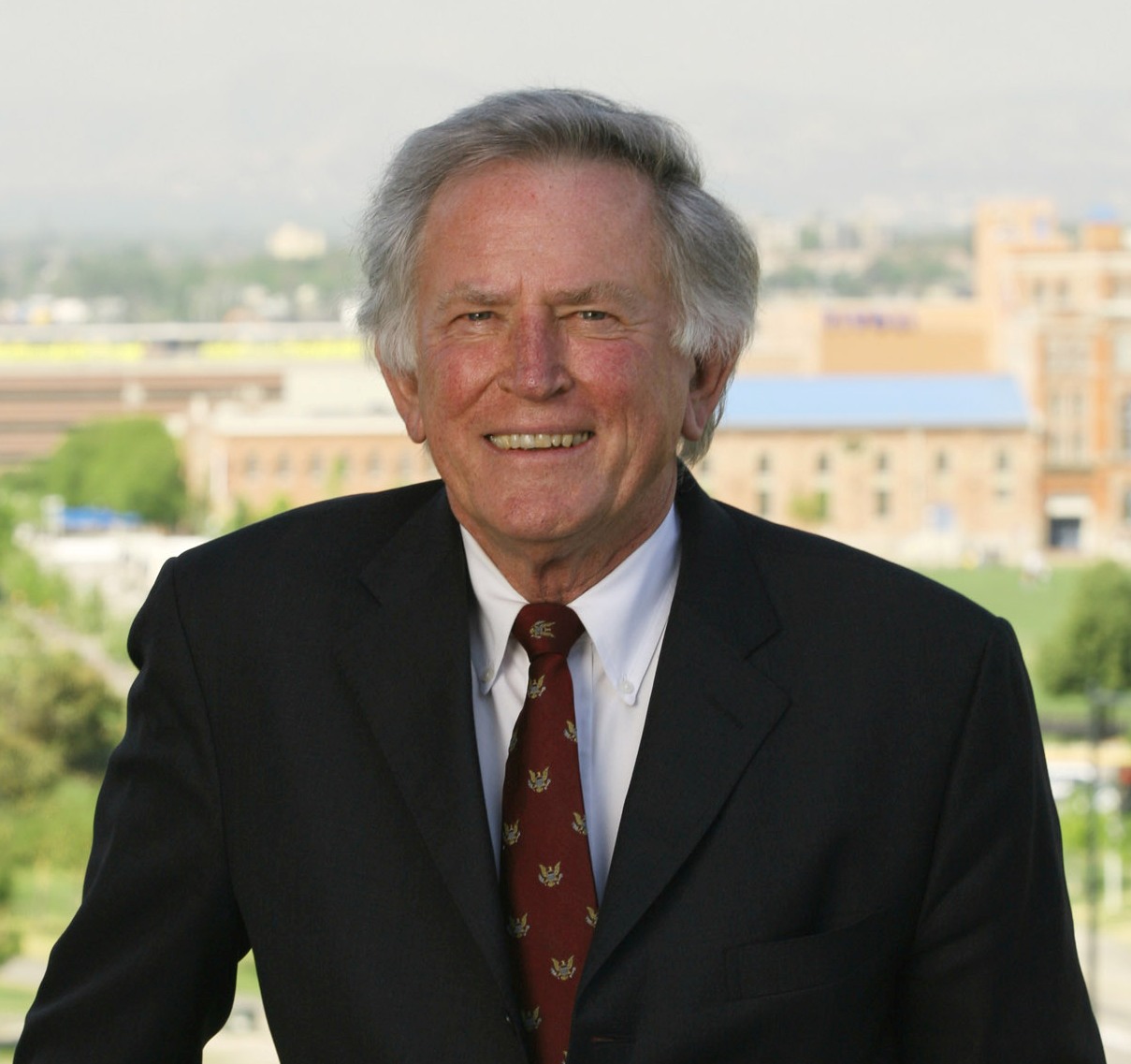
Gary Hart has consistently trod the unbeaten path. As a young Denver attorney, he hooked up with George McGovern, the darkest of dark horses, and together rewrote the book on how to win the Democratic nomination. Two years later, Hart ran for the US Senate from Colorado, a state where Nixon had crushed McGovern two years before. He rode the post-Watergate Democratic tidal wave and entered the Senate at the tender age of 37. In 1984, Hart’s own presidential insurgency nearly knocked off Walter Mondale as he challenged Democrats to look to the future instead of their past.
By crafting a candidacy based on “the new,” Hart discovered the door which others, like Clinton and Obama, successfully opened in later contests. Walter Mondale, on the other hand, represented the past and became a forlorn caricature that Republicans were able to lampoon to a 49 state win. Continue reading →
Can a group, defined solely by its religious affiliation, transform into the intellectual and social leaders of their time? Can they do it within three generations? In Michael Goldfarb’s sprawling history of European Jews, Emancipation, the answer is yes.
Until the eve of French Revolution and the rise of Napoleon, Jews of Europe were marginalized by society, segregated in ghettos, and denied the basic rights of citizenship in their native lands.
It is astounding that from 1482 until 1796, all of Frankfurt’s Jews were housed in a squalid neighborhood called theJudengasse, which directly translated means Jewish alley or Jewish street. They were herded there by an edict from Emperor Frederic III and the ghetto gates were locked by the city burghers on nights and weekends. Even as these populations grew over centuries, they remained sandwiched into the same small plot of real estate. This was the way of life in cities and rural areas throughout Europe.
In a story that remains largely untold, Goldfarb grabs the reader at the eve of the French Revolution and guides them through the next 125 years until the dawn of the First World War. In less than three generations after Emancipation, a young patent clerk named Albert Einstein was poised to revolutionize Physics, Sigmund Freud created psychoanalysis, and the Rothschild family created a global manufacturing and banking empire that spanned Europe. Continue reading →
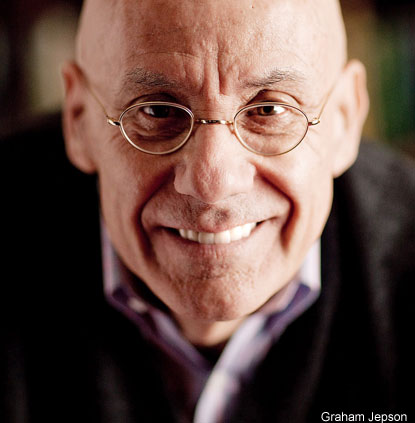
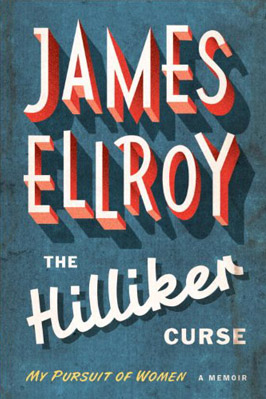
“On my 10th birthday,” James Ellroy began, “my mother Jean Hilliker hit me with a book I had read on spells and witchcraft. After that, I summoned her dead. Three months later she was murdered and it is a crime which remains unsolved to this very day. It’s a burden of guilt that I have carried for a half century. My mother, from the hereafter, mediates my relationships with women. Her death induced in me a tremendous curiosity for all things criminal. I had to go out and write.”
And write he did.
Dining with James Ellroy summons a conversation only found in novels written by James Ellroy. An austere staccato drove the narrative through all three courses, his dialogue came forth in great bursts in each of the three cities, and like in MUCH of his writing over the years, the discussion took several surprising turns.
With that opening line seared into us, The Luncheon Society began its three city odyssey with alpha dog crime writer James Ellroy. Seated next to James throughout was Erika Schickel, the woman who is central to his life and perhaps the key that unlocks The Hilliker Curse, his memoir on how his mother’s grisly death drove the tenor of his relationship with women.
Erika is also a friend of The Luncheon Society who has joined in the past. She also helped organize a wonderful gathering with her father, Richard Schickel, who is one of the best film writers in the industry earlier this year.
No slouch to the printed or spoken word, Erika published a knock-out memoir several years back titled, You’re Not the Boss of Me: Adventures of a Modern Mom, a self portrait of post-hipster life on the suburban plain. She also wrote a well-received play a decade earlier titled Wild Amerika, a “meditation on mating, monogamy, and motherhood – from a Darwinist point of view.” She is now hard at work on a follow up to her earlier book, tentatively titled “Adult Supervision.”
Folks, this was a piece written in May 2009 by an old pal and LA writer Blair Tindall and it captured the essence of The Luncheon Society when we celebrated the 5th anniversary of the Mars Rover landings in Beverly Hills back in January 2009. Blair is probably best known for her memoir Mozart in the Jungle, which captured the harrowing life of the free-lance artist trying to make a career in the music business.
One Night at The Luncheon Society/Blair Tindall
“The best conversations always happen after the second glass of wine,” laughed Bob McBarton as he strode into Morton’s Steakhouse in Beverly Hills and began leaving a thick pile of biographies at each seat.
Collated and stapled, they detailed the diverse backgrounds of thirty members of The Luncheon Society a private assemblage of people with almost nothing in common, except their love for the lost art of conversation. They gathered to celebrate the 5th anniversary of the landing of both Martian Rovers on the Red Planet with Dr. Steven Squyres , the mission’s Principal Investigator, leading the conversation.
Waiters served cocktails as unlikely alliances emerged between scientists, politicians, lawyers, entrepreneurs, actors, writers, and academics alike. A concert cellist who designs chips for Microsoft discussed the state of filmmaking with a major film archivist in Southern California. Several attorneys found themselves talking with two men who sent unmanned spacecraft to the surface of the Moon during the early 1960’s that paved the way for those first steps by Neil Armstrong and Buzz Aldrin. Space architect John Spencer, who helped design parts of the International Space Station, walked though his plans for to recreate the Martian surface in the Nevada desert to the Senior Counsel at MGM as well as a West LA political activist who raised funds for President Obama, long before he emerged on the national scene. Vanity Fair writer Cari Beauchamp, who nursed a well-deserved cocktail after receiving great notices from her biography of Joe Kennedy’s Hollywood years, regaled tales from the hurly–burly days of the mid 1970’s when she served as Jerry Brown’s Press Secretary to a pair of wide-eyed entrepreneurs and a doe–eyed UCLA law professor. Continue reading →
The New York Times has called David Finkel’s latest book, The Good Soldiers , one of best non-fiction entries about the fighting in Iraq and it paints a gripping portrait from the soldier’s point of view.
Finkel’s book, which was a “top ten book of 2009” selection by The New York Times, The Chicago Tribune, Slate.Com, The Boston Globe, The Kansas City Star, The Cleveland Plain Dealer The Christian Science Monitor as well as several other news organizations, has now been published in soft cover. Finkel won a 2006 Pulitzer Prize for the Washington Post based on his reporting on American efforts to fund democracy projects within Yemen and he lives with his family in Maryland.
On tour to support the release, Finkel sat down with The Luncheon Society in San Francisco at Palio d’Asti, a long time favorite locale for our group.
Finkel argues that every war is fought on two levels. The first is found within the corridors of power that flow between the White House, Congress, and the Pentagon. This is a world where paper battles rage between the participants and the only front-line casualties are wounded egos and reputations. These conflicts fill the tomeswritten by people like Bob Woodward and when compared to the battle theater, they read as if the real fighting was some far-off abstraction. Continue reading →
“If you think the night sky is a tranquil place,” former Apollo astronaut Rusty Schweickart says, “consider what may tumble down from the heavens.”
65 Million years ago, a Near Earth Asteroid (NEA) 6 miles in diameter, slammed into the Earth along the Yucatan peninsula, near Chicxulub. It had the power of a 100 Million megaton nuclear blast (the largest man-made nuclear bomb is only 50 megatons) and over 75% of life on Earth, including the dinosaurs, plants, and other life forms vanished. Life hung by a thread.
The Discovery Channel created a stark video which detailed what would happen if a 500 km NEA crashed into the Earth.
There have been at least 5 ELEs (Extinction Level Events) during the last 500 million years of Earth’s history, not counting the Big Daddy of them all when a Mars-sized object slammed into a young Earth 4.5 billion years ago. The collision was so immense that the Earth’s surface melted, was blasted into space and the core was exposed. Over the next millions of years, the Earth slowly healed. However there is a nightly reminder of what took place; the gravitational pull of the debris coalesced into the current consensus of how the Moon was formed.
These events have happened before and they will most certainly happen again. “We live in a cosmic shooting gallery, Rusty Schweickart noted, “and that being hit by a ‘big one’ is simply a matter of time. We have in our sister planet, the Moon, an excellent history of the visitation record of NEAs and comets to our local neighborhood.” Those craters on the Moon are the results of direct strikes.
Consider this. On Friday April 13, 2029 (yes, Friday the 13th) 99942 Apophis, a Near Earth Asteroid, will pass within 24,000 miles of Earth, just under our geosynchronous satellite field. In astronomical terms, this is an incredibly close call. When first discovered in 2004, there were global concerns that it might hit the planet in 2029 or on its return trip on Easter Sunday 2036. NASA has since downgraded the strike percentage to 1:233,000 and they will better refine their calculations in 2013 when the orbit of 99942 Apophis next brings it within tracking range. While the NEA is only three football fields in length and no more than 300 meters across, its packs a punch. If it were to collide with Earth, it would unleash the equivalent of a 510 megaton nuclear blast. Continue reading →
To understand the political despair found in the African nation of Cameroon, look at those who have left the county.
Not only are the Best and Brightest are leaving, the brain drain is accelerating, and those who travel overseas to further their education rarely return home. Within a short period of time, they join the growing ranks of Cameroon’s Diaspora, which now numbers in the tens of thousands. They have resettled across the globe but in the United States, most live in Boston, New York, Washington, Houston, San Francisco and Los Angeles. They have become successful in their chosen fields and they are raising their families with one foot in the United States and one foot back home in Cameroon.
They are wonder aloud why the political reform is succeeding in neighboring countries like Ghana but has floundered in their own homeland.
The Diaspora Outreach. That is why reform-minded Presidential Candidate Bernard Muna is traveling around the United States, reaching out to members of the Cameroonian expatriate community, as he prepares for the 2011 national elections. Muna is here to make his case why his coalition can transform Cameroon politically and economically.
It is a rare to be present as democracy stirs in the hearts of those who want change. Roughly half who joined The Luncheon Society ™ gatherings in Los Angeles and San Francisco were members of the Diaspora. They came to hear Muna, an international attorney, who is early stages of running for President. He is running against Paul Biya, whose corrosive three decade dictatorship has driven Cameroon into the ground. Continue reading →
I thought I would quickly touch base now that we have completed the first half of 2010.Thus far there have been 19 gatherings San Francisco, Los Angeles, and Manhattan. We look for an equal number in the second half and should round out the year at 38-40.
Reminder.To remind everybody, the SF and the LA Luncheon Society gatherings for Christopher Hitchens have been postponed and will be rescheduled later in 2010.
The Luncheon Society website.For those who are unable to join us around the table, you can subscribe to have The Luncheon Society summaries sent via email. Click on the links below to learn more about the luncheons. Continue reading →
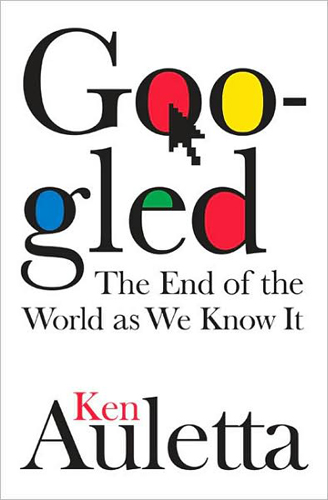
In 1998, Ken Auletta sat down with Bill Gates for a extended New Yorker interview while Microsoft was on trial for allegedly violating the Sherman Anti-Trust Act. At issue was a question as simple as it was complex: had Microsoft abused its de facto monopoly within the PC operating system market?
During the interview, Auletta asked Gates “what scared him, what kept him up late at night?” The answer surprised Auletta because it ripped away the veneer of paranoia that pervaded every corner of high tech. As Gates grabbed a Diet Coke for himself (and neglected to offer one to Auletta) he was worried about innovations he could not see.
Gates believed Microsoft could handle Apple, Netscape, or Yahoo; it could acquire what it could not crush. However, Gates worried that somewhere, some place there were a couple of young kids in a garage inventing something that would render Microsoft obsolete. Continue reading →
Our Luncheon Society friend Roz Savage completed her solo row across the Pacific Ocean last week. She broke the voyage into three legs, the first from San Francisco to Hawaii in 2008, the second, from Hawaii to Kiribati in 2009, and finally the third leg from Kiribati to Madang in Papua New Guinea, which she completed on Friday.
All in all, Roz covered 8,000 miles in a 23ft boat. To view the Luncheon Society summary from her meetings with the Los Angeles and San Francisco groups, link here.
As quoted in today’s London Daily Mail, “I’m already starting to think about the next one.” Roz previously crossed the Atlantic in 103 days and uses her trips to promote environmental causes.
Well done, Roz; well done indeed.
The Luncheon Society ™ is a series of private luncheons and dinners that take place in San Francisco, Los Angeles, Manhattan, and Boston. We essentially split the costs of gathering and we meet in groups of 20-25 people. Discussions center on politics, art, science, film, culture, and whatever else is on our mind. Think of us as “Adult Drop in Daycare.” We’ve been around since 1997 and we’re purposely understated. These gatherings takes place around a large table, where you interact with the main guest and conversation becomes end result. There are no rules, very little structure, and the gatherings happen when they happen. Join us when you can.


 Gary Hart has consistently trod the unbeaten path. As a young Denver attorney, he hooked up with George McGovern, the darkest of dark horses, and together rewrote the book on how to win the Democratic nomination. Two years later, Hart ran for the US Senate from Colorado, a state where Nixon had crushed McGovern two years before. He rode the post-Watergate Democratic tidal wave and entered the Senate at the tender age of 37. In 1984, Hart’s own presidential insurgency nearly knocked off Walter Mondale as he challenged Democrats to look to the future instead of their past.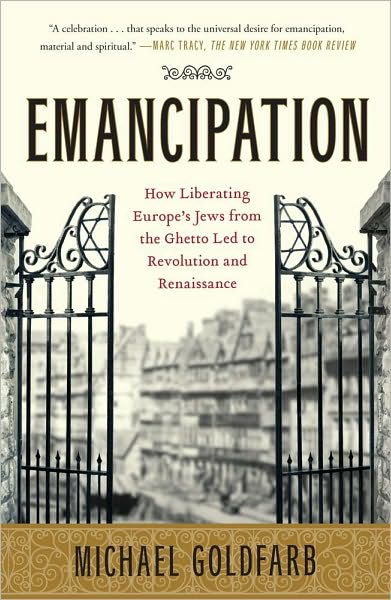











 The Luncheon Society
