The Luncheon Society/Silicon Valley pioneer William Draper on his new book, “The Start Up Game”/San Francisco—Credo/February 22, 2011

Add to FacebookAdd to DiggAdd to Del.icio.usAdd to StumbleuponAdd to RedditAdd to BlinklistAdd to TwitterAdd to TechnoratiAdd to Yahoo BuzzAdd to Newsvine

In late 2010, I got an email from Becky Draper, a friend and Bill’s daughter, to organize a Luncheon Society to support her father’s book.  Besides being the founding rock upon which Silicon Valley was built, he and Pitch Johnson made those early investments in the valley back in the day when what a VC actually did had to be explained to emerging entrepreneurs. Of course, we quickly said yes.

Draper’s father was a banker at Dillon Reed, an army officer, and diplomat. During the Berlin Airlift, the senior Draper worked with General Lucius Clay, who organized the rescue of the city after it had been cut off by the Soviets. The younger Draper was there too, as an attaché to his father.

After the war and a job at Inland Steel, he and Pitch Johnson headed west to make their fortunes. Those thoughts and other are found in his new book, The Startup Game, and it is a book that has been well-received in many quarters. The majority of those around the table were in the starting phases of their own entrepreneurial efforts.

Since the Fortune.com “q and a” piece by Dan Primack captured so much of the conversation, I just decided to rerun his piece. Continue reading

The Luncheon Society/Jonathan Alter and Richard Wolffe/Obama Midterm in his First Term/Manhattan—PrimeHouse/February 10, 2011

Add to FacebookAdd to DiggAdd to Del.icio.usAdd to StumbleuponAdd to RedditAdd to BlinklistAdd to TwitterAdd to TechnoratiAdd to Yahoo BuzzAdd to Newsvine

Richard Wolffe and Jonathan Alter have put together the best historical first draft of the Obama Presidential Campaign and the first two years of the Presidency. Richard Wolffe wrote Renegade, the inside story of the rise of Barack Obama and his campaign as it emerged from the doldrums of 2007 to the early caucuses and primaries into the Denver Convention in 2008.  The Promise, by Jonathan Alter, follows the Obama White House through the early days of the Obama White House, including the challenges of building out an endgame of Afghanistan and dealing with some of the conflicting personalities on his economic team.  In the third book in the troika, Richard Wolffe returns with Revival, which expands the thematics of his first book and parachutes them right into the healthcare debate.  

Richard Wolffe has joined The Luncheon Society on three occasions (most recently last December 2010 in Los Angeles) and Jonathan Alter has joined us twice, both times in Manhattan.

A great story before we begin.  Steve Schlesinger, the son of Arthur Schlesinger Jr, a former speechwriter for Mario Cuomo and the Director of the World Policy Institute at the New School University reflected on the irony that during the 1980’s his father’s next door neighbor was non-other than Richard Nixon, the bete noire of the Kennedy Administration. His younger brother Robert would look over the back fence only to be shooed away by the Secret Service and when Nixon sat out in the backyard, it was often in full suit and tie.

To get a detailed breakout of the gathering we had in Los Angeles with Richard Wolffe, here are the notes from that gathering.  Revival came out as the profile of the Administration was battered from the midterms, but between the release and that December dinner, Barack Obama made the best use of the Lame Duck session and compiled the best legislative record since Lyndon Johnson’s first full term. Continue reading

The Luncheon Society/Richard Panek and “The 4% Universe, Dark Matter, Dark Energy, and the Race to Discover the Rest of Reality”/San Francisco—Palio D’Asti/January 27, 2011

Add to FacebookAdd to DiggAdd to Del.icio.usAdd to StumbleuponAdd to RedditAdd to BlinklistAdd to TwitterAdd to TechnoratiAdd to Yahoo BuzzAdd to Newsvine

In Richard Panek’s latest book, “The 4% Universe,” he asks, “What if everything we knew about the universe was wrong?” Who will solve the riddle? Somebody is going to figure this out and will win the Nobel Prize to become the Einstein of their age. We have only just begun to understand what’s “out there.”  

Richard Panek, who has also written “Invisible Century: Einstein, Freud, and the Search for Hidden Universes” and “Seeing and Believing: How the Telescope Opened our Eyes and Minds to the Heavens,” has an unerring knock of explaining complex scientific concepts to the rest of us.

There are times that somebody else can better describe a gathering than me. On January 27th, we had a mind-blowing conversation with New York Times Science writer Richard Panek surrounding the glue that keeps our universe together, most notably Dark Matter and Dark Energy. Continue reading

The Luncheon Society/Healthcare Whistleblower Wendell Potter on his book “Deadly Spin”/San Francisco—Fior D’Italia/December 10, 2010

Add to FacebookAdd to DiggAdd to Del.icio.usAdd to StumbleuponAdd to RedditAdd to BlinklistAdd to TwitterAdd to TechnoratiAdd to Yahoo BuzzAdd to Newsvine

There’s an old joke that says, “there are two sides to every story—but the bad side pays better.” If a conservative is a liberal who has been mugged, perhaps a liberal might just be a conservative who has been hung out to dry by the health insurance industry.

For nearly two decades, Wendell Potter served as the top Public Relations executive at CIGNA and an health insurance industry insider until he resigned in 2007.  Wendell Potter’s career as an insurance industry whistleblower began in June 2009 as an expert witness in front of a US Senate Committee on Commerce, Science and Transportation, while the healthcare debate was still in full bloom.

His testimony began:

“Mr. Chairman, thank you for the opportunity to be here this afternoon. My name is Wendell Potter and for 20 years, I worked as a senior executive at health insurance companies, and I saw how they confuse their customers and dump the sick — all so they can satisfy their Wall Street investors.

I know from personal experience that members of Congress and the public have good reason to question the honesty and trustworthiness of the insurance industry. Insurers make promises they have no intention of keeping, they flout regulations designed to protect consumers, and they make it nearly impossible to understand — or even to obtain — information we need. As you hold hearings and discuss legislative proposals over the coming weeks, I encourage you to look very closely at the role for-profit insurance companies play in making our health care system both the most expensive and one of the most dysfunctional in the world. I hope you get a real sense of what life would be like for most of us if the kind of so-called reform the insurers are lobbying for is enacted.

When I left my job as head of corporate communications for one of the country’s largest insurers, I did not intend to go public as a former insider. However, it recently became abundantly clear to me that the industry’s charm offensive — which is the most visible part of duplicitous and well-financed PR and lobbying campaigns — may well shape reform in a way that benefits Wall Street far more than average Americans.” Continue reading

The Luncheon Society/MSNBC’s Richard Wolffe on his new book, “Revival, The Struggle for Survival in the Obama White House”/Los Angeles—Café Del Rey/December 6, 2010

Add to FacebookAdd to DiggAdd to Del.icio.usAdd to StumbleuponAdd to RedditAdd to BlinklistAdd to TwitterAdd to TechnoratiAdd to Yahoo BuzzAdd to Newsvine

There are times when Luncheon Society gatherings come blessed with unbelievable serendipitude; our evening dinner in Santa Monica with MSNBC’s Richard Wolffe underlined our luck.

Hours earlier, President Obama announced that he had struck a deal with the Republicans to extend the Bush era tax cuts for another two years, including those who made above $250,000 per year. There would be much to discuss.

It was a compromise that ran counter to promises from his 2008 campaign.  A number of progressive commentators, along with many around our table, howled with cries of “betrayal,” and “weak.”  However, as I scribbled a few recollections a month later, it appears that the President has rebuilt his fortunes, recaptured his momentum, and even may have gotten the last laugh. 

First, when any deal is struck between Congress and the White House, the President (by virtue of the gravitas of the office) earns the lion share of the accolades. Like baseball, the tie goes to the runner.  Second, by removing the tax cut extension issue as a thorn, it opened the door for some landmark legislation, including the repeal of Don’t Ask, Don’t Tell, the New START Treaty, the Food Safety Bill, the Defense Authorization bill , and a continuing resolution to keep funding the federal government. Continue reading

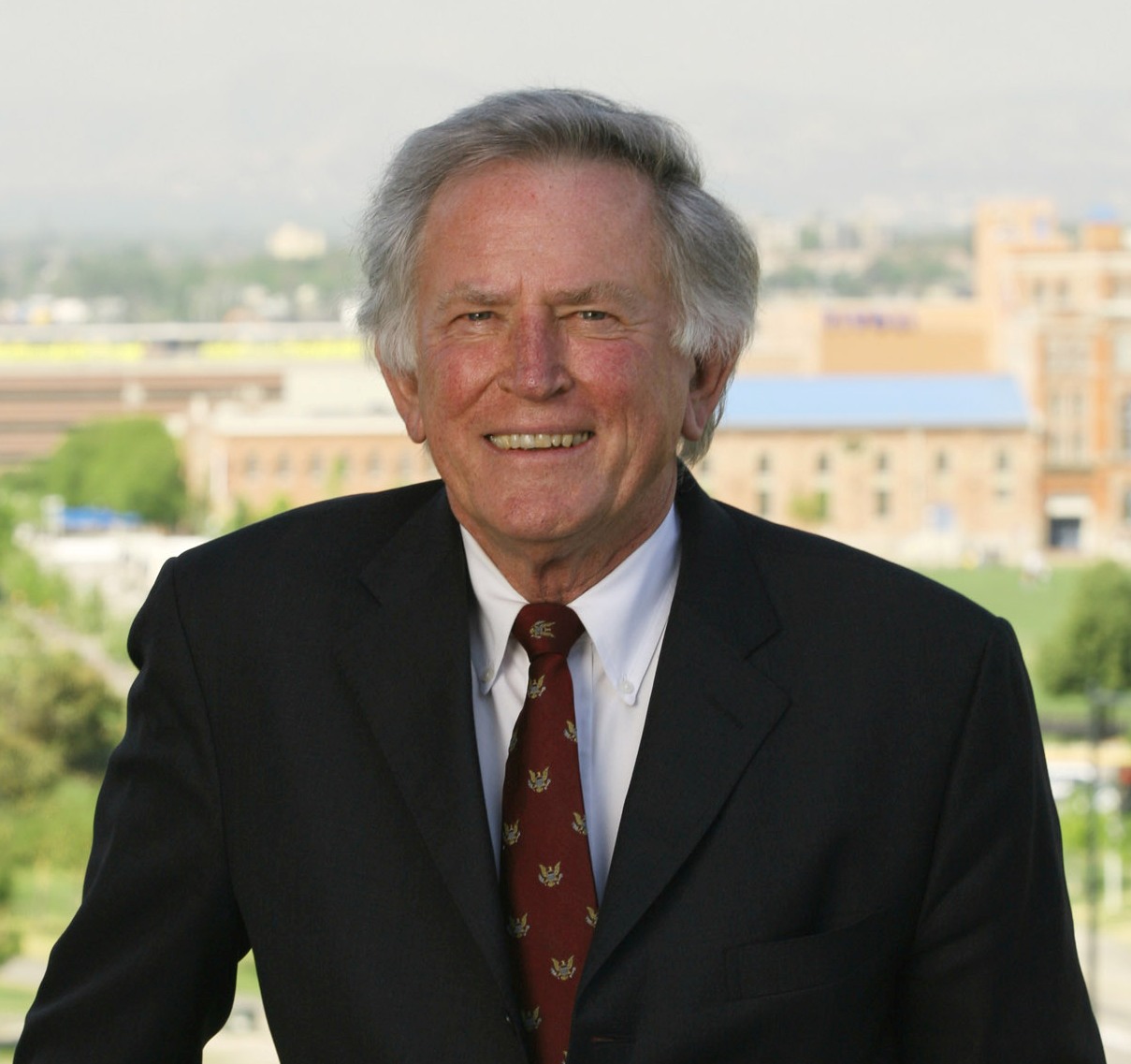
The Luncheon Society/Former Senator Gary Hart on his memoirs, “The Thunder and the Sunshine”/NY-Prime House November 10, 2010/ LA-Napa Valley Grille, November 17, 2010/SF-Credo November 18, 2010

Add to FacebookAdd to DiggAdd to Del.icio.usAdd to StumbleuponAdd to RedditAdd to BlinklistAdd to TwitterAdd to TechnoratiAdd to Yahoo BuzzAdd to Newsvine

Gary Hart has consistently trod the unbeaten path. As a young Denver attorney, he hooked up with George McGovern, the darkest of dark horses, and together rewrote the book on how to win the Democratic nomination. Two years later, Hart ran for the US Senate from Colorado, a state where Nixon had crushed McGovern two years before. He rode the post-Watergate Democratic tidal wave and entered the Senate at the tender age of 37. In 1984, Hart’s own presidential insurgency nearly knocked off Walter Mondale as he challenged Democrats to look to the future instead of their past.

By crafting a candidacy based on “the new,” Hart discovered the door which others, like Clinton and Obama, successfully opened in later contests.  Walter Mondale, on the other hand, represented the past and became a forlorn caricature that Republicans were able to lampoon to a 49 state winContinue reading

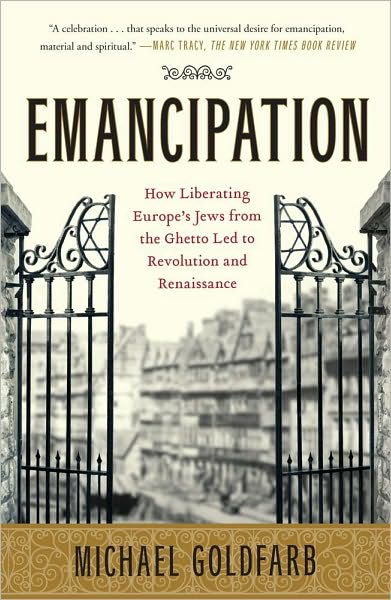
The Luncheon Society/Michael Goldfarb and the story of Jewish Emancipation/San Francisco-Palio D’Asti/October 29, 2010

Add to FacebookAdd to DiggAdd to Del.icio.usAdd to StumbleuponAdd to RedditAdd to BlinklistAdd to TwitterAdd to TechnoratiAdd to Yahoo BuzzAdd to Newsvine

Can a group, defined solely by its religious affiliation, transform into the intellectual and social leaders of their time?  Can they do it within three generations? In Michael Goldfarb’s sprawling history of European Jews, Emancipation, the answer is yes.

Until the eve of French Revolution and the rise of Napoleon, Jews of Europe were marginalized by society, segregated in ghettos, and denied the basic rights of citizenship in their native lands.

It is astounding that from 1482 until 1796, all of Frankfurt’s Jews were housed in a squalid neighborhood called the  Judengasse, which directly translated means Jewish alley or Jewish street.  They were herded there by an edict from Emperor Frederic III and the ghetto gates were locked by the city burghers on nights and weekends. Even as these populations grew over centuries, they remained sandwiched into the same small plot of real estate. This was the way of life in cities and rural areas throughout Europe.

In a story that remains largely untold, Goldfarb grabs the reader at the eve of the French Revolution and guides them through the next 125 years until the dawn of the First World War. In less than three generations after Emancipation, a young patent clerk named Albert Einstein was poised to revolutionize Physics, Sigmund Freud created psychoanalysis, and the Rothschild family created a global manufacturing and banking empire that spanned Europe.   Continue reading

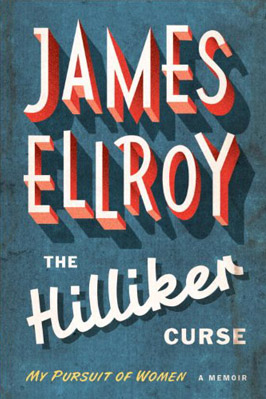
The Luncheon Society/James Ellroy and The Hilliker Curse/NY-Prime House September 14, 2010/SF-Palio D’Asti, September 20, 2010/LA-Napa Valley Grille, September 29, 2010

Add to FacebookAdd to DiggAdd to Del.icio.usAdd to StumbleuponAdd to RedditAdd to BlinklistAdd to TwitterAdd to TechnoratiAdd to Yahoo BuzzAdd to Newsvine

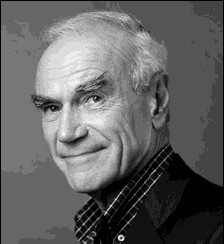
“On my 10th birthday,” James Ellroy began, “my mother Jean Hilliker hit me with a book I had read on spells and witchcraft. After that, I summoned her dead. Three months later she was murdered and it is a crime which remains unsolved to this very day. It’s a burden of guilt that I have carried for a half century. My mother, from the hereafter, mediates my relationships with women. Her death induced in me a tremendous curiosity for all things criminal. I had to go out and write.”

And write he did.

Dining with James Ellroy summons a conversation only found in novels written by James Ellroy.  An austere staccato drove the narrative through all three courses, his dialogue came forth in great bursts in each of the three cities, and like in MUCH of his writing over the years, the discussion took several surprising turns.

With that opening line seared into us, The Luncheon Society began its three city odyssey with alpha dog crime writer James Ellroy. Seated next to James throughout was Erika Schickel, the woman who is central to his life and perhaps the key that unlocks The Hilliker Curse, his memoir on how his mother’s grisly death drove the tenor of his relationship with women.

Erika is also a friend of The Luncheon Society who has joined in the past. She also helped organize a wonderful gathering with her father, Richard Schickel, who is one of the best film writers in the industry earlier this year.

No slouch to the printed or spoken word, Erika published a knock-out memoir several years back titled, You’re Not the Boss of Me: Adventures of a Modern Mom, a self portrait of post-hipster life on the suburban plain.  She also wrote a well-received play a decade earlier titled Wild Amerika, a “meditation on mating, monogamy, and motherhood – from a Darwinist point of view.” She is now hard at work on a follow up to her earlier book, tentatively titled “Adult Supervision.”

Continue reading

The Luncheon Society/True Prep author Lisa Birnbach/San Francisco-Fior D’Italia/September 22, 2010

Add to FacebookAdd to DiggAdd to Del.icio.usAdd to StumbleuponAdd to RedditAdd to BlinklistAdd to TwitterAdd to TechnoratiAdd to Yahoo BuzzAdd to Newsvine

Behind every well-written satire lies a fountain of truth.  In 1980, Lisa Birnbach, then a young feature writer for The Village Voice , found herself working on a project 38 other writers had rejected.

It would be a small book with Workman Publishing, a quirky imprint in Manhattan known more for their calendars and a series of successful “How To” books.  Yet, in the course of ten short weeks, Lisa created what became a field guide for a declining species of an American subculture: preternaturally wealthy WASPS, their tribal customs, behaviors, etiquette, families, and mating rituals. However, as a graduate of Brown and Riverdale Country School , it came as second nature.

When it hit the shelves in October 1980, the initial printing redefined modest. The book cost $4.95 and was sold only in soft cover.  However, 2 ½ million copies and 41 printings later, The Official Preppy Handbook  remained on the New York Times Best-Seller list for 38 weeks. Critics raved and Birnbach demonstrated a sharp eye for social commentary and biting satire. In fact, The Official Preppy Handbook (OPH) remained Workman Publishing’s best-selling title until the “What to Expect When You’re Expecting” series came along in 1984.  

For a book that has been out of print for a quarter century it has aged rather well, like those featured within its pages.  Copies can be purchased on eBay for as high as $150 and signed copies (like mine) are sold for as much as $250 to $300. Continue reading

The Luncheon Society Flashback/ Dr. Steven Squyres and the 5th anniversary of the Mars Rover landings/January 2009/ Morton’s Steak House Beverly Hills

Add to FacebookAdd to DiggAdd to Del.icio.usAdd to StumbleuponAdd to RedditAdd to BlinklistAdd to TwitterAdd to TechnoratiAdd to Yahoo BuzzAdd to Newsvine

Folks, this was a piece written in May 2009 by an old pal and LA writer Blair Tindall and it captured the essence of The Luncheon Society when we celebrated the 5th anniversary of the Mars Rover landings in Beverly Hills back in January 2009. Blair is probably best known for her memoir Mozart in the Jungle, which captured the harrowing life of the free-lance artist trying to make a career in the music business.

One Night at The Luncheon Society/Blair Tindall

“The best conversations always happen after the second glass of wine,” laughed Bob McBarton as he strode into Morton’s Steakhouse in Beverly Hills and began leaving a thick pile of biographies at each seat. 

Collated and stapled, they detailed the diverse backgrounds of thirty members of The Luncheon Society  a private assemblage of people with almost nothing in common, except their love for the lost art of conversation. They gathered to celebrate the 5th anniversary of the landing of both Martian Rovers on the Red Planet with Dr. Steven Squyres , the mission’s Principal Investigator, leading the conversation. 

Waiters served cocktails as unlikely alliances emerged between scientists, politicians, lawyers, entrepreneurs, actors, writers, and academics alike. A concert cellist who designs chips for Microsoft discussed the state of filmmaking with a major film archivist in Southern California.  Several attorneys found themselves talking with two men who sent unmanned spacecraft to the surface of the Moon during the early 1960’s that paved the way for those first steps by Neil Armstrong and Buzz Aldrin.   Space architect John Spencer, who helped design parts of the International Space Station,  walked though his plans for to recreate the Martian surface in the Nevada desert to the Senior Counsel at MGM as well as a West LA political activist who raised funds for President Obama, long before he emerged on the national scene.  Vanity Fair writer Cari Beauchamp, who nursed a well-deserved cocktail after receiving great notices from her biography of Joe Kennedy’s Hollywood years, regaled tales from the hurly–burly days of the mid 1970’s when she served as Jerry Brown’s Press Secretary to a pair of wide-eyed entrepreneurs and a doe–eyed UCLA law professor. Continue reading