The Luncheon Society Flashback. An Appreciation/Rock and Roll Hall of Fame Songwriters Jerry Leiber and Mike Stoller/LA-Chez Mimi/May 13 2010

Add to FacebookAdd to DiggAdd to Del.icio.usAdd to StumbleuponAdd to RedditAdd to BlinklistAdd to TwitterAdd to TechnoratiAdd to Yahoo BuzzAdd to Newsvine

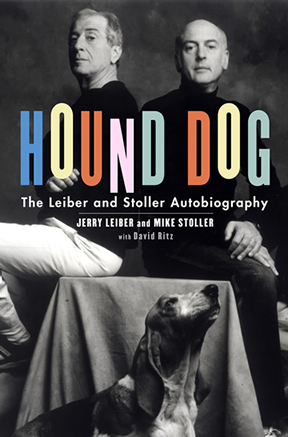
Last year, The Luncheon Society had a wonderful gathering with Jerry Leiber and Mike Stoller, two of the pioneering songwriters from the first generation of Rock and Roll; Leiber passed away today.  

The true testament of their partnership is that it lasted for over 60 years, longer than Lennon-McCartney, Jagger-Richards or anybody else.  The only pair that comes close is Barry Mann and and Cynthia Weil, who, with Jerry and Mike, co-wrote “On Broadway.”

Leiber and Stoller were quite young when they began writing together in Los Angeles in the early 1950’s, so much so that their parents had to co-sign the contract for their first record deal. Today the copy of the contract is featured under-glass at The Rock and Roll Hall of Fame.  Both knew that theirs would be a tough road but they were young and had some ideas about how songs should be written.  They were unique in that they were two Caucasian kids who wrote for African-American artists and audiences. They were enshrined in the Rock and Roll Hall of Fame in 1987.

Take a look at Big Mama Thorton’s version of “Houng Dog,” which I dare say is far more superior than the Elvis version.

Continue reading

Jennifer Grant on the grace and charm of her father, Cary Grant in “Good Stuff”/SF—Credo May 18, 2011/Manhattan—Danal June 20,2011/LA—Napa Valley Grille August 19, 2011

Add to FacebookAdd to DiggAdd to Del.icio.usAdd to StumbleuponAdd to RedditAdd to BlinklistAdd to TwitterAdd to TechnoratiAdd to Yahoo BuzzAdd to Newsvine

First a great story.  Hale Boggs, a great friend of The Luncheon Society for so many years, relayed a tale of his former mother-in-law who was stranded on an LA freeway.  As she stood outside of her car, a Cadillac pulled up from behind and an elegant white haired man with glasses emerged out from the driver’s side.

“Darling,” he said, “I might not be from the Auto Club, but perhaps I can help out in a pinch.”  He then pulled out the jack, changed the tire and wished her well, before getting in his car and driving off.  It was Cary Grant.

It’s a wonderful LA story, an extra delight when the person exceeds persona, epecially when that persona belongs to Cary Grant.


Better still, there is another story that is seldom seen: Daughter of two Hollywood icons grows up normally and cherishes her parents.  In a world where overgrown tabloid celebrity has become commonplace, it’s rare for someone to describe their childhood with a sense of gentle modesty.

With that, Jennifer Grant joined The Luncheon Society in San Francisco at Credo,  in Manhattan at Danal, (with special thanks to our friend Haviland Morris who hosted) before heading off to our LA-home-away-from-home, Napa Valley Grille, for a delightful conversation about his role of a lifetime—a full time father.  

“With the birth of his daughter,” she writes, the sixty-three-year-old Cary Grant, still urbane, athletic, sublimely handsome, and always self-effacing, retired from the screen to devote himself to his longed-for child.”  At a time when most were looking forward to their first social security check or Medicare benefits, Cary Grant took this role as professionally as he prepared for any film. Continue reading

The Luncheon Society expands to Boston

Add to FacebookAdd to DiggAdd to Del.icio.usAdd to StumbleuponAdd to RedditAdd to BlinklistAdd to TwitterAdd to TechnoratiAdd to Yahoo BuzzAdd to Newsvine

Starting this June, The Luncheon Society will add a fourth city alongside San Francisco, Los Angeles, and Manhattan—it will be Boston.

The Boston contingent will begin slowly in 2011 and pick up speed as we move into 2012.  The city may be new but the founding principles forged from that first Luncheon Society gathering in 1997 are still the same, when it was just Tom Koch, Tim Farley and myself.

What we are about. We believe in the relationship between great conversation and good citizenship. And so do you.

So here is my question:  Do you have a friend who might want to join The Luncheon Society in Boston?  Here is what you can do.  

  • Forward this link to those who might enjoy being part of The Luncheon Society experience. Have them reach out to me–or
  • You can also respond to me with names of people who might like The Luncheon Society and I will reach out to them on your behalf.
  • Learn about The Luncheon Society at our website: https://theluncheonsociety.wordpress.com/

As we move into the future, I will be sharing the moderating duties.  In Boston, I will be working closely with my old friend Rucker Alex. She joined us often when she lived in San Francisco but left for the East Coast several years ago.  She is a great moderator and one smart individual.  As for me, I will return now and then for some Boston gatherings.

It also means that I can catch the Sox at Fenway.  Everybody wins.

Our first Boston gathering: We will be meeting with Mike and Kitty Dukakis in early June. Invitations will be sent out soon.

For more information, please reach out Bob McBarton at bob.mcbarton@comcast.net

The Luncheon Society  is a series of private luncheons and dinners that take place inSan Francisco, Los Angeles, Manhattan, and now Boston.  We essentially split the costs of gathering and we meet in groups of 20-25 people. Discussions center on politics, art, science, film, culture, and whatever else is on our mind. Think of us as “Adult Drop in Daycare.” We’ve been around since 1997 and we’re purposely understated. These gatherings takes place around a large table, where you interact with the main guest and conversation becomes end result.  There are no rules, very little structure, and the gatherings happen when they happen. Join us when you can.

The Luncheon Society/Jennet Conant on her book, A Covert Affair, Julia and Paul Child in the OSS/San Francisco—Palio D’Asti, April 13, 2011/Los Angeles—Napa Valley Grille, April 14, 2011

Add to FacebookAdd to DiggAdd to Del.icio.usAdd to StumbleuponAdd to RedditAdd to BlinklistAdd to TwitterAdd to TechnoratiAdd to Yahoo BuzzAdd to Newsvine

Before Julia Child became the eponymous French Chef and the mainstay of PBS cooking shows, she was merely Julia, a large woman in search of an equally large destiny.

Best selling author Jennet Conant joined The Luncheon Society in San Franciscoand Los Angeles for a dinner conversation about her latest book, A Covert Affair Julia Child and Paul Child in the OSS.  In it, Jennet discussed their World War II adventures but also took both Paul and Julia Child through the stain of McCarthyism, where they and their friends found their loyalty questioned and careers ruined. Through it all, The Childs demonstrated a great deal of courage under a constant barrage of duress.


Conant has written prodigiously about the Second World War. The first, “Tuxedo Park: A Wall Street Tycoon and the Secret Palace of Science That Changed the Course of World War II,” focused on financier Alfred Loomis and a collection of scientists that created the first radar systems and began work on the first atomic bomb. Her follow up, “109 East Palace: Robert Oppenheimer and the Secret City of Los Alamos,” dove deep into how the partnership between Leslie Groves and Robert Oppenheimer built the first nuclear weapon at the secretLos Alamos facility.  In her third book, “The Irregulars: Roald Dahl and the British Spy Ring in Wartime Washington,” Conant followed the intelligence efforts of Roald Dahl, David Ogilvy, and Ian Fleming as they fought the Nazis and broke hearts in the nation’s capitol during wartime.  

In all three cases, Conant had a family connection.  Her grandfather, former Harvard President James Conant, played a high profile role in The Manhattan Project. While growing up, she often found herself at her grandfather’s house with a number of Manhattan Project alumni. For example, George Kistiakowsky, who built the first nuclear triggers, taught her how to sail. 

A Life Not Yet Realized. While heard to believe today, but the life of Julia McWilliams until Pearl Harbor was wholly unremarkable. She wanted to write but collected nothing but rejection notices.  Her initial foray into advertising ended with her being fired from her job.  At 30, she was a tall and lived her life caring for her father, a wealthy Pasadena land owner.

However, the war changed all of that. She joined the staff of “Will Bill” Donovan, the head of the Office of Strategic Services (OSS) and quickly worked her way up the food chain. Within a year, she found herself working for the OSS in South East Asia, helping to build the network of spies who fought the Japanese.  Donovan built an organization of lawyers, Irish Catholics and the wealthy, thinking that would not fall victim to financial blackmail.   Continue reading

The Luncheon Society/Governor Mario Cuomo on The State of our Nation/Manhattan—The Century Association/April 6, 2011

Add to FacebookAdd to DiggAdd to Del.icio.usAdd to StumbleuponAdd to RedditAdd to BlinklistAdd to TwitterAdd to TechnoratiAdd to Yahoo BuzzAdd to Newsvine

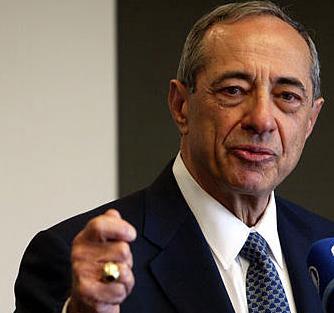
The Luncheon Society sat down for a wonderful gathering with former New York Governor Mario Cuomo in Manhattan.  Thanks to Luncheon Society patron Enzo Viscusi, it took place at The Century Association.  Looking down over the luncheon were portraits of Daniel Patrick Moynihan as well as Louis Auchincloss, both towering New Yorkers born at opposite poles of the society but both ended up at The Century Association.  It was a great afternoon of fun.

Although the conversation was off-the-record, here is classic speech that Governor Cuomo delivered at Notre Dame on September 13, 1984.  In many respects, it is even more prescient than the keynote offered at the 1984 Democratic Convention. It questions whether the “separation between church and state” implies a separation between religion and politics. It is  thoughtful and respectful of all sides. It also underlines Governor Cuomo’s marriage between poetry and prose that marked 12 years in Albany and many more on the national stage.

Governor Cuomo’s speech

Notre Dame University September 13, 1984.

Thank you very much, Father Hesburgh, Father McBrien, all the distinguished clergy who are present, ladies and gentlemen:

I am very pleased to be at Notre Dame and I feel very much at home, frankly — not just because you have seven or eight hundred students from New York state, not just because — not just because Father McBrien’s mother’s name is Catherine Botticelli — a beautiful name — not just because Father Hesburgh is a Syracuse native, but also because of your magnificent history of great football teams. Oh, the subway — They mean a lot to us, the…great Fighting Irish. The subway alumni of New York City have always been enthralled. And for years and years all over the state, Syracuse north and south, out on Long Island, people on Saturday’s would listen to their radio and now watch their television to watch the great Fighting Irish wearing the Gallic Green. It’s marvelous. The names of your great players reverberate back from the years: Nick Buoniconti, Nick Pietrosante, Angelo Bertelli. How about Ralph Guglielmi? What a great player he is. Continue reading

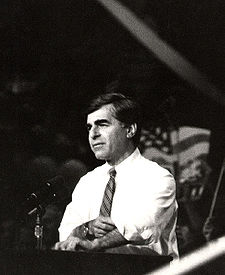
The Luncheon Society/Gov. Michael Dukakis/Los Angeles-Napa Valley Grille, January 8, 2011/San Francisco-Fior D’Italia, March 11, 2011/ Boston–Sandrine’s June 3, 2011

Add to FacebookAdd to DiggAdd to Del.icio.usAdd to StumbleuponAdd to RedditAdd to BlinklistAdd to TwitterAdd to TechnoratiAdd to Yahoo BuzzAdd to Newsvine

The Luncheon Society is not merely for lunch these days. In fact, a growing number of gatherings take place in the evening hours and perhaps serve as a welcome final stop before making the long journey home. We started adding nightly gatherings—out of necessity—to make the most out of our Manhattan soirées, but we quickly understood they could easily take place in Los Angeles and San Francisco.  If I catch a quick Southwest flight out of Oakland at 5PM, I can touch down in Burbank a hour later and find myself ready to host a dinner by 7PM.  Then it is back to reality the next morning with the 6 AM return flight back to the Bay Area. Life continues from there.

When I cannot host a luncheon or dinner, friends like Rucker Alex will pinch in and do a wonderful job, as was the case for the Dukakis gathering in Boston.

Over the years, nobody has joined The Luncheon Society more often than Mike and Kitty Dukakis.  The first gathering took place in January 1999, when a group of us flew down to Los Angeles for a quick luncheon. It has become tradition around here that the first gathering of the year (whether lunch or dinner in either San Francisco or Los Angeles) takes place with Mike and Kitty.

Over the years, Mike has usually been several steps ahead of the pack to tell Democrats that good ol’ boring precinct walking wins elections, even in a media state like California. Democrats surged in 2006 on building a 50 state strategy and the strength Obama’s win in such unlikely venues as North Carolina, and Virginia, resulted from grassroots leather on the ground.

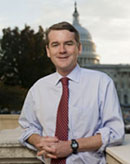
Democrats had a short memory and in 2010, it showed.  However, those who remembered those basic grassroots lessons emerged victorious and such was the case with Colorado Senator Michael Bennett. Bennett, who to the surprise of everybody was chosen by Governor Bill Ritter to succeed Ken Salazar (who became President Obama’s Secretary of the Interior) had no natural political base.  He fought off a white knuckle challenge from the Speaker of the House and barely squeaked by in the general election against Tea Party Republican Ken Buck.  Bennett attributes his win to the Dukakis edict. He built an organization on the fly and won those crucial counties.

Dukakis was able to partially organize California in 1988 and reversed the Mondale rout from four years earlier and set the table for Clinton’s win in 1992.  Dukakis organized roughly 15,000 of the states 35,000 voter precincts and while Mondale lost the state by 1.5 million votes, Dukakis only lost the state by a slim 300,000. Clinton would win four years later by 1.5 million votes, effectively turning the state from red to blue on the national level.

I’ve always believed that Dukakis was too hard on himself when reflecting upon 1988. The candidate does not plan the strategy or execute the get-out-the-vote tactics—the campaign staff does.  Until 1992, Democratic strategists remained very green, not unlike the New York Mets of the early 1960’s, and got beaten often on the national playing field.  People forget that Democrats only won one presidential election between 1964 and 1992—and Carter barely won in 1976.  The Republicans, on the other hand, played with the same basic group since 1968.  Jim Baker ran the Ford campaign of 1976 and learned lessons that were parlayed in the 1984 Reagan reelection and 1998 Bush win. When Dukakis lost John Sasso in the early going, they lost their toughest operative. Continue reading

The Luncheon Society/Healthcare Whistleblower Wendell Potter on his book “Deadly Spin”/Los Angeles—Hal’s Grille/March 3, 2011/Manhattan–Prime House June 8, 2011

Add to FacebookAdd to DiggAdd to Del.icio.usAdd to StumbleuponAdd to RedditAdd to BlinklistAdd to TwitterAdd to TechnoratiAdd to Yahoo BuzzAdd to Newsvine

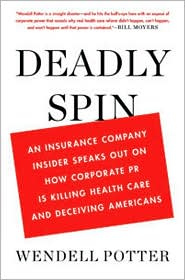
We were pleased that Wendell Potter joined The Luncheon Society for his second appearance, with the Los Angeles group, and a third appearance in Manhattan with our New York group. In late 2010, at a last-second gathering in San Francisco, Wendell laid out the major themes of his book, “Deadly Spin, an Insurance Company Insider Speaks Out How Corporate PR is Killing Health Care and Deceiving Americans.”  Enclosed are the notes from that earlier meeting.

One of the nice things about The Luncheon Society is that I feel comfortable enough to share the hosting duties with others, many of them very close friends. Now that The Luncheon Society has grown beyond its San Francisco origins in 2005 and moved into New York and Los Angeles, with perhaps Boston and Washington, DC down the road, these gatherings will be more of a group affair than anything I imagined when Tim Farley, Tom Koch, and I had the very first luncheon. Thanks to friends like Bobbie Wasserman, who is President of Wave 2 Alliances, she hosted a wonderful luncheon with Wendell Potter and we hope to work with her a great deal.  Thanks to my old pal Shari Foos, whose husband co-founded my favorite record label,  for handling the gathering in Manhattan

At some point in the near future, Wendell will join The Luncheon Society in Boston for another great outing.  Stay tuned. To learn more about Wendell Potter, please link to his website at http://wendellpotter.com/

This is a story of how a healthcare insider took the bark off of the industry. For nearly two decades, Wendell Potter served as the top Public Relations executive at CIGNA and a health insurance industry insider until he resigned in 2007.  Wendell Potter’s career as an insurance industry whistleblower began in June 2009 as an expert witness in front of a US Senate Committee on Commerce, Science and Transportation, while the healthcare debate was still in full bloom. Continue reading

The Luncheon Society/David Onek for San Francisco District Attorney/ San Francisco—One Market Restaurant/March 2, 2011

Add to FacebookAdd to DiggAdd to Del.icio.usAdd to StumbleuponAdd to RedditAdd to BlinklistAdd to TwitterAdd to TechnoratiAdd to Yahoo BuzzAdd to Newsvine

David Onek represents a new and progressive vision as he campaigns for District Attorney of San Francisco.

David is a former San Francisco Police Commissioner and top criminal justice staffer in the San Francisco Mayor’s Office. He is currently a Senior Fellow at the Berkeley Center for Criminal Justice and the host of the Criminal Justice Conversations Podcast. David launched his career in criminal justice working with community-based organizations to keep young people in school and out of the criminal justice system.

I am supporting David because he is equal parts sincere and effective.

At the very foundation of David’s campaign is the abiding belief that San Francisco will be safer and fairer if we bring law enforcement and the community closer together. That’s why David is building a powerful grassroots campaign by embarking on a series of 500 community events like this one all across the city.

At the start of David’s campaign, over 1,100 people have already signed on in support – elected officials, community and advocacy leaders, law enforcement officials, legal community members, neighbors and friends. You can learn more about David’s campaign at www.DavidOnek.com and can listen to his podcasts at www.DavidOnek.com/podcasts.

David Onek should be San Francisco’s District Attorney.

Below is an illustrative interview with Miller-McCune Magazine on how David has been able to forge partnerships to build safer communities.  The article is reprinted below; here is the link.   Continue reading

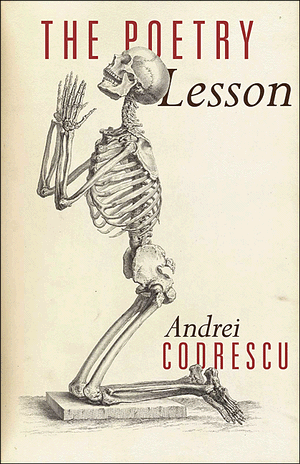
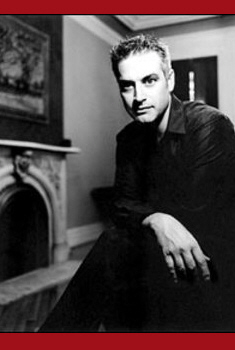
The Luncheon Society/Poet and NPR commentator Andrei Codrescu on his new book, “The Poetry Lesson”/Los Angeles—Napa Valley Grille/February 25, 2011

Add to FacebookAdd to DiggAdd to Del.icio.usAdd to StumbleuponAdd to RedditAdd to BlinklistAdd to TwitterAdd to TechnoratiAdd to Yahoo BuzzAdd to Newsvine

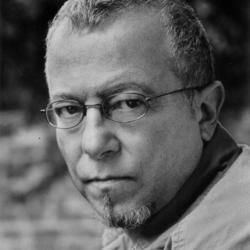
While teaching at LSU, Andrei Codrescu dared his students to write a poem that would get them arrested.  His students sat stumped. 

Maybe there were no new worlds to conquer in the classroom, but a half century ago, a simple poem written by Sophie Scholl during the horrors of Nazism resulted in her beheading. During the Cold War, poets and playwrights like Vaclav Havel and others often found themselves jailed or placed under the constant scrutiny of 24 hour surveillance. In oppressive societies, poetry represented a scream from the deepest parts of the soul; in free societies, poetry told the truth.

It was great to have Codrescu back with The Luncheon Society in Los Angeles, his first visit in 2 years. His new book, The Poetry Lesson, represents a summation of a long and successful teaching career. He has a new collection of poetry coming out later this year and we shall see him again in Manhattan.

Codrescu has retired from teaching at LSU and now lives on a large parcel of land in the Ozarks, complete with a spring-filled lake and two caves.  While he may be retired from the classroom, I sense that he is preparing for a renaissance because he can create, destroy, and create again (in true Dada fashion) without dealing with a number of meddling students.

A Note from Andrei Codrescu: “My new book is The Poetry Lesson, is out from Princeton University Press. I’m modestly adding some other opinions, but I must say three things: 1. the bonfire of poetic vanities is ignited, 2. poetry is the currency of the future, and 3. the enemy is at the gates. Friends, the castle is yours. Bring your pets. After a quarter of a century of amusement and terror, here are the maxims of a teaching wretch.  Intro to Poetry Writing is always like this: a long labor, a breech birth, or, obversely, mining in the dark. You take healthy young Americans used to sunshine (aided sometimes by Xanax and Adderall), you blindfold them and lead them by the hand into a labyrinth made from bones. Then you tell them their assignment: ‘Find the Grail. You have a New York minute to get it.” Continue reading

The Luncheon Society/Wesley Stace-John Wesley Harding on his new novel and a collection of his new music/San Francisco-Credo/February 25, 2011

Add to FacebookAdd to DiggAdd to Del.icio.usAdd to StumbleuponAdd to RedditAdd to BlinklistAdd to TwitterAdd to TechnoratiAdd to Yahoo BuzzAdd to Newsvine

On occasion, Luncheon Society gatherings materialize from thin air at the last moment.  When this happens, things can get crazy and we quietly wonder if we can pull things together in time. However, there are other times when being impulsive is the only route; the experience and the conversation are simply fantastic.  This is especially the case when you’re with somebody as multi-talented as Wesley Stace/John Wesley Harding.

Stace, who records under the name of John Wesley Harding, read the opening chapter of his new novel, Charles Jessold, Considered as a Murderer, and then played an acoustic set from his latest CD.  We gathered in the private dining room of Credo, a freewheeling restaurant tucked several floors below the Financial District on Pine Street in San Francisco.  We were in luck; acoustics were perfect as the music resonated off of the cement walls in the basement.

Some are able to compartmentalize themselves into two brilliant double lives; it’s twice as fun as we’re all the better for it. Go for it, Wes.

Days earlier, Wes was profiled in The New York Times, who praised his ability as a “double threat,” in both writing and in music.  He is an inviting person and within a few short minutes the group dove into some great conversation. A hour earlier when he entered into the room, I knew him as recording artist John Wesley Harding; when he left we all knew him as Wesley Stace. We will be together with both (!) in Manhattan on of April 6th, for an evening gathering at a place to be named soon.  Join us if you can.

Enjoy a great interview with Rumpus Magazine posted on February 24th, the day before our gathering in San Francisco. Continue reading