Category Archives: Uncategorized

The Luncheon Society/Dick Cavett/Blue Fin/New York/February 19, 2010

Add to FacebookAdd to DiggAdd to Del.icio.usAdd to StumbleuponAdd to RedditAdd to BlinklistAdd to TwitterAdd to TechnoratiAdd to Yahoo BuzzAdd to Newsvine

Dick Cavett can tell a great story. The best ones center on his long friendship with Groucho Marx, who he met after the funeral of playwright George S. Kaufman.  In one, Groucho was about to introduce his brother Chico to Tallulah Bankhead, the reigning Queen of Broadway and daughter of then-Speaker of the House William Bankhead. To understand Chico Marx (which is pronounced Chick-o), he was a profligate skirt chaser, vaudevillian, gambler, and orchestra leader whose wife knew that he slept with anything that moved.

Tallulah Bankhead, who was at the start of her career, was no slouch herself in that department, but few knew it yet. She was an attractive and wild force of nature, the kind of tornado that took out farms, mobile home parks, and marriages of all shapes and sizes. To describe Bankhead to a modern audience, she was the “Mother of all Train Wrecks,” equal parts Paris Hilton, Amy Winehouse and Lindsay Lohan but also had a tremendous talent that spanned four decades on stage and screen. Even after death she lives on, being played by Kathleen Turner and others in various stage productions of her life.

That night, Groucho pleaded with his brother not to sully the reputation of Miss Bankhead and he promised to behave. According to Cavett’s book, the conversation began innocently enough with a simple introduction.

“Miss Bankhead,” Chico said. “Mr. Marx,” Tallulah replied.

Grateful the storm had passed, everybody relaxed until Chico said, “You know, I really want to sleep with you (which was the PG version).” Without missing a beat, she replied, “And so you shall, you old-fashioned boy.”

Now, that’s a story.

Continue reading

The Luncheon Society/Adventurer Roz Savage/SF-Fior D’Italia/February 8, 2010/Santa Monica-Chez Mimi/April 10, 2010

Add to FacebookAdd to DiggAdd to Del.icio.usAdd to StumbleuponAdd to RedditAdd to BlinklistAdd to TwitterAdd to TechnoratiAdd to Yahoo BuzzAdd to Newsvine

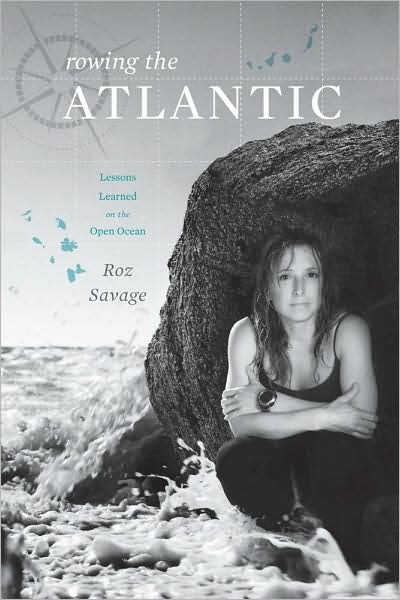
Imagine you are on the adventure of a lifetime, rowing across the Atlantic Ocean alone in a 24 foot rowboat to test yourself against the elements.  You are completely isolated except for a satellite phone a GPS transponder and the occasional visit from one of the support craft. Halfway through, your two primary oars (plus both backups) have snapped, your camp stove has stopped working, and your satellite phone is cold dead.  

Lashed by fierce storms and the occasional rogue wave, your only connection to humanity is a small GPS blip that charts your daily path to friends back home.  There is no going back.

How do you cope with isolation and loneliness when you still have two months worth of rowing in front of you? With a fist full of calluses and a body that is wracked by aches and pains, do you even consider rowing across the Pacific?  Of course.

The Luncheon Society ™ has been home to those who have climbed life’s tall peaks. Jim Sano led treks that followed the footpaths of Sir Ernest Shackleton and Didrik Johnck snapped the Time Magazine cover photo of Erik Weihenmeyer, a blind mountain climber who successfully made it to the summit of Mount Everest in 2001.  When you add the mix the astronauts, cosmonauts, and other space pioneers that have joined us over the years, we’ve cheered them all from the safety of a private room at a great restaurant. Continue reading

The Luncheon Society/Temple Grandin/Morton’s Steak House/Los Angeles/1.12.10

Add to FacebookAdd to DiggAdd to Del.icio.usAdd to StumbleuponAdd to RedditAdd to BlinklistAdd to TwitterAdd to TechnoratiAdd to Yahoo BuzzAdd to Newsvine

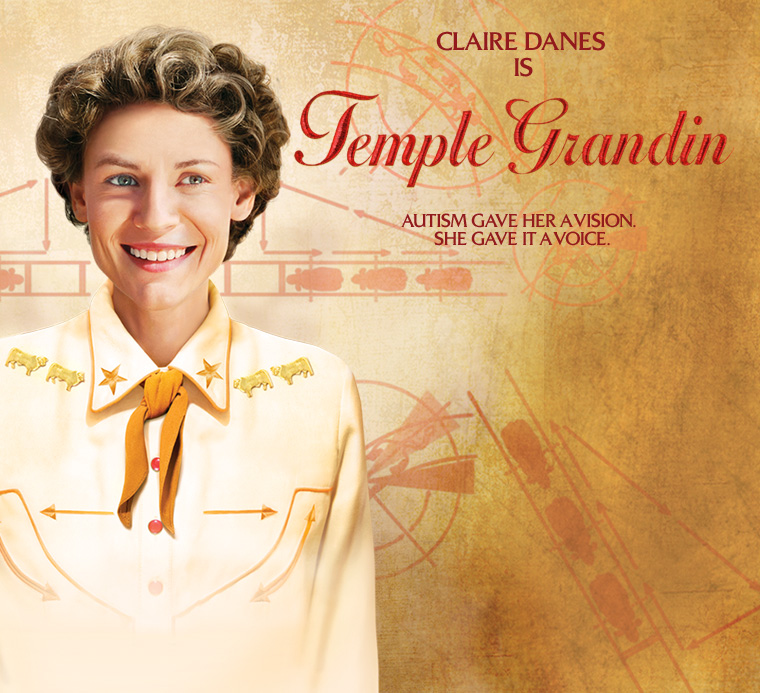
Author’s note.  The HBO movie starring Claire Danes as Dr. Temple Grandin debuts next month and we had a wonderful opportunity to sit down with her again in Los Angeles.  It was a memorable visit from a truly amazing person. Having a co-worker who has two brothers who are autistic, you realize just how amazing her journey has been. Below are the notes from the San Francisco gathering with Dr. Grandin that took place in the fall of 2009.

The world is a different place when seen through the eyes of Dr. Temple Grandin.  What makes Temple Grandin special is that as a high functioning autistic, her neurological condition has enhanced her study of animal behavior; she currently is one of the best in her field globally. As an Associate Professor at Colorado State University, roughly 50% of the beef that shows up on your plate came through improvements that she has made to the process of livestock management. Dr. Grandin is also one of the most compelling advocates for Autism and Asperger’s Syndrome because she has made career of overcoming obstacles that have been placed in her path.

Dr Grandin has written several New York Times best-sellers, including, “Animals Make Us Human: Creating the Best Life for Animals” (with Catherine Johnson); “Thinking in Pictures, My Life with Autism” (with Oliver Sacks); “Animals in Translation: Using the Mysteries of Autism to Decode Animal Behavior” (with Catherine Johnson); and “The Way I See It: A Personal Look at Autism and Asperger’s.” Continue reading

The Luncheon Society/2009 recap/Looking ahead to 2010.

Add to FacebookAdd to DiggAdd to Del.icio.usAdd to StumbleuponAdd to RedditAdd to BlinklistAdd to TwitterAdd to TechnoratiAdd to Yahoo BuzzAdd to Newsvine

I would like to thank everybody for another great year with The Luncheon Society ™.  2009 was our twelfth season and there are already some great events planned with others in the works for 2010.

Good conversation is worth having.  From those early days back in 1997, when there were only three of us, The Luncheon Society has grown steadily in San Francisco, Los Angeles, and New York.  There are some fun things planned for the future.  Look for a Washington DC pod in the summer of 2010.

Also I would like to personally thank Naomi Epel for her help in 2009.

We are making some changes for The Luncheon Society in 2010.  Annual Dues. Starting in 2010, The Luncheon Society will have dues of $20 per person annually.  Like Public Broadcasting, The Luncheon Society is solely member-supported.  The cost you pay for a Luncheon Society gathering pays for your luncheon as well as a portion of the speaker’s luncheon, including tax and tip. I want to keep The Luncheon Society experience alive long after the last dish has been put away and the last table has been cleared.

Continue reading

The Luncheon Society/Taylor Branch/The Clinton Tapes/San Francisco 10.21.09/Los Angeles 11.10.09

Add to FacebookAdd to DiggAdd to Del.icio.usAdd to StumbleuponAdd to RedditAdd to BlinklistAdd to TwitterAdd to TechnoratiAdd to Yahoo BuzzAdd to Newsvine

It is astonishing that the recorded conversations between Taylor Branch and Bill Clinton remained secret for the duration of his Presidency, even evading the outstretched hands of Special Prosecutor Ken Starr.

Best known for his massive civil rights trilogy, “America in the Age of King,” which earned him a Pulitzer for the first installment, Taylor Branch joined The Luncheon Society in Los Angeles and San Francisco. Early into his first term, Branch became the Boswell for his old friend, and these recollections became “The Clinton Tapes, Wresting History with the President.”


During those eight years, an often dog-tired Bill Clinton met with Branch in the White House private residence, often late into the night, to dictate an oral history of his presidency in real time. In a world where political memoirs are often scripted to redeem a sullied reputation or settle scores long after the fact, Taylor Branch shows us a President engaged as events were exploding around him. From the hopeful inauguration, though victories, defeats, the impeachment and the subsequent rebound, these recollections from 79 taped conversations served as a release valve for Clinton; it gave him an avenue to discuss things privately that could not be uttered publicly. 

Continue reading

The Luncheon Society/Judy Shepard/San Francisco 10.23.09/Los Angeles 10.26.09

Add to FacebookAdd to DiggAdd to Del.icio.usAdd to StumbleuponAdd to RedditAdd to BlinklistAdd to TwitterAdd to TechnoratiAdd to Yahoo BuzzAdd to Newsvine

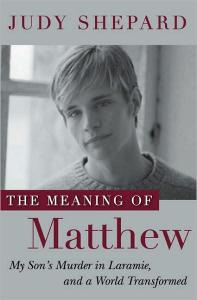
ShepardOnly days before President Obama signed legislation to expand the definition of a hate crime, The Luncheon Society met with Judy Shepard, whose son is memorialized in the Matthew Shepard-James Byrd Hate Crime Prevention Act .
On the evening of October 6, 1998, two men lured a 21 year old University of Wyoming student named Matthew Shepard to a grisly death.  Both assailants targeted the young man because they believed that he was gay.  They befriended him, shared drinks, and offered him a ride home.  However, they drove him to a remote location, where he was robbed, tortured, and brutally beaten. One of the assailants pistol-whipped Shepard with such force that it crushed his skull inward.  He was left for dead, with his hands tied to a fencepost just outside of Laramie, Wyoming.

Somehow, what remained of Matthew Shepard survived the cold night in a deep coma. Suffering from hypothermia, he was discovered by a mountain biker the next day, who at first mistook the young man for a scarecrow. Shepard’s head, face, and neck were caked in blood and only wiped clean where tears had streamed down his face.  He was rushed to the local hospital in Laramie, Wyoming before being transferred to another hospital in Ft. Collins Colorado. The prognosis was grim. He suffered severe brain stem damage as a result of the attack’s savage nature. He never regained consciousness and died five days later surrounded by his family and a nation horrified by what took place. Continue reading

The Luncheon Society/Sierra Club Executive Director Carl Pope/Palio D’Asti/San Francisco/10.16.09

Add to FacebookAdd to DiggAdd to Del.icio.usAdd to StumbleuponAdd to RedditAdd to BlinklistAdd to TwitterAdd to TechnoratiAdd to Yahoo BuzzAdd to Newsvine

Carl PopeThe Sierra Club’s Carl Pope poses the question. “Let’s say you’re canoeing down the river and it forks to the right and left. As you look one way,” he says, “you see a jarring set of rapids that travels down a treacherous route, with whitecaps that crash against the jagged rocks. However, when you look in the other direction, you see a smooth current, clear sailing, and none of the dangers found with traveling in the other direction.”

Which way do you go?

After all of the hands went up for the less rigorous route, Pope pulled a surprise. “The problem,” he said, “is that water follows gravity. The more dangerous route, while difficult, gets you to the safety. The smooth route to the right, which may appear safe at first, gets you to a waterfall. By the time you’ve discovered your error, it’s too late and you’re finished.”

In that short parable, Carl Pope underlined his concerns about the upcoming Climate Conference in Copenhagen, which will take place for two weeks in December. As the Kyoto Protocol expires in 2012, many hope that the Copenhagen process becomes the next framework to decrease the realities of global warming. However, as Pope looks at the process, he sees it as a global canoe trip down the smooth side of the fork, the one which leads to a lethal waterfall. Continue reading

The Luncheon Society/Salon.com’s Joan Walsh/Palio D’Asti/San Francisco/9.28.09

Add to FacebookAdd to DiggAdd to Del.icio.usAdd to StumbleuponAdd to RedditAdd to BlinklistAdd to TwitterAdd to TechnoratiAdd to Yahoo BuzzAdd to Newsvine

joan_walsh_artDoes overheated rhetoric invite and incite dangerous behavior? Is there a causal relationship between the killing of Dr. George Tiller and the rhetoric that originated from the partisan talk-television prior to his death? 

Joan Walsh is troubled that she is best remembered for a 10 minute debate with Bill O’Reilly surrounding Tiller rather than three decades of writing and editorship. It says something profound about the state of basic cable news.  The rationale for CNN, plus a whole host of basic cable news outlets, was to give us more of a global viewpoint. However, we have instead seen the growth of talk television, which is modeled on the growth of talk radio. 

The mission of The Luncheon Society has been to remove the invective from either side of the debate to have far more robust conversation.  There are a number of The Luncheon Society members who I cheer on when I catch them on television.  However, when they are with us, they’re free to expand beyond confines of the “10 second answer,” and the conversations are richer for it. As I ponder this question, I think to last week’s Ken Burns elegant documentary on The National Parks System, hearing the voice of Peter Coyote and seeing Carl Pope, both who have joined us around the table on numerous occasions.  We would be a better country if our national debate mirrored that approach. Continue reading